The paper that named RAG: a model paired with a retriever over a document index, answering more factually than the model alone.
Retrieval-Augmented Generation for Knowledge-Intensive NLP Tasks
Patrick Lewis et al. May 2020
Open arxiv.org →RAG (retrieval-augmented generation) means the AI first looks up passages from a set of documents you choose and then answers from them, instead of relying only on its training. The term comes from a 2020 paper by Patrick Lewis and others. A RAG pipeline splits your documents into chunks, stores them in a search index (often a vector store), finds the chunks closest to each question and hands them to the model with the question. For a founder, it is how a support bot or internal assistant answers from your current policies and can cite them. Retrieval is where it fails: Anthropic found that adding context to each chunk cut failed retrievals by 49%, and by 67% with reranking.

Part of AI agents on eChai Explore.
On the AI map, 29 October 2026 Frontier models Open-weight models Decision models
6 resources.
The paper that named RAG: a model paired with a retriever over a document index, answering more factually than the model alone.
Patrick Lewis et al. May 2020
Open arxiv.org →A plain explainer of how retrieval, augmentation and generation fit, and why RAG is cheaper than retraining a model.
AWS 2026
Open aws.amazon.com →Anthropic's measured fix for the weak step in RAG: contextual chunks cut failed retrievals by 49%, and by 67% with reranking.
Anthropic Sep 2024
Open anthropic.com →The quickest hosted RAG: upload files to a vector store and let the model search them, with no database of your own.
OpenAI 2026
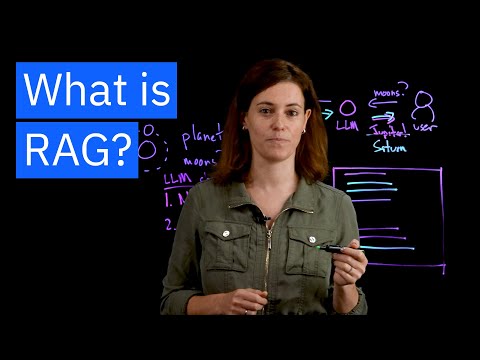
Open developers.openai.com →A short whiteboard video that explains RAG with one everyday example.
IBM Technology 2023
Watch on YouTube youtube.com →Google's explainer, including when RAG beats fine-tuning and how grounding reduces made-up answers.
Google Cloud 2026
Open cloud.google.com →The same ground, over in Build the product, our Starting Up track.