Blessing in disguise
Books for Entrepreneurs
Documentary
eChai Wall of Love
How I Met My Co-Founder
In Focus Today
Insight Reports
Movies for Entrepreneurs
Notes from Podcasts
Slice of Startup Life
The First Hire
The First Welcome in Silicon Valley
The Reading Room
Unforgettable Lessons
Confidence begins the moment you trust yourself


At eChai Ventures, we’re running a new series called Unforgettable Lessons. Founders share the moments that shaped them, stories of doubt, resilience, and discovery that changed the way they build and lead.
For Kena Shah, Founder of Inara, Fashion Coach, and Author, two such lessons from the early days of her journey continue to guide how she approaches business, leadership, and growth as a woman entrepreneur.
Here’s how she tells it:
Trusting My Instincts Above All
I have always been someone who relies deeply on my instincts. More often than not, they have guided me correctly. But in my early days, I found myself doubting them, not because they weren’t strong, but because I wasn’t a trained fashion student.
I have always been someone who relies deeply on my instincts. More often than not, they have guided me correctly. But in my early days, I found myself doubting them, not because they weren’t strong, but because I wasn’t a trained fashion student.
Coming from a management background, I sometimes listened to unsolicited advice from people who had never walked the path I was building. Their words made me second-guess myself, and at times, those detours slowed my process.
What I eventually realized is this: clarity comes from within, not from the noise outside. As an entrepreneur, the most important thing you can do is answer the powerful questions that define your core: Why am I building this business? Who am I designing for? What experience do I want to create and leave behind?
The moment I aligned with these questions, I found not just direction but power. That was the turning point when I shifted from being someone trying to build a brand to becoming a woman who owns her vision with confidence.
Never Judge a Book by Its Cover
Another unforgettable lesson came from my early experiences with clients. I’ll admit, in the beginning, I made one of the classic mistakes of business: judging a book by its cover.
Another unforgettable lesson came from my early experiences with clients. I’ll admit, in the beginning, I made one of the classic mistakes of business: judging a book by its cover.
Once, a woman walked in, and at first glance, I believed she was only there to browse. To my surprise, she walked out not just with interest, but with more than three outfits in one go. That moment hit me deeply because I hadn’t paid her the attention she deserved in the beginning.
I realized that every customer who walks through your door deserves respect, attention, and presence, whether they buy one piece or ten, whether they fit into your assumptions or not. Business isn’t built on assumptions; it’s built on relationships, trust, and service. That single incident reshaped the way I approached every client thereafter.
In business and in life, the most unforgettable lessons don’t always come from victories. They often come from the moments we stumble, reflect, and rise stronger. For me, those early days of doubt and misjudgment were exactly what transformed me into the entrepreneur I am today.
Sometimes It’s Not About Creativity, It’s About Patience
.jpg)
At eChai Ventures, we’ve started a new series called Unforgettable Lessons. In this series, founders share moments from their journey that taught them lessons they’ll never forget.
Some stories are about big wins, some about tough rejections, and some are about challenges that quietly change the way you work and lead.
For Pinal Didwania, Founder of The Pencil Advertising, one such lesson came from a client relationship that almost broke her team’s resolve.
Here’s how she tells it, in her own words:
There was a client who was never satisfied. New changes every night. New directions every morning. We reached a point where we thought: “This is impossible. We can’t do this.”
But we didn’t walk away. We sat down and said: “Let’s stop fighting the chaos. Let’s understand what’s really behind this.”
We realized the client wasn’t difficult, they were scared. Scared to take risks, scared to trust, scared to fail.
So instead of resisting, we adapted. We communicated more clearly, gave them multiple options, and reassured them at every step. Slowly, their anxiety turned into confidence.
Months later, that same client told us: “I know I was tough. But you never gave up on me. That’s why I trust you more than anyone else.”
Lesson: Sometimes, clients don’t test your creativity. They test your patience, empathy, and consistency. And passing that test is what earns you long-term loyalty.
But we didn’t walk away. We sat down and said: “Let’s stop fighting the chaos. Let’s understand what’s really behind this.”
We realized the client wasn’t difficult, they were scared. Scared to take risks, scared to trust, scared to fail.
So instead of resisting, we adapted. We communicated more clearly, gave them multiple options, and reassured them at every step. Slowly, their anxiety turned into confidence.
Months later, that same client told us: “I know I was tough. But you never gave up on me. That’s why I trust you more than anyone else.”
Lesson: Sometimes, clients don’t test your creativity. They test your patience, empathy, and consistency. And passing that test is what earns you long-term loyalty.
The Grit of Industrial Sales
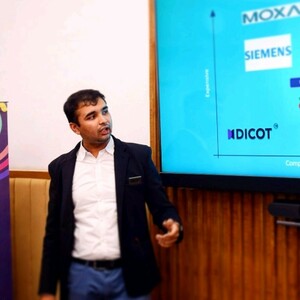

At Dicot, we build industrial automation solutions that are designed and manufactured in India for factories looking to improve speed, safety, and efficiency. Selling these solutions, however, has never been easy.
I began my journey in industrial sales by knocking on factory doors, walking in, introducing myself, and asking people to give our products a chance. The market was dominated by expensive European brands, and their name alone was enough for orders to flow. When I spoke about our machines made in India, people often appreciated the thought, but very few placed an order. Encouragement was common, real commitments were rare.
There were days when I walked into ten factories and came out empty-handed, no meetings, no orders, not even a phone number to follow up on. Those were heavy days, but I still went to the next gate because even one “yes” could make up for all the “no’s.”
Most of my time was spent inside plants, wearing a helmet and talking to engineers and managers. Many doors stayed shut, some conversations ended quickly, and a handful turned into lasting relationships that helped us move forward. Those few were enough to keep me going.
Industrial sales is tough work. It demands patience, belief, and a lot of resilience. It tests your confidence and helps you see who is open to giving new ideas a chance. Most of all, it has taught me that progress in business, and in life, often begins with the simple act of knocking on the next door.
The First Welcome in Silicon Valley: Nirman Dave, CEO, Zams

.jpg)
As part of The First Welcome in Silicon Valley series, I have been asking founder friends to share their stories of the first welcome they experienced in Silicon Valley. These are the people, the moments, and the gestures that stayed with them.
In this stream, Nirman Dave, Co-founder and CEO of Zams, shared three moments that defined his early steps in the Valley.
Nirman is now building Zams, his AI command center for B2B sales teams, bringing tools like Salesforce, Hubspot, Slack, Apollo, and Gong into one place. Before Zams, he co-founded Obviously AI (2020–2024), a no-code AI platform for data analysis.
> "Murtaza Hussain was the cofounder of Streamlabs, which sold to Logitech for $200M. I cold-emailed him asking for an internship. They didn’t take interns. He gave me one anyway."
> "Asha Jadeja was the reason I ever set foot in the US. She flew me from India for the Rajeev Circle Fellowship at Stanford even before I started college. That was my first glimpse of Silicon Valley. Later, when I started my first company and needed a place to stay, she gave me hers."
> "Chon Tang was the first investor in my company. I was still in college. I had no track record. He backed me anyway."
Nirman’s story shows how the first welcome can take many forms. An internship that wasn’t supposed to exist, a fellowship that changed his path, or an investor who believed without proof. Each of these acts became part of his foundation in Silicon Valley.
This September, DevX Puts Ahmedabad’s Startup Story on the Main Board


In 2017, three friends walked into a half-empty floor in Ahmedabad. The walls were peeling, the floor was still dusty, and the landlord was not sure if leasing it to them made sense. Coworking was barely known here, and in a city built on factories and family businesses, the idea of young founders sharing office space felt untested. But Parth Shah, Rushit Shah, and Umesh Uttamchandani saw something different. They imagined a place where entrepreneurs could work, grow, and feel part of something larger. That evening, they began what would later become DevX.
The first steps were not easy. Families were worried, landlords were doubtful, and clients were uncertain. This is where each of the three founders showed what made them different. Umesh carried optimism that reassured others and turned hesitation into agreement. His calm conviction won them their first landlord. Rushit had the persistence to keep conversations alive until they became real partnerships. One of DevX’s first anchor clients came on board only because he refused to let the dialogue end. Parth steadied it all, slowing the team when excitement pushed them to run too fast and reminding them to make one center work well before opening another.
From those small steps DevX began to grow. What started as a coworking space soon evolved into something bigger. The team realized that companies were not only looking for shared desks. They needed managed office solutions, with custom design, turnkey fit-outs, and operational support that would let them move in and begin work without the cost and delay of long leases. DevX built exactly that. Today it is one of India’s leading flexible workspace providers, offering both coworking and managed offices together.
The real test came during Covid. Many believed the business of leasing and offices would decline as remote-first models took over. Instead of waiting, DevX adapted. It strengthened its design arm through Phi Designs, and began helping large companies set up offshore development centers in India. This shift allowed DevX to diversify and turn a crisis into an opportunity, while continuing to support giants who needed reliable partners to reimagine workspaces for a changed world.
That adaptability shaped its scale. From a single floor in Ahmedabad, DevX has expanded into 28 centers across 11 cities, with 14,000 seats and more than 250 clients, serving early-stage startups as well as large corporates. Growth was steady and deliberate, built on the same traits that defined the founders from the beginning: optimism, energy, and discipline.
The first steps were not easy. Families were worried, landlords were doubtful, and clients were uncertain. This is where each of the three founders showed what made them different. Umesh carried optimism that reassured others and turned hesitation into agreement. His calm conviction won them their first landlord. Rushit had the persistence to keep conversations alive until they became real partnerships. One of DevX’s first anchor clients came on board only because he refused to let the dialogue end. Parth steadied it all, slowing the team when excitement pushed them to run too fast and reminding them to make one center work well before opening another.
From those small steps DevX began to grow. What started as a coworking space soon evolved into something bigger. The team realized that companies were not only looking for shared desks. They needed managed office solutions, with custom design, turnkey fit-outs, and operational support that would let them move in and begin work without the cost and delay of long leases. DevX built exactly that. Today it is one of India’s leading flexible workspace providers, offering both coworking and managed offices together.
The real test came during Covid. Many believed the business of leasing and offices would decline as remote-first models took over. Instead of waiting, DevX adapted. It strengthened its design arm through Phi Designs, and began helping large companies set up offshore development centers in India. This shift allowed DevX to diversify and turn a crisis into an opportunity, while continuing to support giants who needed reliable partners to reimagine workspaces for a changed world.
That adaptability shaped its scale. From a single floor in Ahmedabad, DevX has expanded into 28 centers across 11 cities, with 14,000 seats and more than 250 clients, serving early-stage startups as well as large corporates. Growth was steady and deliberate, built on the same traits that defined the founders from the beginning: optimism, energy, and discipline.
Now, with DevX’s IPO open and the bell-ringing set for September 17, their journey joins the larger arc of Ahmedabad’s startup story. The city has already seen landmark exits. Havmor Ice Cream was acquired by South Korea’s Lotte in 2017. eInfochips was acquired by Arrow Electronics in 2018. Elitecore Technologies was acquired by Sterlite Tech in 2015. Beardo was acquired by Marico in 2020. SocialPilot was acquired by Sweden’s group.one this year for 50 million US dollars. And many others. Each of these stories showed that companies from Ahmedabad could compete nationally and globally. DevX now adds another chapter, a founder-led startup stepping onto the main board, not as an acquisition but as an institution in its own right.
For me, DevX has never been only about offices. I have seen their spaces become gathering points where founders meet, where communities host events, and where collaborations begin. Many of our own eChai meetups took place inside DevX centers, and so did countless gatherings by others. The leadership gave not only space but also their time and energy back to the ecosystem. That is why their success feels connected to the city’s success.
This is why September feels important. On September 17, when the bell rings, it will not only be about three friends who started with a dusty room and turned it into a national brand. It will also be a moment for Ahmedabad, the month when the city’s startup story added a new chapter, and when DevX’s success reminded us that when a company succeeds here, the ecosystem succeeds with it.
eChai Partner Brands
eChai Ventures partners with select brands as their growth partner - working together to explore new ideas, open doors, and build momentum across the startup ecosystem.
.jpg "Hungrito - Building experiences through food fests.")


.jpg "iKomatch - An AI Powered digital Investment Banker with personalized investor outreach to upto 10k+ investors.")


