
Asked the best way into Bangalore startups, mrvelvet_4 names Draper Startup House and eChai, and says two or three connections is all it takes before referrals do the rest.
Open postThe eChai Feed · Startups · Tech · Culture
Startups, tech and culture, worth your time.
The launches, threads, talks and long reads we think every founder should see, curated by eChai.
The Wall of Love: what founders say about eChai → Founder Notes: what founders are building →
Santosh Panda on starting Grittiest for founders outside the metros, and the four steps he used to find its first members in communities he already admired, eChai among them.

Santosh Panda
8 Sep 2025
People ask me this question a lot, How do I start building a community?
Me: Borrow Inspiration from Existing Communities to Find Your First Members
Don’t reinvent the wheel — your first community members are already hanging out somewhere else.
Back in early 2020, during the peak of the COVID pandemic, I wanted to create a space for founders who often felt invisible because they were not in Bangalore, Mumbai, Delhi, Singapore, London, or San Francisco, but were building startups from Nashik, Kochi, Guwahati, Bhubaneswar, Coimbatore, and even Milpitas.
My goal was to enable founders from 2nd/3rd-tier cities building Startups to get support in their journey to overcome challenges.
I looked at communities I admired (eChai, TiE global chapters, SaaSBoomi, Super Morpheus, Headstart and a few more) and realized my first members were already out there — I just had to find them.
By the end of 2020, Grittiest had served 170+ founders from underserved cities.
Founders loved it! Grittiest's focus was to serve unserved founders in 2nd/3rd-tier cities and magic happened.
Here’s the hack for How do I start building a community👇
1. Identify 3–5 communities where your ideal members already gather
2. Observe what people love & what frustrates them
3. Engage authentically before inviting anyone over
4. Reach out personally, not with a broadcast message
The most loyal members often come from the margins, not the mainstream. Start by borrowing energy from the communities your people already love. Just focus on what they get from your community initiative.
Built /building a community? Where did you find your first members? #CommunityGrowth101
Rushabh Shah's notes from the eChai Social with Hari Balasubramanian in Ahmedabad: where capital is actually going, what AI has changed about selling software, and why liquidity, not a paper valuation, is the return.
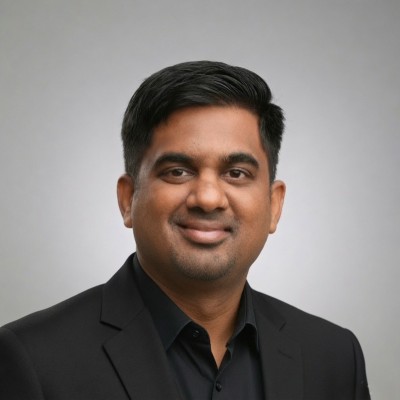
Rushabh Shah
19 Aug 2026
What do founders discuss when the pitch decks are closed?
Today, eChai Ventures brought together founders, investors and operators in Ahmedabad for a candid conversation with Hari Balasubramanian.
It wasn't a rehearsed keynote when we met. The discussion moved from his early investment journeys involving Wow! Momo, Mukunda Foods Pvt. Ltd., Spinny, Rapido and Brevistay to some of the harder questions founders are confronting today:
▶️ Where is capital really going?
▶️ What has AI changed about building and selling software?
▶️ Is conventional SaaS becoming harder to fund?
▶️ How do founders and investors actually achieve liquidity?
Recalling the conversations, I found a few ideas that stayed with me.
▫️Capital is no longer India’s biggest constraint. The constraint is whether a team has a bold enough idea and the operating capacity to deploy that capital intelligently.
▫️AI has made building faster. It has not made distribution easier. Product creation is getting cheaper, while customer access, domain expertise, trust, and monetisation are getting more valuable.
▫️SaaS is not dead. But the comfortable middle is being squeezed. Either reach enormous user scale or own a workflow so deeply that a smaller number of customers will pay serious money.
▫️Paper valuation is not a return. Liquidity is. Many meaningful companies take 10 to 15 years to build, while the structures funding them often expect answers much earlier.
Perhaps the most important lesson was this:
A strong ecosystem is not built through speeches. It is built through rooms where people speak honestly, challenge each other and make the right introductions.
Thank you, Hari Balasubramanian, for sharing decades of experience without trying to make the journey sound neat.
Thank you, Jatin Chaudhary, Umesh Uttamchandani, eChai Ventures and DevX for creating the room.
Amish Trivedi Anil Motwani Anuj Dalal Bhavesh Patel Jash Gor Jayesh Kadivar Koumal Kalantry Nikita Lalwani Rahul Kumar Vikas Mundhra Viraj Rajani Balkrishna Agarwal Chirag Panchal Amit Gupta Dr. Isha Goswami Dr. Saiful Khan Ekta Shah Harsh Joshi Ishani Dave Mitesh Shethwala Murtuza Badami Er. Nandan Shukla Sagar Thakker Satya Mehta Shyam Parmar Sweety Patel Twinkle Barot
The carousel here distils the entire conversation.
YouTube
How powerful business communities workManthan Bhavsar and Jatin Chaudhary on Chai Time With ManthanBaba, on what makes a business community work and what it takes to keep one going.

YouTube
90% of founders don't raise fundingJatin Chaudhary with Harry Rajput on why most founders never raise, and what building a company without funding looks like.

YouTube
How networking turns into businessJatin Chaudhary on the Positive Paaji Show, in Gujarati, on what a founder actually gets out of networking and how those rooms turn into work.

Adarsha M G on the panel, and connecting with founders building across social commerce and deeptech.

Adarsha M G
Investor Relations & Revenue @ Afthonia | Venture Capital | Startup Growth | Strategic Partnerships | Market Expansion | Emerging FinTech
11 Aug 2026
Saturday evening was a great learning and networking experience at eChai Ventures ’s “Fundraising for Startups: Panel Conversation with Founders & Investors.”
It was great connecting with founders building across Social Commerce, Deeptech, Fintech and other emerging sectors, and understanding how investors evaluate startups at different stages.
A key highlight was hearing Swapna Gupta — share her perspective on fundraising, Deeptech and how investors evaluate opportunities.
A few takeaways that stood out:
🔹 Deeptech needs conviction, capital and patience. Building deeptech businesses often requires significant time and capital before commercial validation becomes visible.
🔹 The fundraising bar changes at every stage. Seed is largely about the founder, team and ability to execute. As companies move towards Series A and B, investors increasingly look for traction, validation and data.
🔹 A crowded market isn't necessarily a bad market. Competition can validate demand. If existing products aren't solving the problem well, there is still an opportunity to build better and capture market share.
🔹 Warm introductions matter. Portfolio founders, alumni networks and trusted connections can help startups get the attention needed for that first conversation.
I also had the opportunity to ask Swapna about the intersection of Deeptech and Fintech.
With AI becoming an important layer in financial services, we can automate processes, reduce human intervention and build smarter financial products.
But an interesting question remains:
At what point does an AI-enabled Fintech product actually become Deeptech?
Is applying AI enough, or does Deeptech require proprietary technology, significant R&D and defensible IP?
Definitely something I want to explore further.
A special kudos to Jatin Chaudhary and the entire eChai team for creating open spaces where founders, investors and ecosystem builders can connect, learn and exchange ideas.
#StartupFundraising #Deeptech #Fintech #VentureCapital #AI #Startups #eChai #banglorestartups #startupindia
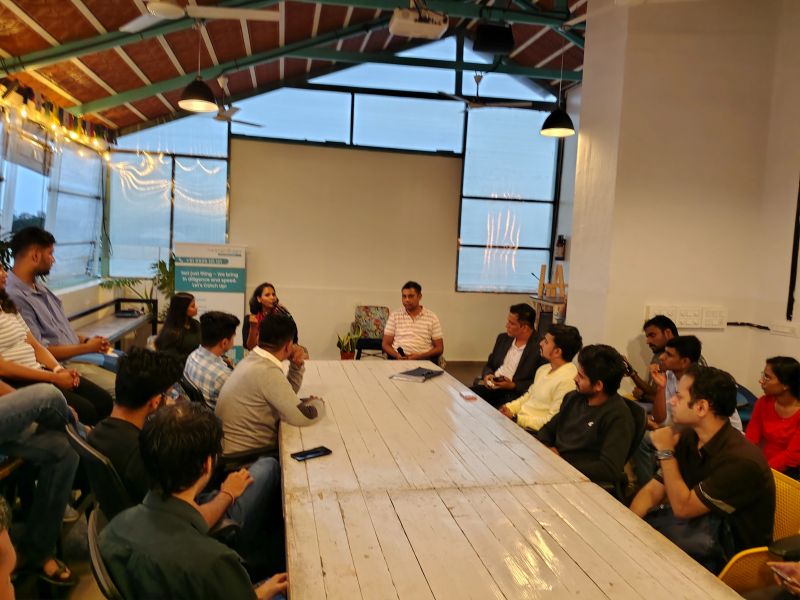
Vinamra Agrawal on the Manufacturing x AI meetup, and Saurya Mishra's account of what a cheap prototype can and cannot prove.

Vinamra Agrawal
AI-led UX & brand strategy for B2B founders — converting web experiences, products & funnels into revenue engines.
11 Aug 2026
Recently, I went into eChai’s Manufacturing × AI meetup expecting a conversation about automation.
I left thinking about what AI cannot compress.
Saurya Mishra's journey made it tangible: a ₹3–4 lakh non-clinical prototype can prove a principle. But it cannot shortcut five years of supplier learning, precision tolerances, specialist talent and certification.
In deep tech, the visible product is only the tip. The capability system behind it is the moat.
Nikunj Thakkar added the other half: a good product is not discoverable simply because it exists.
In AI-mediated discovery, your brand is no longer just what your website claims. It is what the wider internet can independently verify—and what AI systems feel confident recommending.
My takeaway as someone building Brandhero Design:
In B2B, brand is not polish. It is the evidence layer that makes unfamiliar capability feel safe to choose.
And perhaps that is what Jatin Chaudhary and eChai Ventures have been compounding, city by city: not merely events, but trust infrastructure—lowering the search cost for customers, talent, partners and ideas.
AI will accelerate everything around the physics: research, documentation, coordination and discovery.
But atoms—and trust—still move at the speed of proof.
Thank you Saurya Mishra, Nikunj Thakkar and Jatin Chaudhary for a genuinely thought-provoking conversation—and Urban Vault for hosting the room.
#DeepTech #Manufacturing #AI #B2BBranding
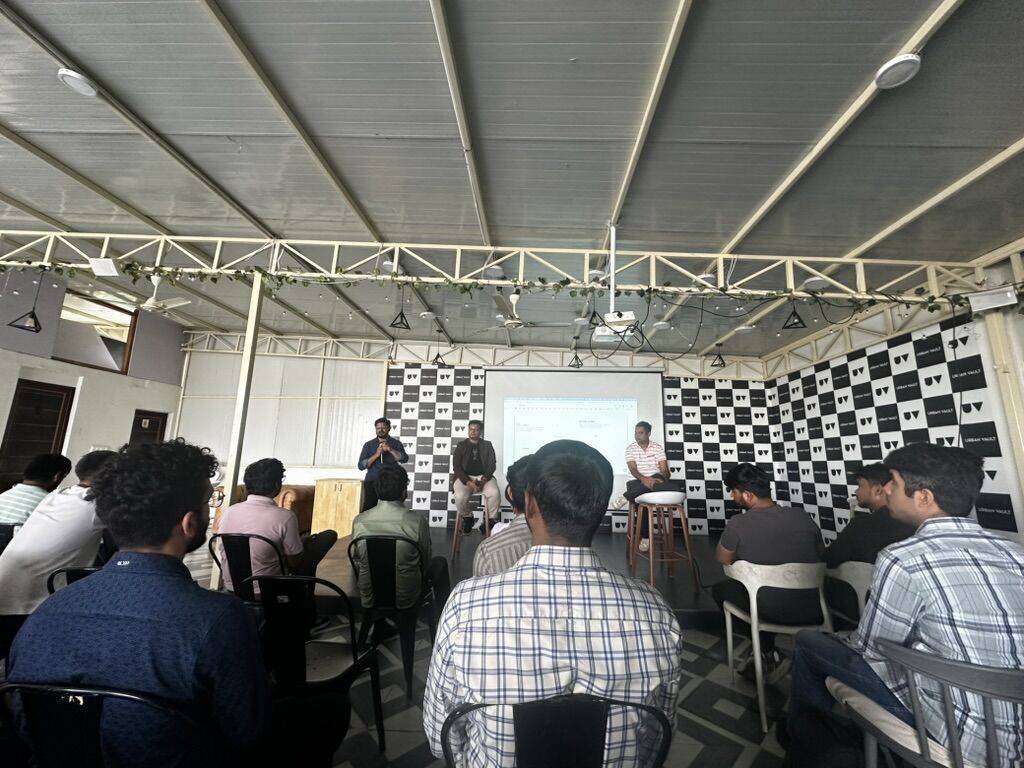
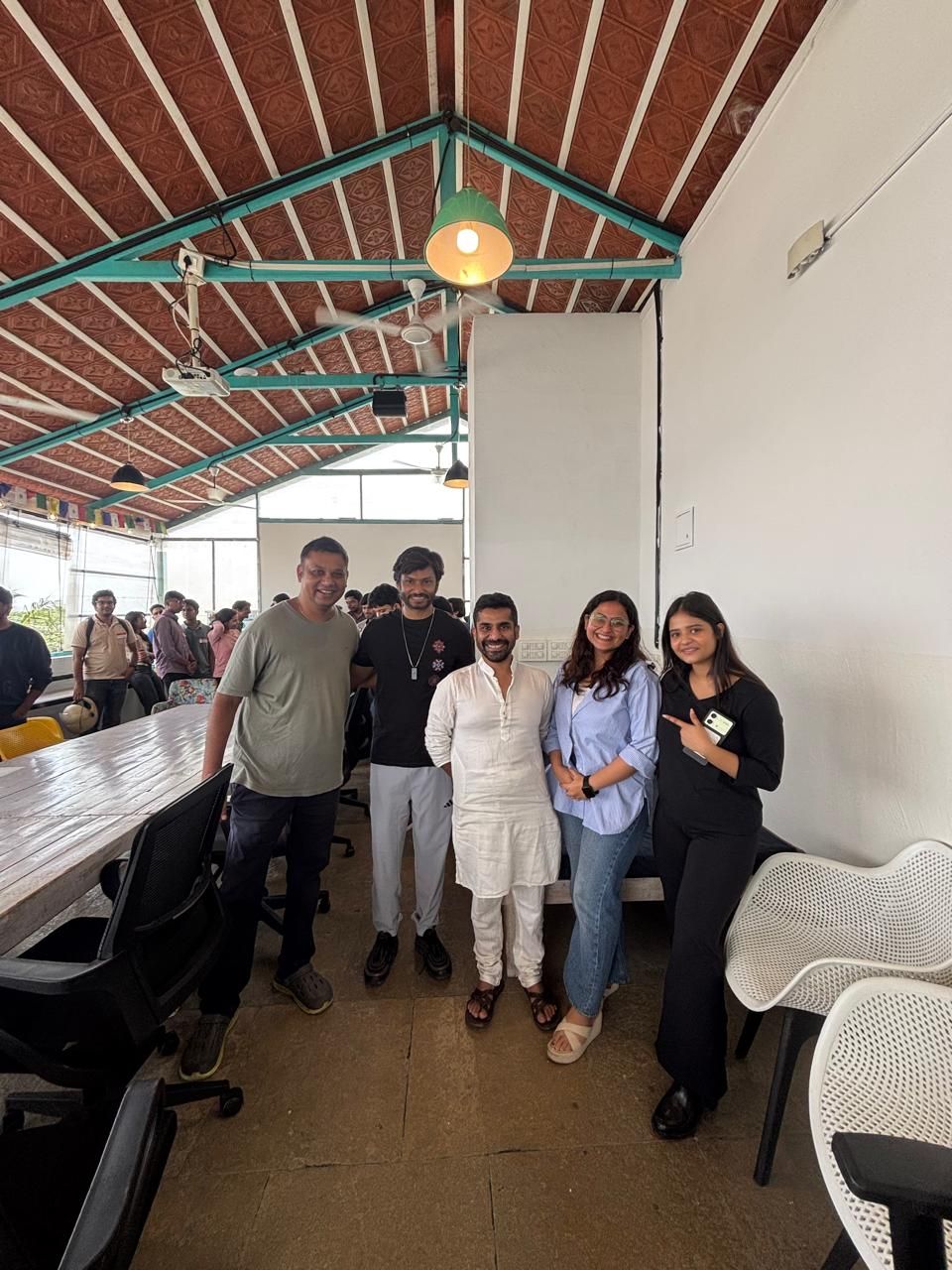
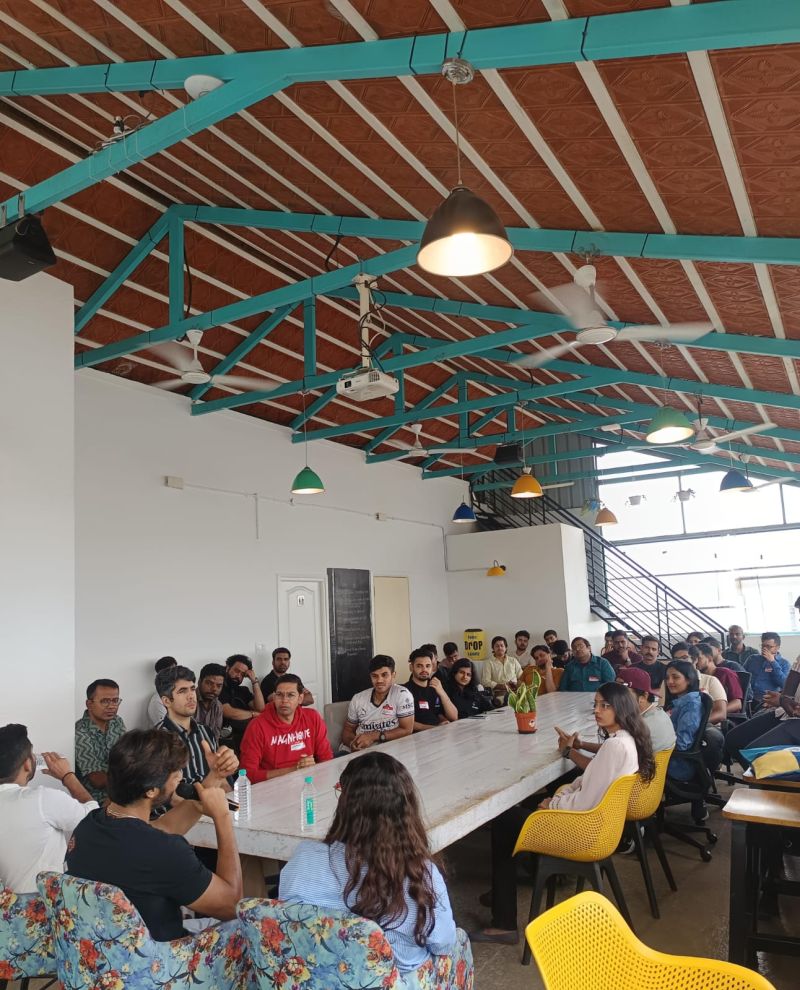
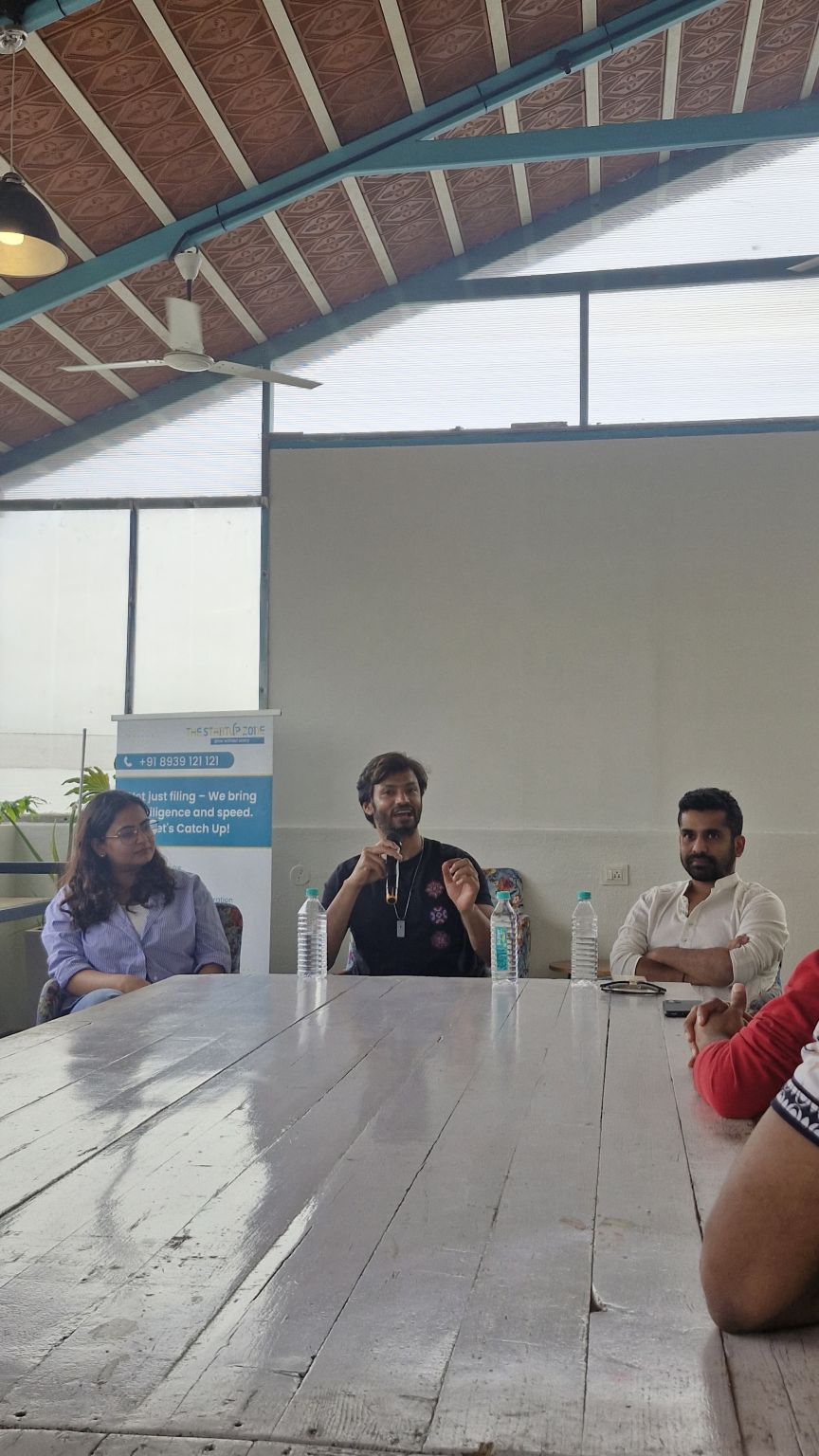
Mansi S on the Founder Startup House session with eChai, where one question went in a dozen directions at once.

Mansi S.
IIM Bangalore | Building in @stealth | Customer Success Executive @Founder Startup House
11 Aug 2026
What does it really take to build a consumer brand today?
Yesterday at Founder Startup House x eChai Ventures, that question took the room in a dozen different directions.
From how people discover products, to why they stay loyal, to what makes them switch overnight.
Listening to Dhananjay Yadav from NeoSapien and Vikas Bardia from Shoffr, I realized that consumer businesses are probably the closest you'll get to watching human behavior play out in real time.
One moment the conversation was around D2C and consumer brands.
The next, it was about the fitness industry and how rapidly it is evolving beyond just gyms and memberships.
What fascinated me wasn't a growth hack or a framework.
It was seeing how two founders look at the same market and notice things most people miss.
A customer decision.
A changing habit.
A small shift in behavior.
And suddenly, an entire business opportunity emerges.
These are the conversations I enjoy the most.
No pitch decks.
No buzzwords.
Just founders sharing how they see the world, and everyone in the room leaving with a slightly different perspective than they walked in with.
That's the magic of founder communities.
Sometimes the most valuable thing you take back isn't a contact or a note.
It's a new way of looking at a market.
Vikram Bharati Karan Bahadur Nivin Joseph Jatin Chaudhary Mansi Baheti
Suhani Jain
K Mahammad Asif on what changed for him after an eChai session on GTM and distribution, and why AI-powered is not a value proposition.

K. Mahammad Asif
GTM Engineer @ ProductBridge | Go-to-Market Strategy | Customer Feedback & Insights | Product Growth | SaaS
11 Aug 2026
One thing I've started looking at differently after attending an eChai session on GTM & Distribution for Startups:
We often talk about AI as a feature.
“AI-powered.”
“AI integration.”
“AI-driven.”
But the customer doesn't really care that you added AI.
They care about what AI does for them.
Does it save them time?
Reduce repetitive work?
Help them make better decisions?
Solve a problem they've been struggling with?
That shift in perspective was one of my biggest takeaways from the session.
There's a simple test I found useful:
Try describing your product without saying “AI” at all.
Just describe the outcome for the customer.
If that's difficult, maybe the pitch is still built around the technology rather than the person using it.
That connects to another idea that stuck with me: start with the customer's problem, not your product.
When telling your startup's story, don't open with “Here's what we built.”
Open with “Here's the problem our customers are facing.”
The AI or whatever you built is simply how you help them get from that problem to the desired outcome.
GTM isn't just about getting your product in front of more people.
It's about understanding the customer deeply enough to explain why your product matters to them.
And in the AI era, maybe the better question isn't:
“Where can we add AI?”
It's:
“What can we make possible for the customer because of AI?”
Thank you to eChai Ventures for organizing the session and creating a great space to learn and exchange ideas.
#GTM #Startups #ProductMarketing #AI #Marketing #Distribution #B2BMarketing #eChai
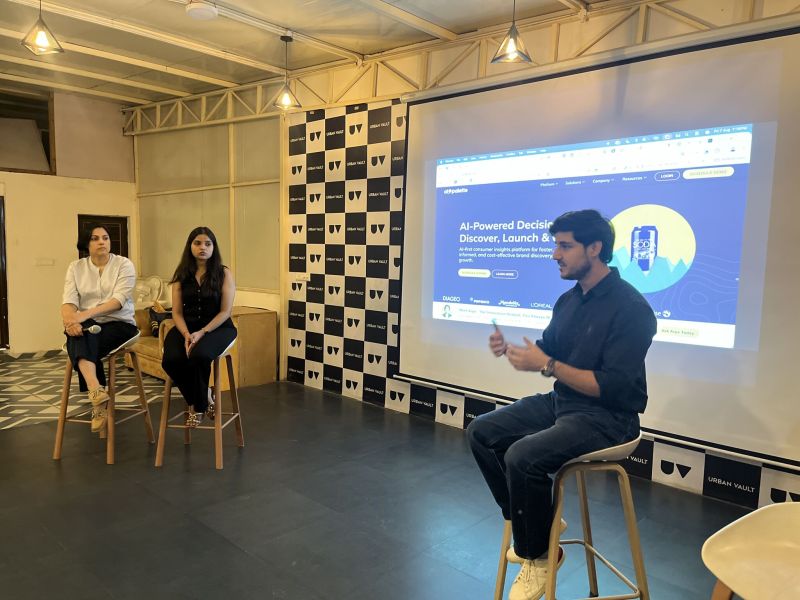
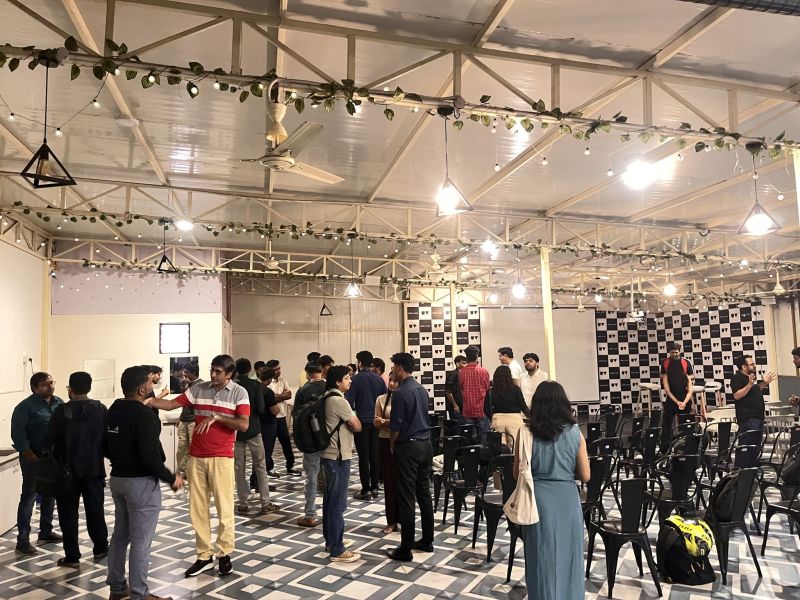
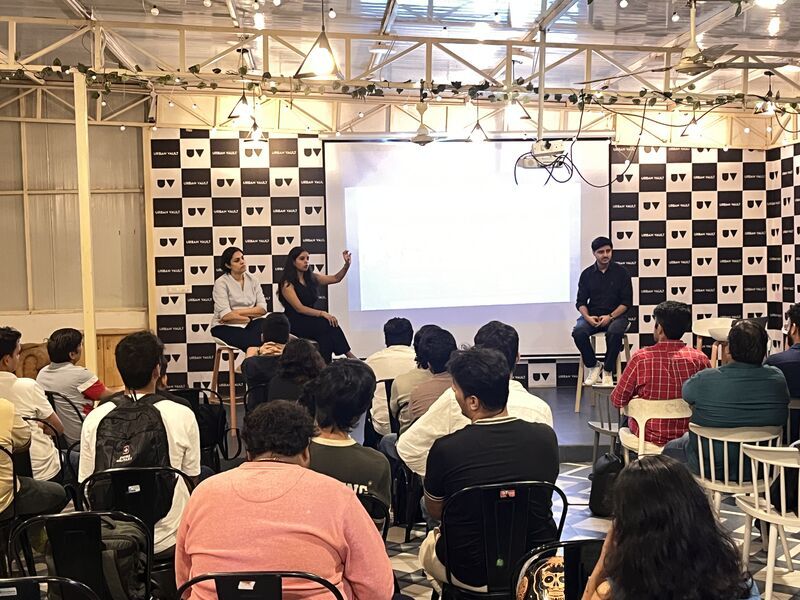
Koral Jain asked Dhananjay Yadav of NeoSapien and Vikas Bardia of Shoffr how they started, and both answered with a problem rather than an ambition.

Koral Jain
Founder’s Office @Uplers | Startup Operator | Growth, Strategy & Talent | Building AI-Native Growth Systems That Scale
18 Aug 2026
"i never dreamt of becoming a founder...
there was just a problem statement i discovered, and decided to go all in to solve it."
that’s what both Dhananjay Yadav from NeoSapien and Vikas Bardia from Shoffr said when i asked them about their journey as founders.
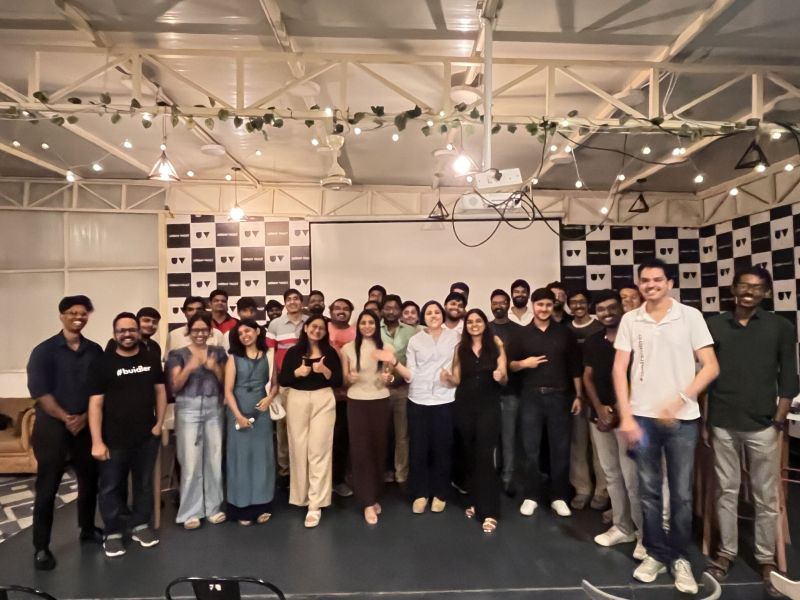
last sunday, we hosted an event with eChai Ventures at Founder Startup House around building consumer & d2c brands with folks who have actually done the grunt work, built from scratch, and scaled in the d2c space.
there were a lot of takeaways from the session including:
>the playbook behind building a brand
>how word of mouth actually compounds
>hiring and culture when you’re scaling
>when and how to raise funding (and whether you even should)
>the messy, uncertain parts of the founder journey...and everything in between
but if there is one thing i am taking away from the conversation, it’s this:
“STAY CURIOUS”
no matter how far ahead you get, there’s always something new to learn.
and perhaps more importantly- keep the SIMPLICITY:
the ability to stay grounded, ask questions, admit what you don’t know, keep figuring things out, iterate, and fail faster.
it was so much fun hosting you both, Vikas Bardia and Dhananjay Yadav.
thank you for being so candid, generous, and open with your experiences (and for answering all our questions:)
and a big shoutout to the eChai Ventures Jatin Chaudhary and Founder Startup House team for making this happen 🙌
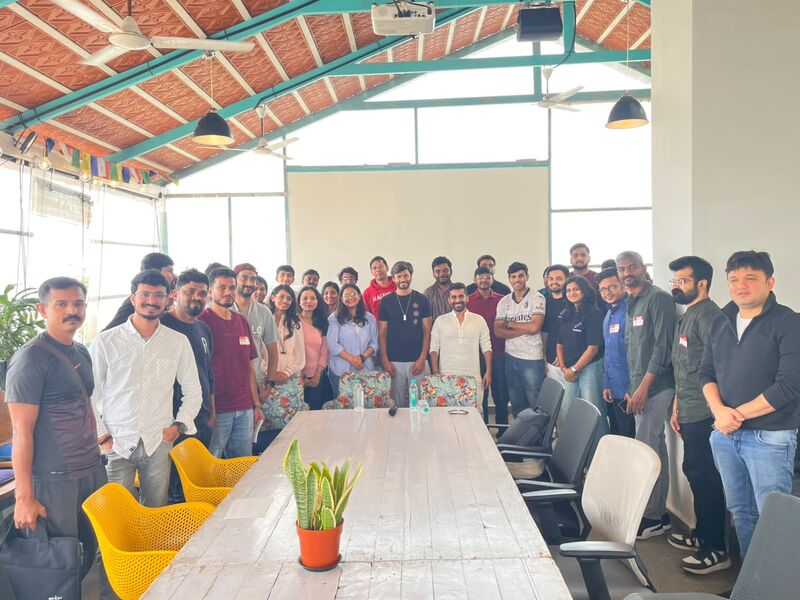
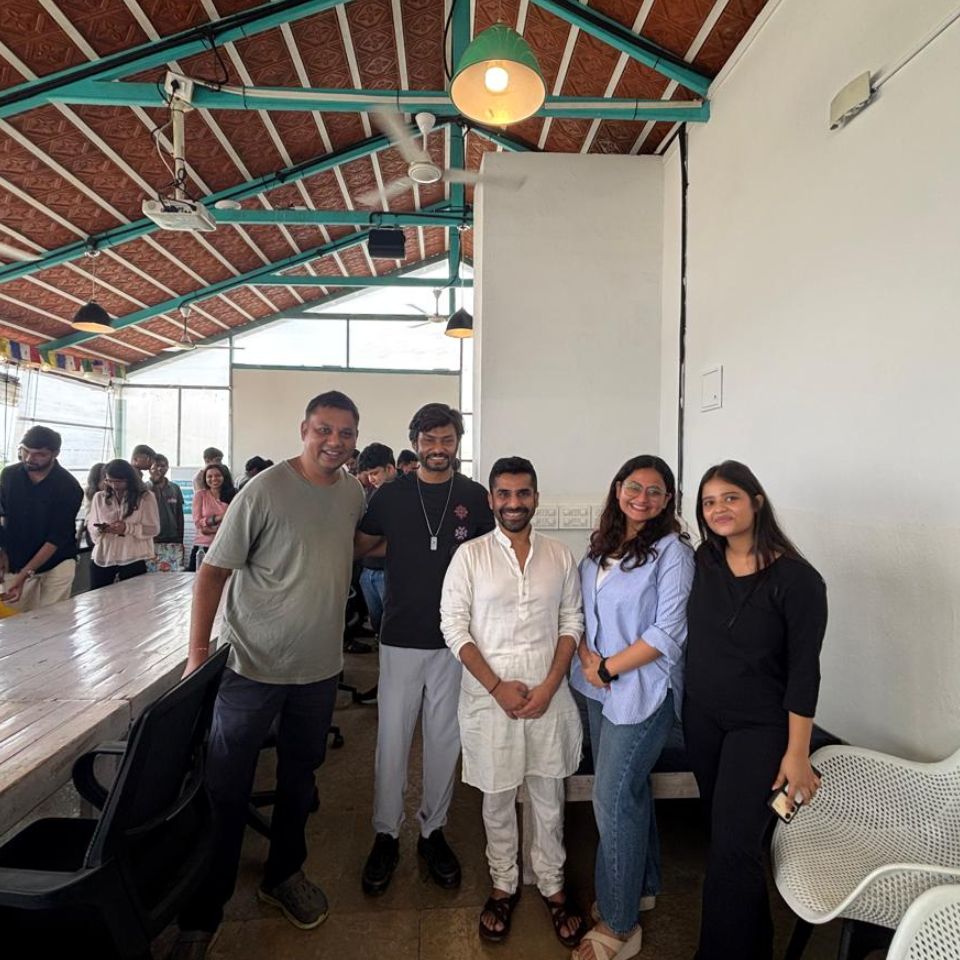
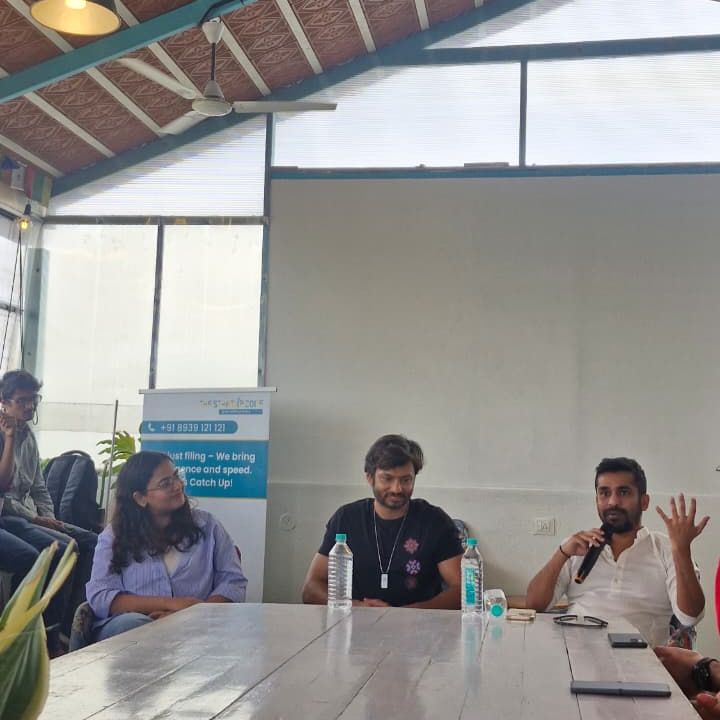
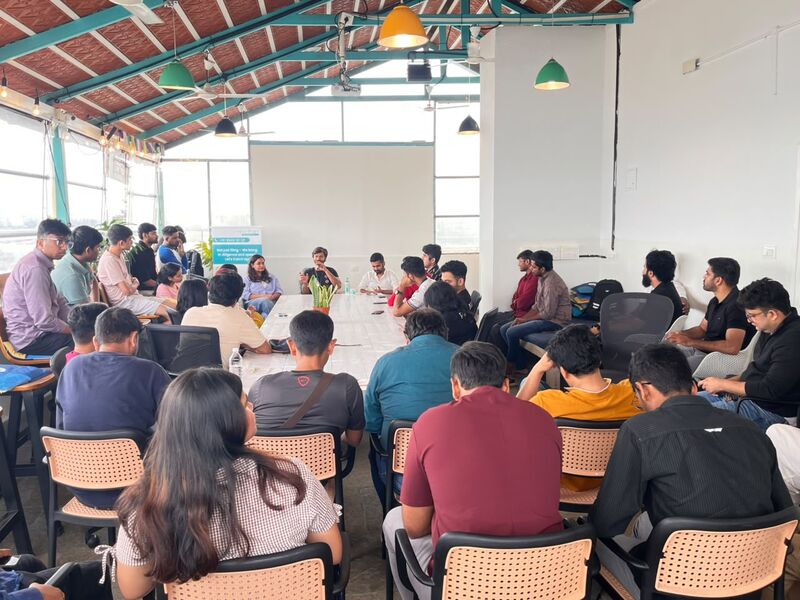
Dheer Gupta on the eChai and Tech Expo Gujarat session at Elsner, and the gap he thinks sits between the two.

Dheer Gupta
AI Solutions Engineer | LangChain · RAG · Multi-Agent Systems · OpenAI | .NET + Azure Full-Stack | 26+ LLM Apps Shipped
18 Aug 2026
Evening well spent — was at Elsner Technologies Pvt. Ltd. for eChai Ventures x Tech Expo Gujarat session on AI and M&A.
One thing that hit me early: most founders are heads-down in AI, or heads-down in M&A — rarely both at once. That gap is basically where the next wave of growth is hiding.
Two panels, no pitch decks, just real talk:
🔹 AI inside the business — not the shiny demo version. The actual one. What got automated, what it costs to keep running, and (my favorite part) where teams tried it, hit a wall, and quietly went back to doing it the old way. Refreshing to hear people admit that on stage instead of pretending everything's a success story.
🔹 M&A outside it — buying or getting bought isn't some far-off milestone anymore, it's just... a growth move. What actually makes a company worth acquiring, how deals get valued, and what changes the morning after you sign. Way messier in real life than it sounds on paper.
Good energy in the room, sharper questions from the audience than from the moderator half the time — which is always a good sign.
Huge thanks to Jatin Chaudhary for hosting, and to the panel for showing up with real answers instead of safe ones — Bhavesh Patel, Harshal Shah, Mitesh Shethwala, Rushabh Shah, Shrijay Sheth, and Taral Shah.
If you're building something in Ahmedabad and still haven't been to an eChai meetup — you're missing out. Go.
#eChaiVentures #AhmedabadStartups #StartupIndia #AIinBusiness #MergersAndAcquisitions #FounderLife #TechExpoGujarat #BusinessGrowth #Networking #Entrepreneurship
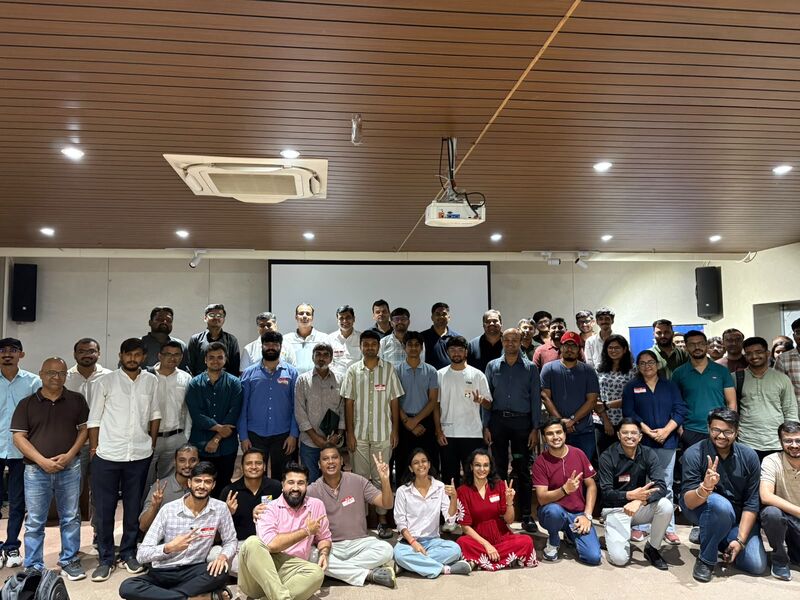
Renisa Khaire on the Andheri meetup in Mumbai, and the advice from it she decided was worth keeping.

Renisa Khaire
Finance is where I started. Founders’ rooms are where I actually learned.
18 Aug 2026
NETWORKING. NETWORKING. NETWORKING.
Last Saturday at eChai Ventures, Andheri, Mumbai was genuinely so much fun.
A few pieces of advice from the event worth holding onto:
>> Find your why. It's what carries you on the days motivation doesn't show up.
>> Get comfortable with rejection early. It stops being personal once you've collected enough of it.
>> If you want to build something, don't fall in love with the product or the end goal. Fall in love with the problem, get clear on what you're actually solving and what value it adds, everything else follows from that.
Ended up talking and connecting to people from different backgrounds, IIT grads, lawyers, people already building something of their own, just a room full of interesting minds.
Refreshing to sit in a room where entrepreneurship was default, not the exception.
grateful for rooms like this, more of these, pleaseee
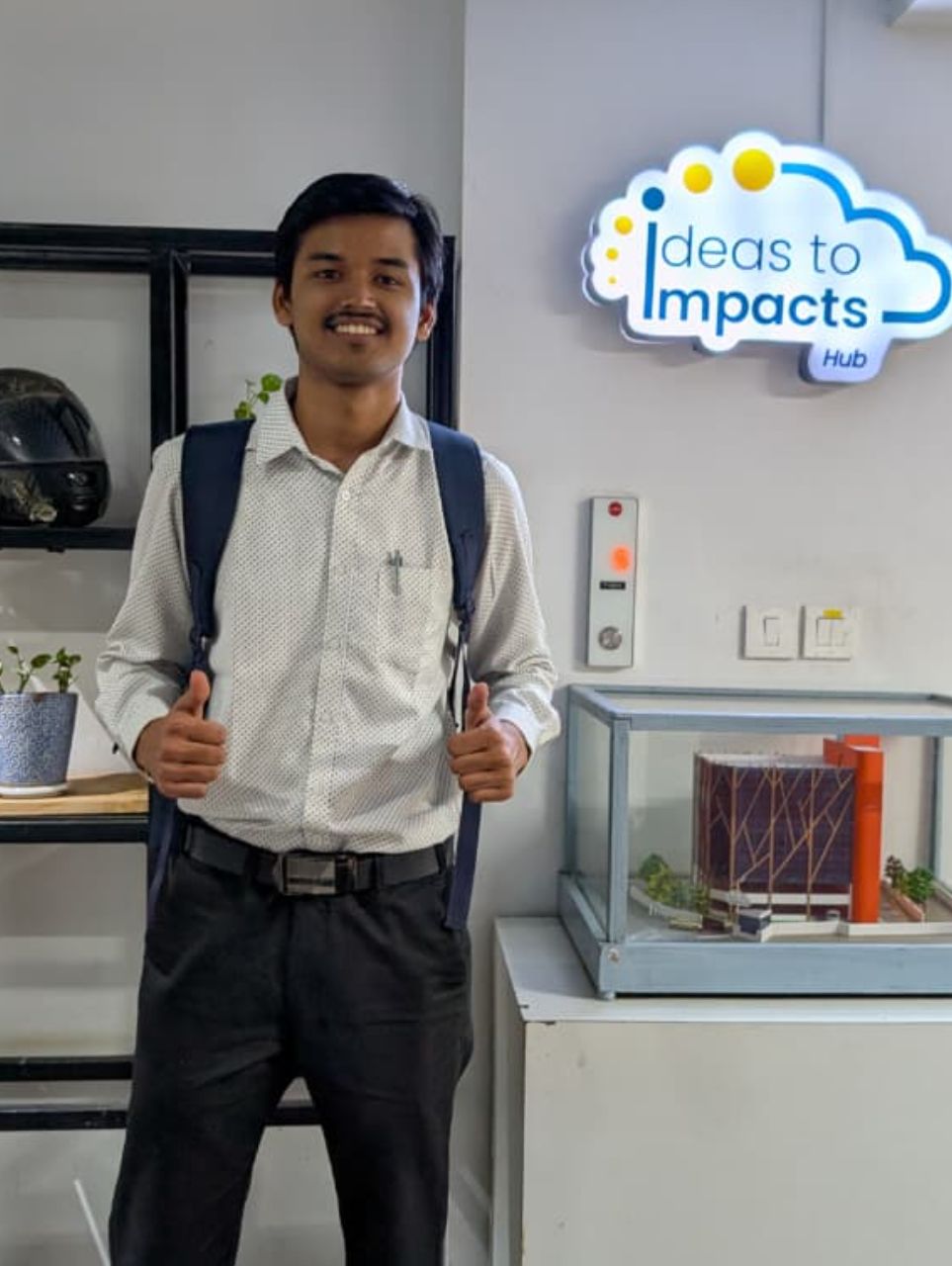
Krishna Toshniwal on the evening at Ideas to Impacts Hub in Baner, surrounded by people working out how AI reshapes what they build.

Krishna Toshniwal
Video Editor | Content Creator | JLPT N5 (Dec 2026) | IELTS | S.Y B.Com, MES GCC | MS Excel | Ex- Digital Marketing Intern at BrandupX, Aundh
18 Aug 2026
𝗔𝗜 × 𝗦𝘁𝗮𝗿𝘁𝘂𝗽𝘀 × 𝗡𝗲𝘁𝘄𝗼𝗿𝗸𝗶𝗻𝗴: 𝗔𝗻 𝗘𝘃𝗲𝗻𝗶𝗻𝗴 𝗙𝘂𝗹𝗹 𝗼𝗳 𝗟𝗲𝗮𝗿𝗻𝗶𝗻𝗴 & 𝗡𝗲𝘄 𝗣𝗲𝗿𝘀𝗽𝗲𝗰𝘁𝗶𝘃𝗲𝘀 🚀
Spent my Saturday evening at Ideas to Impacts Hub, Baner, surrounded by founders, engineers, and builders who are all figuring out how AI is reshaping the way we build products. Two sessions stood out for me:
🎤𝗔𝗯𝗵𝗶𝘀𝗵𝗲𝗸 𝗕𝗮𝗹𝗹𝗮𝗯𝗵 (Co-Founder & CEO, VidyaAI & ExtraaEdge) shared an honest, no-fluff take on how founders are actually using AI day-to-day and more importantly, how to think about building AI products rather than just bolting AI onto existing ones. He also went deeper into how to actually use Claude to get the most out of it, practical tips on prompting and workflow that instantly changed how I'll be using it going forward. Easily one of the most useful, hands-on parts of the evening.
🎤 𝗞𝗮𝗽𝗶𝗹 𝗡𝗲𝘂𝗿𝗴𝗮𝗼𝗻𝗸𝗮𝗿 (Engineering Manager, Last9) walked us through "Agentic Debugging, The MithAI Way", a fascinating look at how agentic systems are changing the way engineering teams debug and ship.
𝗪𝗵𝗮𝘁 𝗺𝗮𝗱𝗲 𝘁𝗵𝗲 𝗲𝘃𝗲𝗻𝗶𝗻𝗴 𝗲𝘃𝗲𝗻 𝗯𝗲𝘁𝘁𝗲𝗿 𝘄𝗮𝘀 𝘁𝗵𝗲 𝗼𝗽𝗲𝗻 𝗻𝗲𝘁𝘄𝗼𝗿𝗸𝗶𝗻𝗴 𝘀𝗲𝘀𝘀𝗶𝗼𝗻 𝗮𝗳𝘁𝗲𝗿𝘄𝗮𝗿𝗱, 𝗴𝗿𝗲𝗮𝘁 𝗰𝗼𝗻𝘃𝗲𝗿𝘀𝗮𝘁𝗶𝗼𝗻𝘀 𝘄𝗶𝘁𝗵 𝗽𝗲𝗼𝗽𝗹𝗲 𝗯𝘂𝗶𝗹𝗱𝗶𝗻𝗴 𝗴𝗲𝗻𝘂𝗶𝗻𝗲𝗹𝘆 𝗶𝗻𝘁𝗲𝗿𝗲𝘀𝘁𝗶𝗻𝗴 𝘁𝗵𝗶𝗻𝗴𝘀 𝗶𝗻 𝘁𝗵𝗲 𝗔𝗜/𝘀𝘁𝗮𝗿𝘁𝘂𝗽 𝘀𝗽𝗮𝗰𝗲 𝗶𝗻 𝗣𝘂𝗻𝗲.
Big thanks to eChai Ventures, Jatin Chaudhary, Malav Warke, and the team at Ideas to Impacts Hub for putting together such a well-curated, candid session. More of these, please! 🙌
#corise #echai #pune #meetup #ai #startup
#AIProducts #FounderJourney #AgenticAI #ClaudeAI #PuneStartups #StartupIndia #TechMeetup
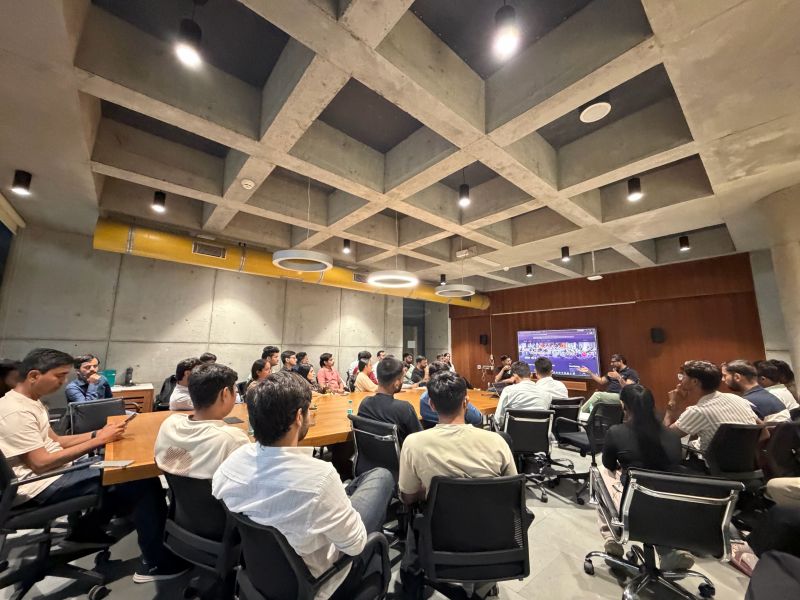
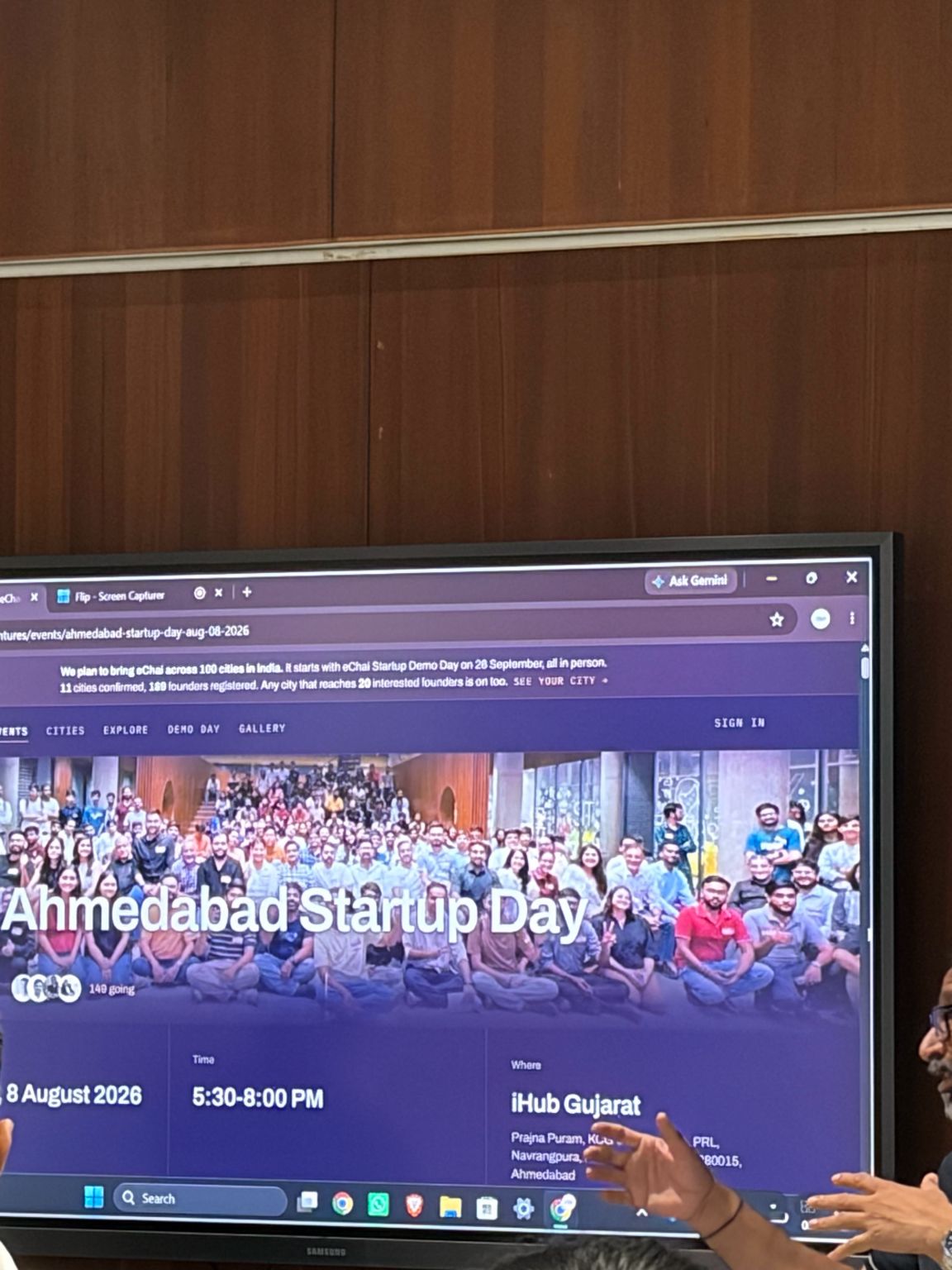
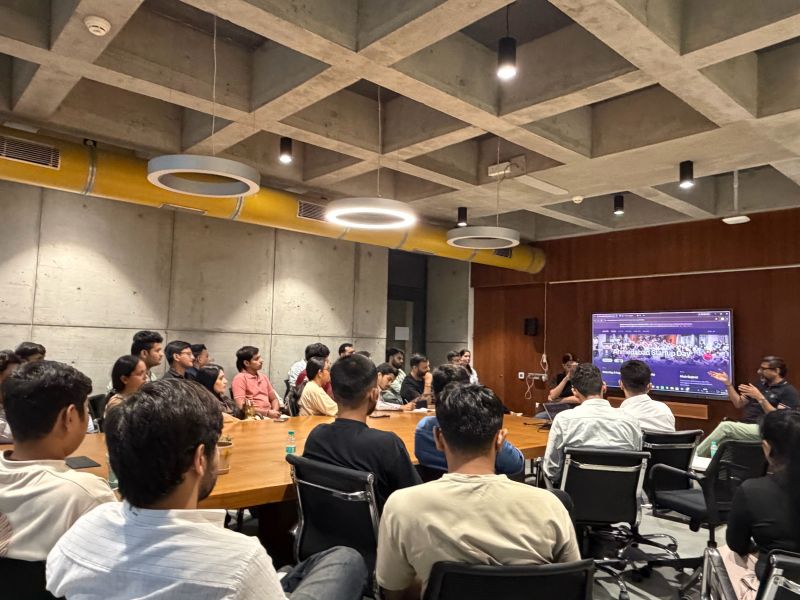
Dr Navneet A on Ahmedabad Startup Day at i-Hub Gujarat, and why the harder question is who exactly you are selling to.

Dr. Navneet A.
Healthcare & Wellness Commercial Strategy | FMCG| Growth & Brand Innovation | Market Intelligence | Brand Manager & Marketer| Consulting |
18 Aug 2026
Most startups don’t have a marketing problem. They have a “who exactly are we selling this to?” problem. 🎯
That was one of my strongest takeaways from Ahmedabad Startup Day at i-Hub Gujarat — a room where conversations moved quickly from ideas to the uncomfortable realities of taking them to market.
We spoke a lot about GTM strategy, marketing, AI for business, and the mistakes founders make while trying to grow.
And one pattern kept coming back:
👉 Building first. Validating later.
👉 Targeting “everyone” and converting no one.
👉 Confusing visibility with demand.
👉 Scaling acquisition before understanding retention.
👉 Copying a competitor’s GTM without understanding why it works for them.
Because GTM isn’t simply “How do we market this?”
It starts much earlier:
Who has the problem? → How painful is it? → Who makes the decision? → Who actually pays? → Why should they switch? → Which channel reaches them? → What makes them stay?
Get that chain wrong, and even great marketing can become an expensive way to discover that your assumptions were wrong. 📉
Another conversation I particularly enjoyed was around AI for business. 🤖
The opportunity isn’t simply adding “AI-powered” to another product.
It’s asking where AI can genuinely improve customer intelligence, personalization, decision-making, operational efficiency, sales or the economics of growth.
Coming from a strategy + marketing + analytics lens, these are exactly the conversations I enjoy — where data meets customer psychology and eventually meets the market. 🧠 × 📊 × 🚀
Walked out with one thought:
Don’t ask how to scale your startup too early.
First ask — what exactly have you earned the right to scale?
Kudos to the teams and community behind Ahmedabad Startup Day at i-Hub Gujarat by eChai Ventures for creating a room where founders could discuss not just what worked, but what didn’t. 🙌
For the founders here: what’s one GTM assumption you believed initially that the market proved wrong? 👇
#GTM #GoToMarket #StartupStrategy #MarketingStrategy #AIForBusiness #BusinessStrategy #GrowthStrategy #Startups #AhmedabadStartups #StartupEcosystem
Nancy Chin Lam on the AI Builders Forum run with PMI San Francisco Bay Area, eChai and The AI Foundry.

Nancy Chin Lam, PMP®, CSM®
Senior Program Manager | Client-side Transformation Lead | AI Enablement & Digital Transformation | Program Management | PMO & Portfolio Leadership | Agile Delivery | Enterprise Program Delivery
20 Aug 2026
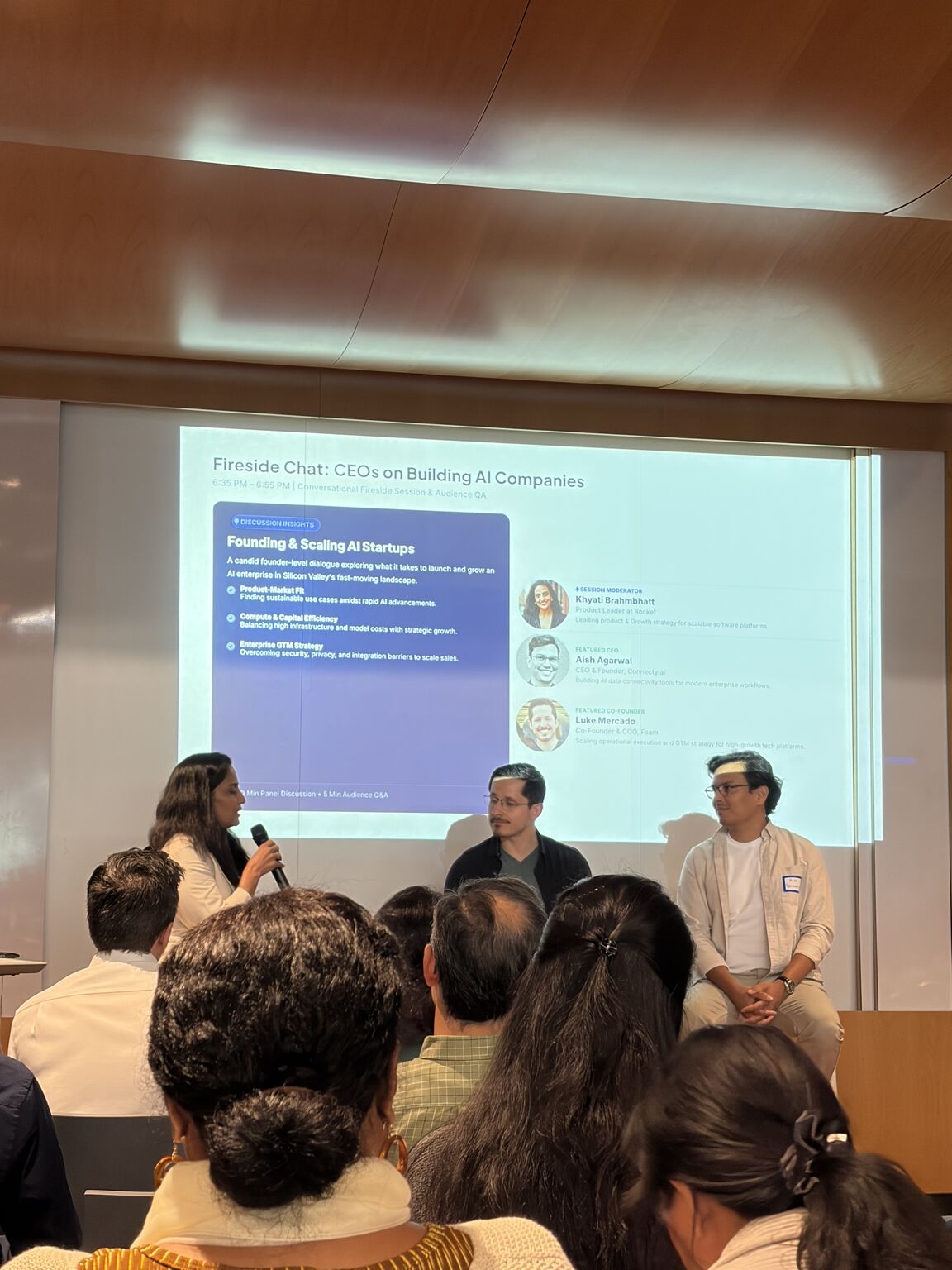
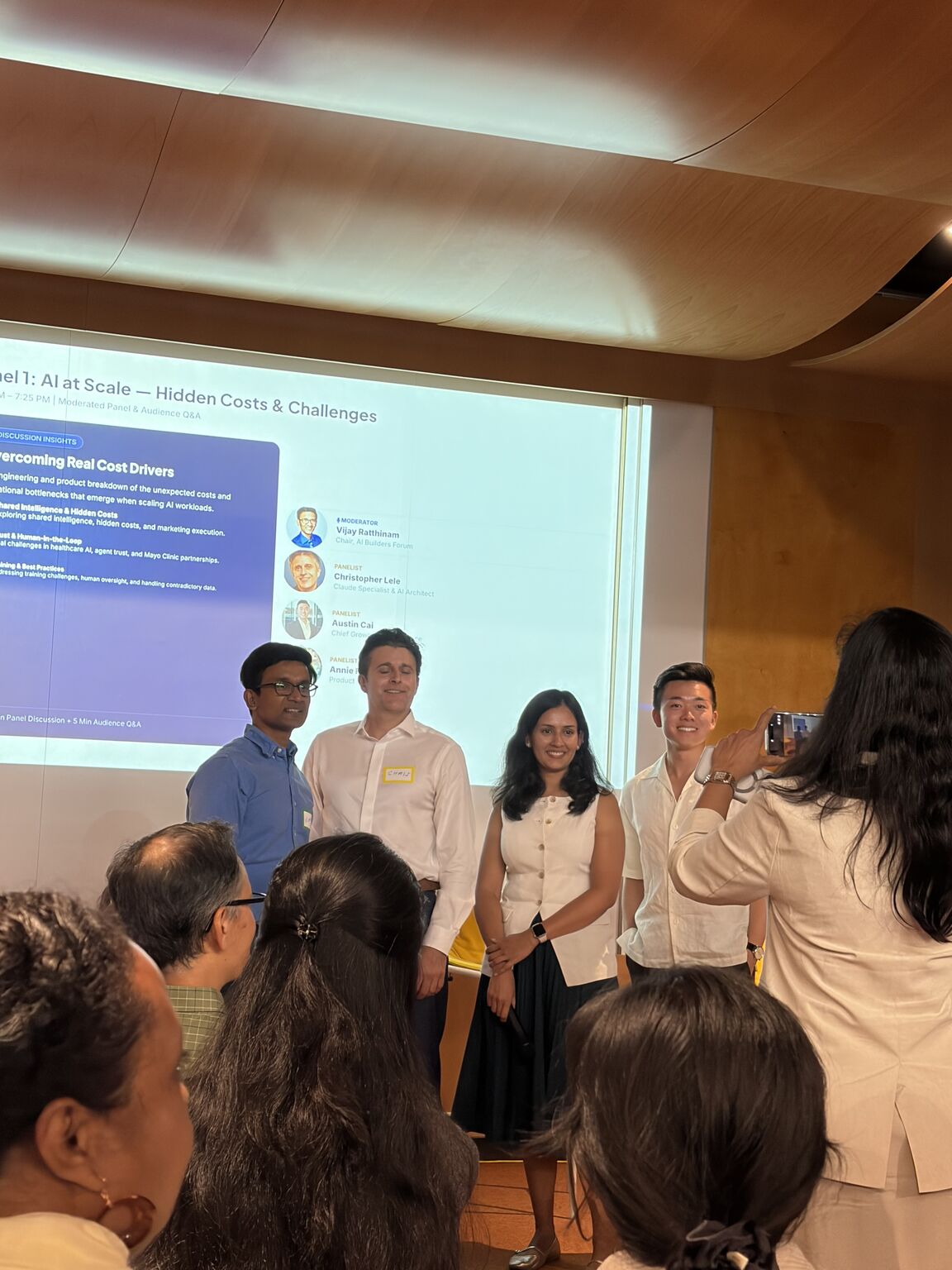
Great insights and conversations at yesterday’s AI Builders Forum — The Real Cost of AI: What It Takes to Build, Scale & Succeed.
Thank you to PMI San Francisco Bay Area Chapter, eChai Ventures, and The AI Foundry for bringing together such a thoughtful group of AI founders, operators, product leaders, and practitioners.
One takeaway that really stayed with me was the discussion around the true cost of AI. AI can require significant investment in technology, data, training, workflow redesign, governance, and change management. But the greater cost may come when organizations invest in AI without first being clear about the business problem they are trying to solve.
If the solution does not improve an outcome, remove friction, reduce cost, increase productivity, or create meaningful value, then even a technically successful implementation can become an expensive experiment.
It reinforced for me the importance of continuing to ask: What business problem are we solving, how will we measure success, and do we have the right people and processes in place to drive adoption?
Technology is only one part of the equation. Successful AI adoption also depends on training, workflow design, change management, and bringing the right people along with the transformation.
And on a personal note, it was finally wonderful to see Estelle Paysinger-Hill, PMP in person, and great catching up with Sanjay Belagodu, Seyi Oshinowo, MBA, PMP, PgMP, CAL, CSPO, Sara Abolhassani, PMP, Vijay Ratthinam, Anup (Andy) Deshpande.
Thank you to all of the speakers and moderators for sharing such practical perspectives on what it really takes to move AI from experimentation to meaningful business impact.
1 more on LinkedIn
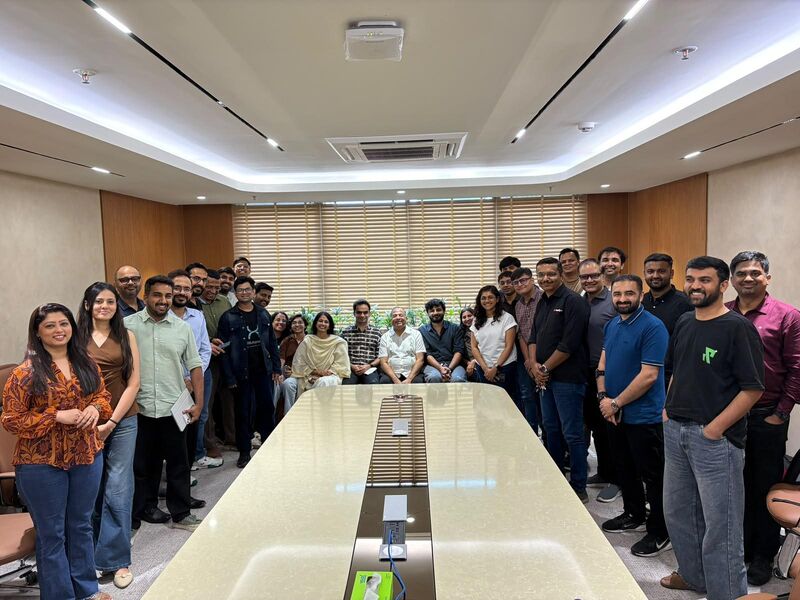
View on LinkedIn →Sweety Patel of FactsScan on the Ahmedabad meetup, and the actionable parts she took away from listening.
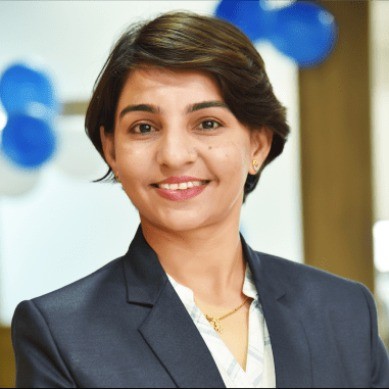
Sweety Patel
Founder @ FactsScan | Partnering with nutrition, tech & health communities to decode packaged food for every Indian home | 100% focused on building India’s AI food‑scanner app
20 Aug 2026
𝗔𝗻 𝗲𝘃𝗲𝗻𝗶𝗻𝗴 𝗽𝗮𝗰𝗸𝗲𝗱 𝘄𝗶𝘁𝗵 𝗿𝗮𝘄 𝘀𝘁𝗮𝗿𝘁𝘂𝗽 𝘄𝗶𝘀𝗱𝗼𝗺, 𝗮𝗰𝘁𝗶𝗼𝗻𝗮𝗯𝗹𝗲 𝗶𝗻𝘀𝗶𝗴𝗵𝘁𝘀, 𝗮𝗻𝗱 𝗶𝗻𝗰𝗿𝗲𝗱𝗶𝗯𝗹𝗲 𝗲𝗻𝗲𝗿𝗴𝘆!
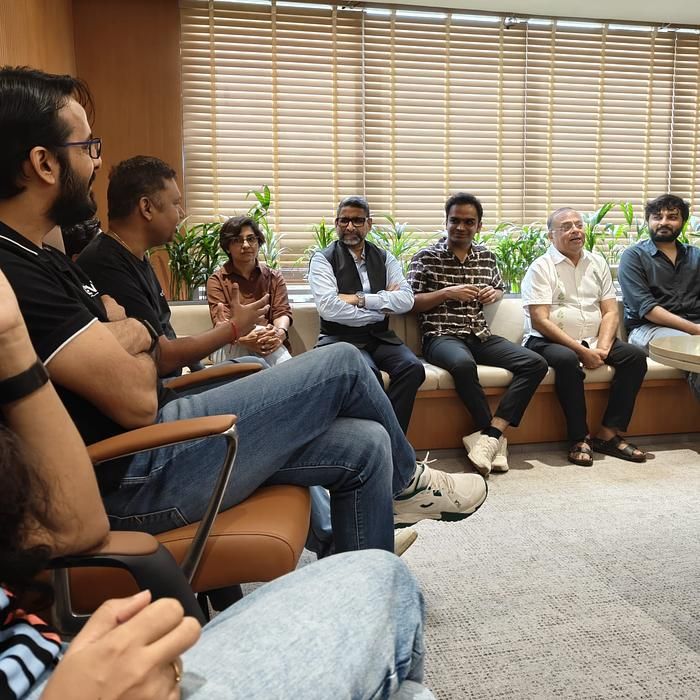
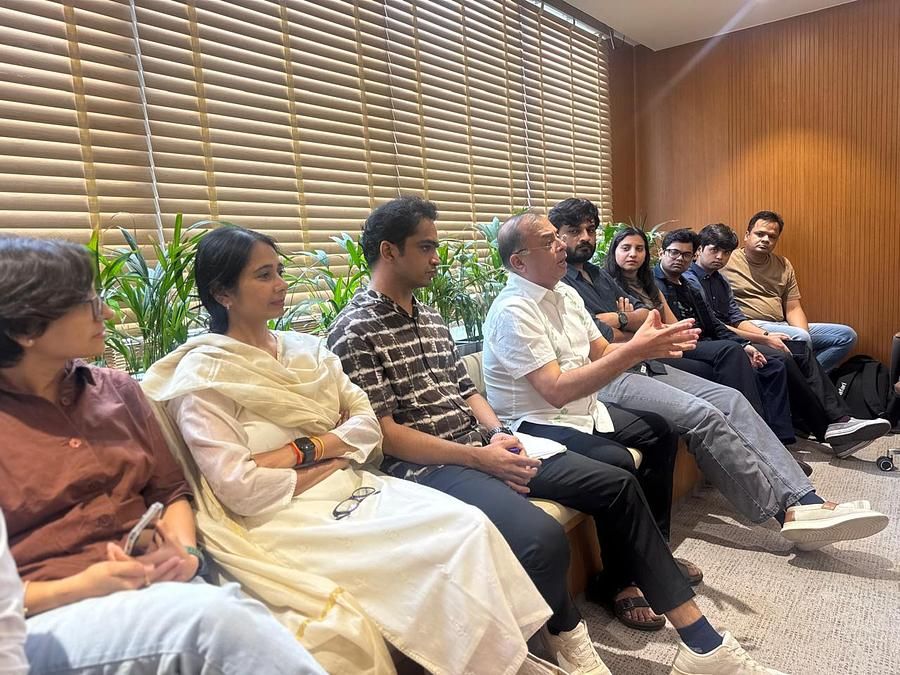
Yesterday, I had the privilege of attending the eChai Ventures meetup here in Ahmedabad, and listening to Hari Balasubramanian sir was nothing short of a masterclass on the Indian startup ecosystem.
Hearing his personal journey and decades of experience provided a grounded reality check and immense inspiration.
𝗔 𝗳𝗲𝘄 𝗸𝗲𝘆 𝘁𝗮𝗸𝗲𝗮𝘄𝗮𝘆𝘀 𝘁𝗵𝗮𝘁 𝗿𝗲𝘀𝗼𝗻𝗮𝘁𝗲𝗱 𝗱𝗲𝗲𝗽𝗹𝘆:
💡 𝗧𝗵𝗲 𝗘𝘃𝗼𝗹𝘃𝗶𝗻𝗴 𝗦𝘁𝗮𝗿𝘁𝘂𝗽 𝗟𝗮𝗻𝗱𝘀𝗰𝗮𝗽𝗲: Where the real growth trends lie and which high-impact segments hold the biggest opportunities for the next decade.
💡 𝗙𝗼𝘂𝗻𝗱𝗲𝗿 𝗠𝗶𝗻𝗱𝘀𝗲𝘁: The grit, resilience, and authentic problem-solving mindset that separates enduring companies from short-term hype.
💡 𝗪𝗵𝗮𝘁 𝘁𝗼 𝗞𝗲𝗲𝗽 𝗶𝗻 𝗠𝗶𝗻𝗱: The fundamentals of sustainable execution that every founder must stay anchored to while building in India.
What makes these sessions so special is the candid, open format where founders can freely ask real questions and share unvarnished thoughts.
A huge thank you to Jatin Chaudhary and the entire eChai Ventures team for consistently curating such open, high-value founder circles.
Special thanks to Umesh Uttamchandani and the 𝗗𝗲𝘃𝗫 team for hosting us at such a fantastic venue (and for the great coffee! ☕).
Walking away with sharp perspectives, renewed energy, and great clarity for the road ahead. Onward and upward!
#Startups #Entrepreneurship #FounderJourney #eChai #DevX #AhmedabadStartups #StartupIndia #Networking #Innovation #Leadership
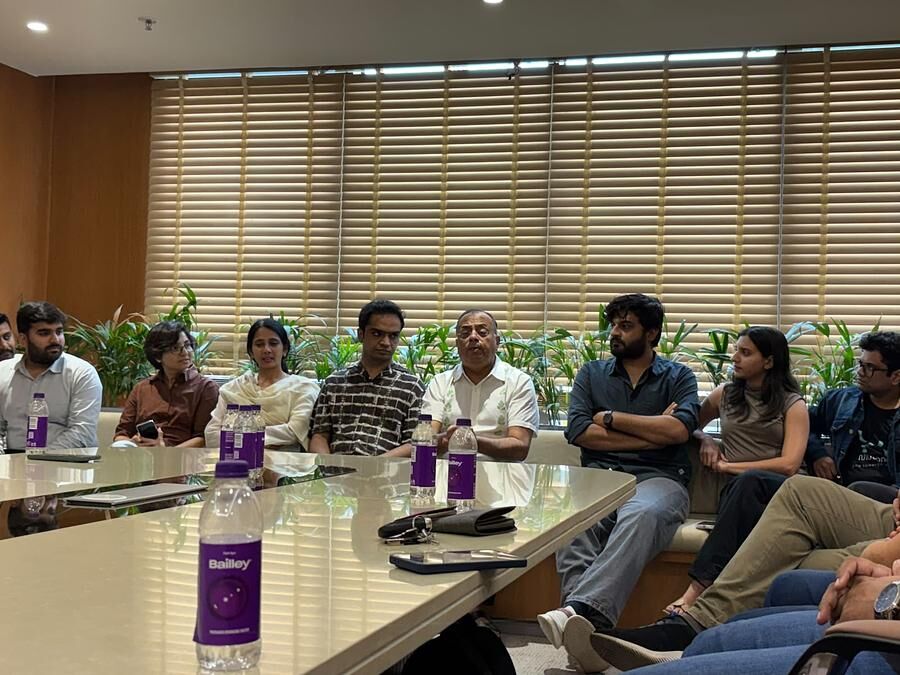
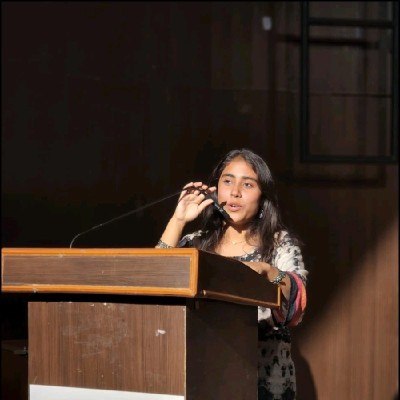
Suravi Sehgal on the session with Kiran Babu at IIITH, and what it changed about her view of building a startup.
Suravi Sehgal
B.Tech AI & Data Science Student | Full-Stack (Flutter, Next.js, MongoDB) | Oracle AI Foundation Certified | GDG TechSprint Winner | Open to SWE Internships 2027
24 Aug 2026
I just wrapped up an incredible E-Cell workshop at International Institute of Information Technology Hyderabad (IIITH) with Kiran Babu at eChai Ventures, and it completely shifted my perspective on building and scaling startups.
Here are the top 7 takeaways I brought back with me:
1. Shift from MVP to MVD (Minimum Viable Distribution)
Building is only half the battle. If you don't solve for distribution early, your product dies in silence.
2. Boring problems build massive businesses
Especially in B2B. If you solve an unglamorous problem that saves time or boosts productivity, value follows.
3. Think like a CFO, not just a CEO
Instead of asking "Can we build this?", ask "Why would someone actually pay for this?"
4. Positioning > Product
The product gets you into the room: how you frame, price, and sell it determines if you close the deal.
5. Listen more than you pitch
The sharper your customer conversations, the clearer the actual problem becomes. Stop leading the dialogue—let the customer talk.
6. Your customer is the hero; you’re just the guide
Make the story about solving their problem, not about how impressive your tech is.
7. Map the Decision-Making Unit (DMU)
A great pitch to the wrong stakeholder is a wasted pitch. Always know who holds the budget.
The ultimate lesson? Don’t just build to build. Build something that saves time, increases productivity, or creates undeniable, measurable value.
#Entrepreneurship #Startups #IIITHyderabad
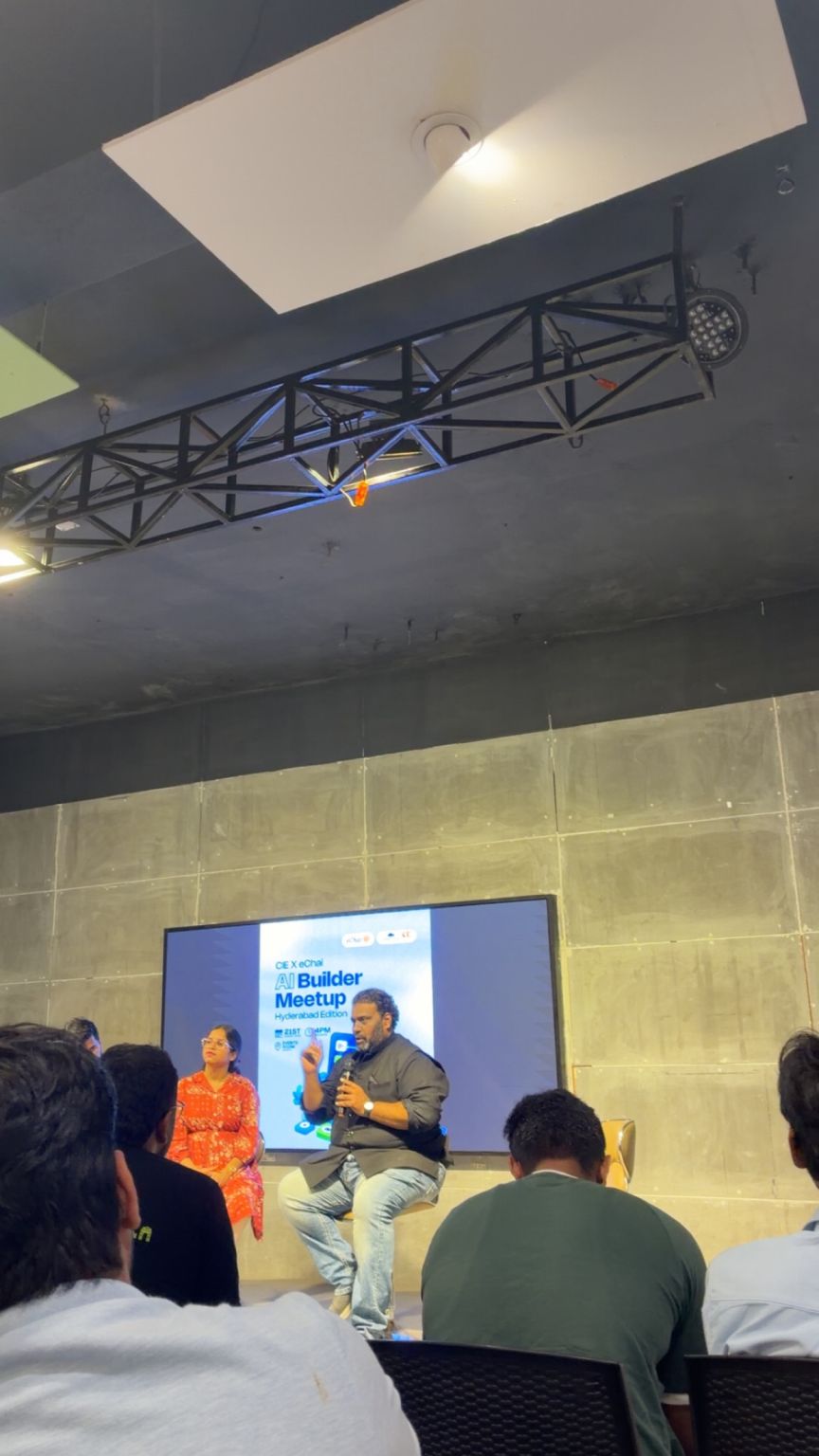
Shivam Agrawal, a backend engineer, on How Founders Use AI and meeting people solving problems well outside his own field.

Shivam Agrawal
Backend Engineer | Distributed systems, event-driven architecture | Node.js, TypeScript, Go, PostgreSQL, AWS
24 Aug 2026
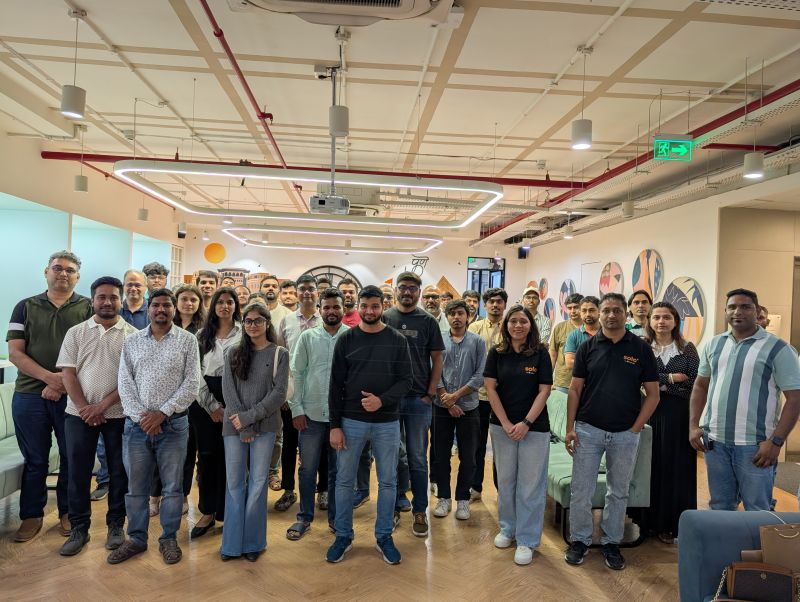
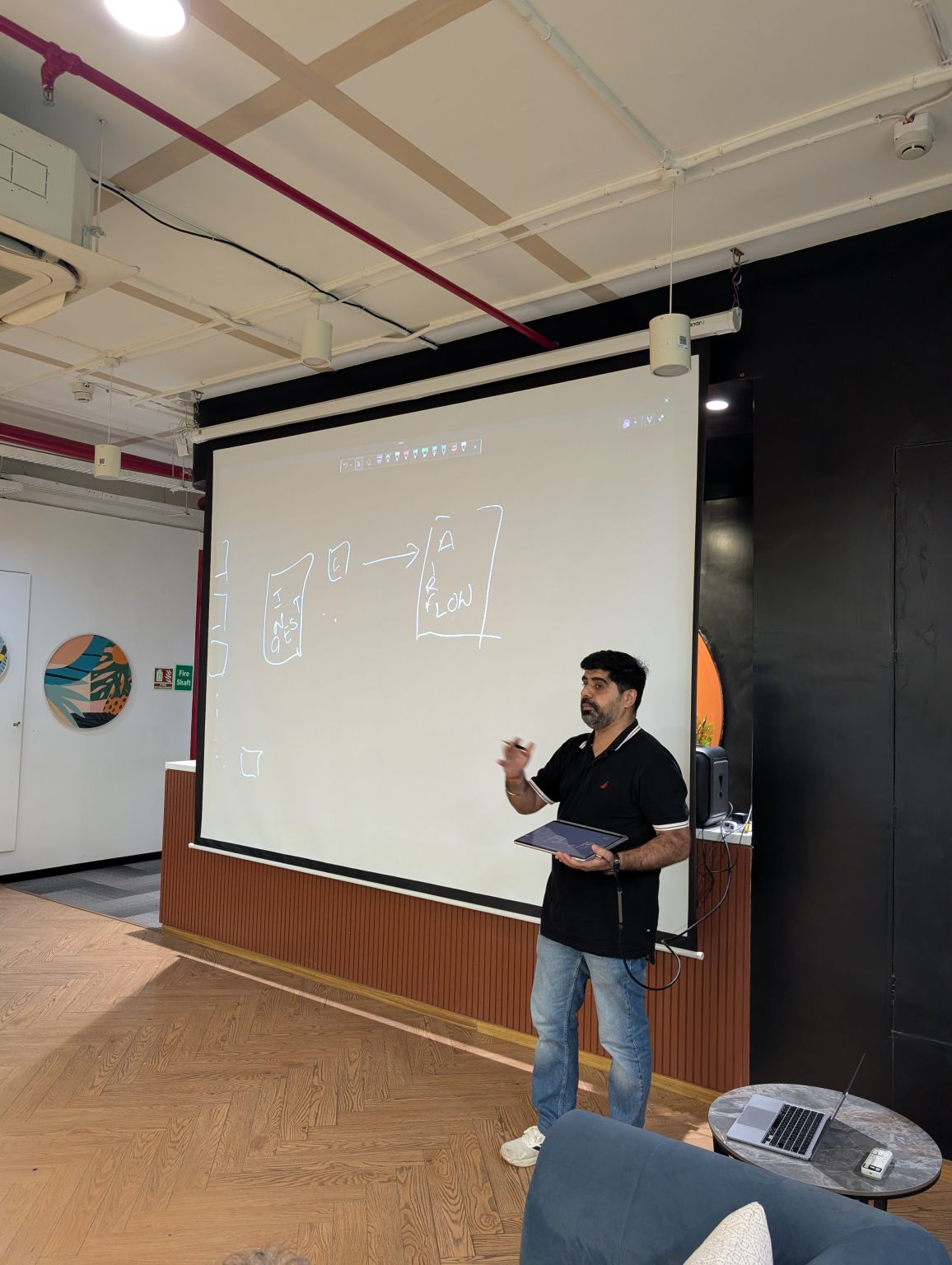
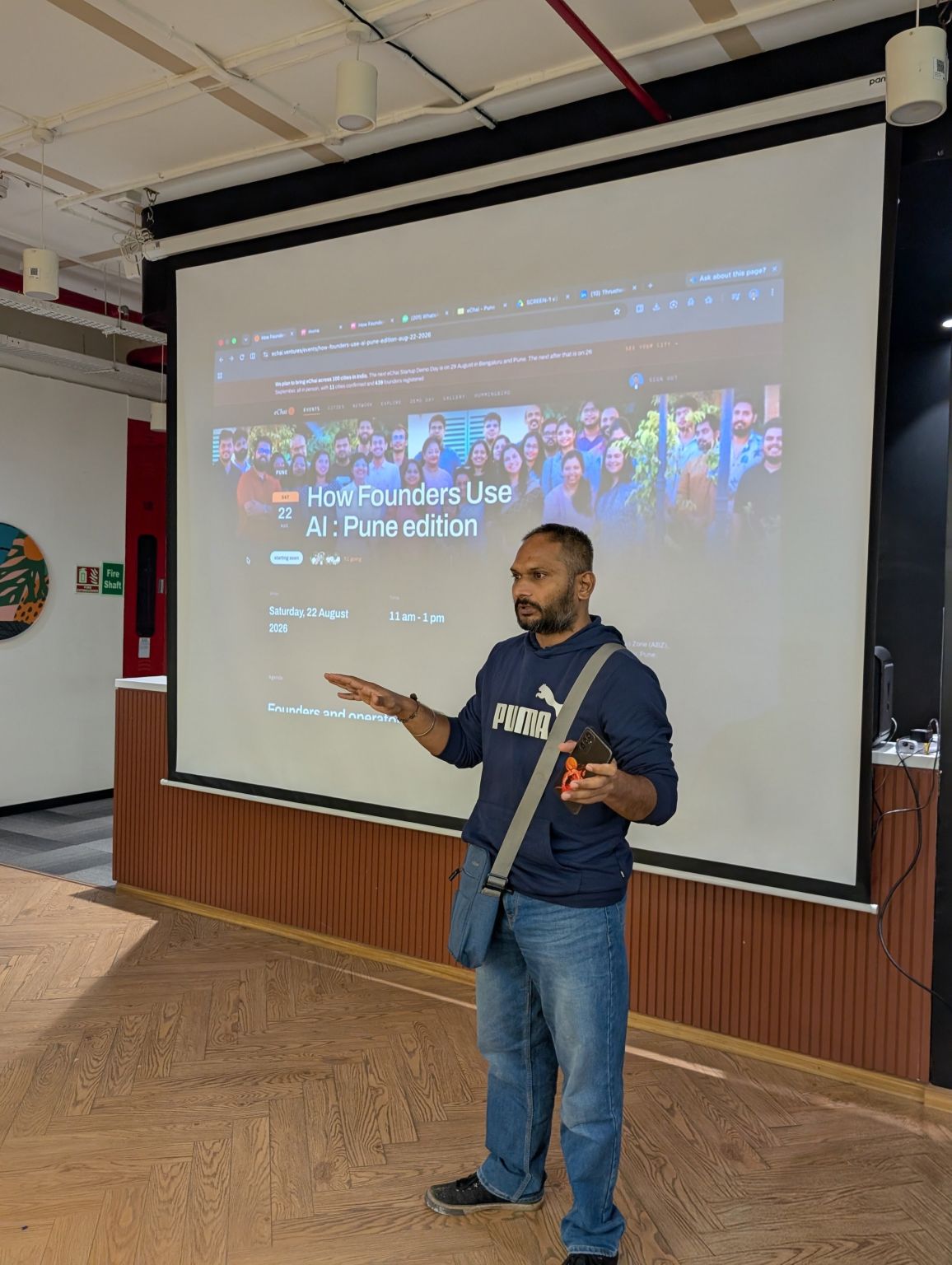
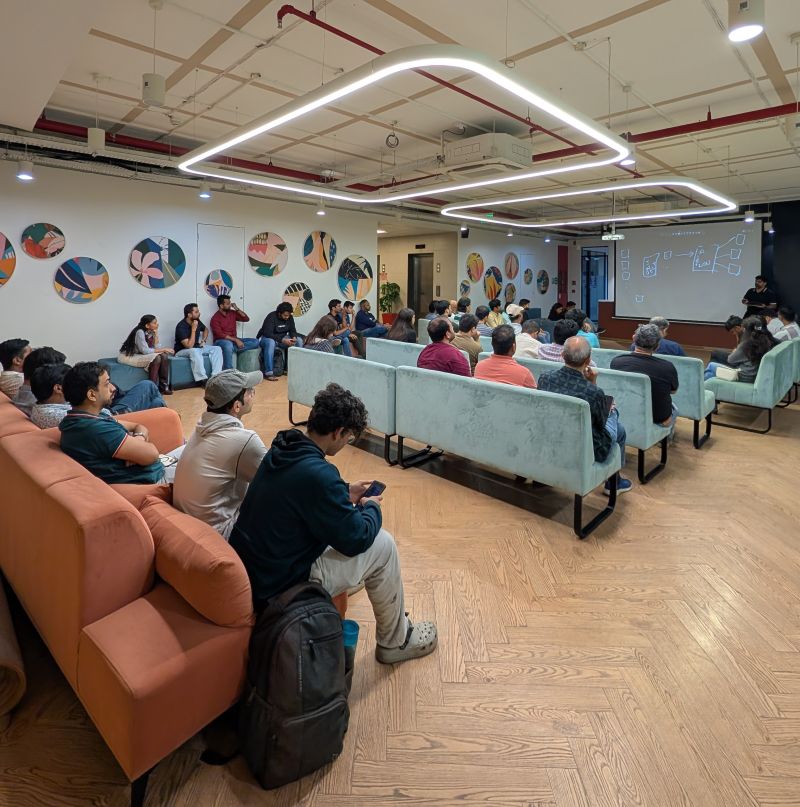
This Saturday, I attended an amazing meetup by eChai Ventures on “How Founders Use AI.”
As a developer, it genuinely expanded my horizon beyond just Copilot, Claude, Cursor, and AI agents.
I got the opportunity to meet people solving real-world problems across completely different industries — from marketing and sales automation to aerospace engineering and cloud infrastructure.
What fascinated me most was seeing how differently people think about AI when they are focused on solving a specific business or industry problem.
I was humbled by the knowledge and experience shared by the people I met. Events like these remind me that there is so much more to learn when you step outside your usual tech bubble.
For me, meetups like this trigger curiosity — and that's exactly what I'm looking for.
Looking forward to attending more meetups, meeting more builders, and understanding how people are using AI to solve real problems, not just write code faster.
If you're building something interesting with AI, I'd love to learn from you.
Thanks Chaitanya Badave for hosting this meetup.
#AI #ArtificialIntelligence #Startups #Founders #Pune #TechCommunity #BuildInPublic #AIBuilders #Networking
1 more on LinkedIn
View on LinkedIn →Vivek Trivedi of Clozzet on what go-to-market actually turned out to mean while building, as against the version people describe on stage.
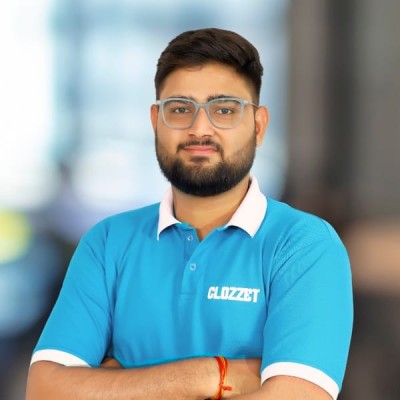
Vivek Trivedi
Co-Founder & CMO at Clozzet 🎯| Building India's one & only Hyperlocal Fashion Search Engine 📈
24 Aug 2026
GTM is probably the most misunderstood part of building a startup.
We often talk about GTM as running ads, building a sales team, or launching in a new market. But while building Clozzet, we’ve realised it is much simpler, and much harder. It’s about figuring out where your customers are, what makes them trust you, and what gives them a reason to come back.
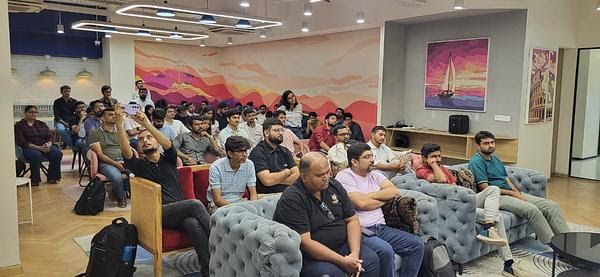
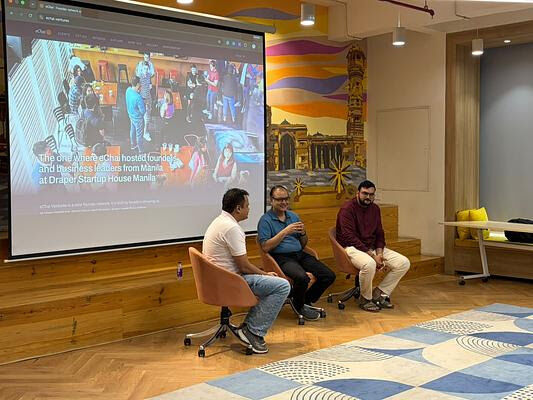
At eChai’s GTM & Distribution for Startups Ahmedabad Edition, I got the opportunity to share some of our GTM experiments at Clozzet, what worked, what didn’t, and how we’ve approached distribution while building in a highly fragmented offline market.
The most valuable part was hearing how other founders and operators are solving the same problem across completely different businesses.
One takeaway I’m taking back:
GTM isn’t a launch.
It’s a constant need for a startup, and you discover it by doing.
Thank you eChai Ventures Jatin Chaudhary for bringing together such a thoughtful room of builders.
And thank you Balkrishna Agarwal, Anil Salvi, and Vikas Mundhra for sharing your experiences and making the conversation genuinely practical.
Back to building.
#GTM #Distribution #Startups #Founders #Clozzet
eChai Partner Brands