Blessing in disguise
Books for Entrepreneurs
Documentary
eChai Wall of Love
How I Met My Co-Founder
In Focus Today
Insight Reports
Movies for Entrepreneurs
Notes from Podcasts
Slice of Startup Life
The First Hire
The First Welcome in Silicon Valley
The Reading Room
Unforgettable Lessons
The First Welcome in Silicon Valley: Mala Ramakrishnan, Managing Partner, Progressive Ventures
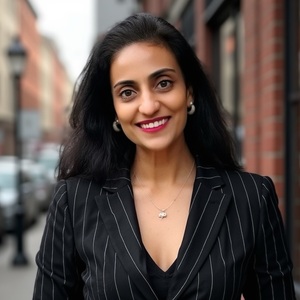

As part of The First Welcome in Silicon Valley series, I have been asking founder friends to share their stories of the first welcome they experienced in Silicon Valley. These are the people, the moments, and the gestures that stayed with them.
In this stream, Mala Ramakrishnan, Founder and Managing Partner at Progressive Ventures, shared memories from her earliest days at Stanford. With more than 20 years of operating experience and a deep focus on actionable insights for B2B AI SaaS, Mala has built her career on technology and people, and her first welcomes in the Valley reflect both.
"My first job as a grad student, was driving a golf cart around Stanford campus installing computers in the undergrad dorm rooms. I don't remember the name of the staff who hired me, just his face... and I was ecstatic - driving a golf cart before I was eligible for a driver's license, earning $12 an hour, and doing the thing I loved most in the world at the time - installing computers.
The two people who touched my life most, were Anand Chandrasekaran (who we affectionately call AK) and Dan Turchin, who invited me to write a business plan that got first place from Guy Kawasaki and got me on stage and published in some famous magazines.
The prof who was kindest and I learnt the most from, was Prof Leonidas Guibas who taught Data Structures and Algorithms and kindly let me be his TA for a few quarters, which covered my tuition and helped me truly understand data structures and algorithms that I can clearly explain them even today, after 25 years. He even took us out to eat Indian food in Amber India at the end of the quarter for working in his class. Amber Los Altos is still my favorite Indian restaurant from those memories."
Mala’s story shows that the first welcome can come in many forms. A job, a mentor, a professor’s kindness, even a shared meal that becomes a lifelong memory. These are the moments that stay with us and remind us that the Valley is not only about companies being built. It is also about people creating belonging for each other.
Why Founders Rename Their Startups


Founders fall in love with their first startup name. It is on the first t-shirt, the first invoice, the first pitch deck. It feels permanent. But startups do not stay still. Products shift, markets expand, ambitions grow. One day, the name that once carried everything suddenly feels too small. That is when founders make the hard call to rename.
For Chirag Panchal, that moment came after seven years of building under the name Enerlyf. What had started with three products and a scrappy spirit had evolved into something larger. “After 7 years with Enerlyf and three products, I knew the name no longer fit the vision ahead,” he said. “The customer personas had evolved, the positioning had become more premium, and the ambition had gone global. I wasn’t iterating anymore, I was building with intent. Climyn marked a fresh start, a bold new identity shaped by experience, driven by clarity, and built for global scale.” It is the same reason Backrub became Google, when the ambition went global the name had to grow with it.
For Alpesh Vaghasiya, the decision was about perception. In the beginning, UBSApp, short for Ultimate Business Solutions App, made sense for a simple HR and payroll tool. But as the company grew into a full operating system for work, the name itself began to feel limiting. “UBSApp sounded more like a tool than a brand,” he recalled. “The old name felt like a cage. It limited how people saw us, and even how we saw ourselves.” That realization gave birth to Superworks, a single word that, in his words, “was not just a rename, it was a rebirth.” Cure.fit made a similar call when it rebranded as Cult.fit, a tighter, sharper identity that signaled fitness at the core.
Rohan Desai did not plan to rename at all. His company started as PlexusMD, a LinkedIn-like community for doctors. Then the team built something new. “When we pivoted to a more learning-centric approach and a video-first platform, we chose to rename as Medflix,” he explained. “Our idea was to run both in parallel, but very quickly the new product eclipsed PlexusMD in traction and before we realised we had gotten a new identity!” The same thing happened when Burbn turned into Instagram, once the pivot takes over, the old name does not survive.
For Bhavesh Patel, it was about scale. Their first name, BrandSpot365, reflected a narrow promise, one ready-made post every day. But as the company began helping thousands of small businesses go digital for the first time, the name no longer matched the impact. “Something started nagging us,” Bhavesh said. “The name felt smaller than the value we were actually creating and it was long too. We were no longer just delivering posts, we were helping thousands of small businesses go digital for the very first time. That is when we renamed to Brands.live. It captured the bigger vision, to make every Indian brand come alive online, not just keep them on a daily content cycle.” Amazon went through the same shift, Cadabra was too small, too confusing, for the scale Jeff Bezos imagined, so he chose a name that suggested global dominance.
Yet sometimes it's not ambition but legal reality that forces a name change. Mahindra had to drop the "e" in BE 6e after airline IndiGo challenged the use of "6E", a call sign deeply associated with the airline. Mahindra retitled its electric SUV BE 6 to avoid delays and legal headaches
Yet sometimes it's not ambition but legal reality that forces a name change. Mahindra had to drop the "e" in BE 6e after airline IndiGo challenged the use of "6E", a call sign deeply associated with the airline. Mahindra retitled its electric SUV BE 6 to avoid delays and legal headaches
Renaming is never just cosmetic. It is painful, risky, and emotional, like letting go of a piece of your own history. But it is also an act of clarity. Chirag outgrew Enerlyf. Alpesh broke free from UBSApp. Rohan’s pivot made PlexusMD fade. Bhavesh realised BrandSpot365 was too small. And just like Google, Instagram, Amazon, or Cult.fit, they all discovered the same truth: a name does not define the company. The company defines the name.
The First Welcome in Silicon Valley: Aquibur Rahman, CEO of Mailmodo

Silicon Valley attracts founders from every corner of the world. They arrive with big dreams, fresh ideas, and the excitement of being at the heart of innovation. As part of eChai SF, I meet many of them, over coffees, at events, in conversations that stretch late into the night. What stays with me from these meetings is not just the talk of fundraising or partnerships, but the personal stories. Again and again, founders tell me about the people who made them feel at home. The first smile, the first coffee, the first friend who said, “You belong here.” That’s what I call the first welcome in Silicon Valley.
I started asking a few of my founder friends to share their own stories of the first welcome they received when they came here.
Aquibur is building Mailmodo, an email marketing platform that helps businesses get up to 3x higher conversions with interactive, app-like emails. With AMP-powered widgets like forms, surveys, scheduling, and quizzes inside the email, Mailmodo removes redirections and delivers a smoother experience. Backed by Y Combinator (S21) and Sequoia Surge, the company is simplifying email marketing and driving growth for a global customer base.
"Coming from India to sf was quite disappointing at first. In India, I am used to see people all around, often busy and sometime chaotic. In 2022, I landed in SF, took BART and came to market street to reach my hotel. And I was shocked. It was a foggy day with chill winds. I couldn’t find people on streets except a lot of homeless people. I didn’t imagine sf like that. I didn’t have any friends in sf then and couldn’t see sun for a few days. I was sad and questioning my decision to come.
Then I went to my first event. People were smiling at me and talking to me for no reason. That was a surprise too. I met Mariana. we talked for hours and became friends instantly. She invited me to meet her family and we brainstormed on our startups. Eventually she started working at Mailmodo in a year’s time. After a few events, I met Alan, who is a nice and kind soul. He invited me to stay at his place when he visited sf again while we were still strangers. Mariana and Alan are just two names but there are countless others who shared laughs, connection and ideas in the city. While the number of people less, each person is ambitious and working on something new. And most importantly they are open to help other people in their journey. That what makes sf so special."
Then I went to my first event. People were smiling at me and talking to me for no reason. That was a surprise too. I met Mariana. we talked for hours and became friends instantly. She invited me to meet her family and we brainstormed on our startups. Eventually she started working at Mailmodo in a year’s time. After a few events, I met Alan, who is a nice and kind soul. He invited me to stay at his place when he visited sf again while we were still strangers. Mariana and Alan are just two names but there are countless others who shared laughs, connection and ideas in the city. While the number of people less, each person is ambitious and working on something new. And most importantly they are open to help other people in their journey. That what makes sf so special."
Stories like Aquibur’s show what truly defines this place. It’s not just the technology or the capital, it’s the generosity. The first welcome turns a city into a community, and strangers into collaborators and friends.
So let me ask you, when you first came here, who welcomed you? What did they do, and how did it shape your path? And what stayed with you from that act of generosity?
The Finish Line Keeps Moving

In startups, some moments feel like the story is complete. The launch that finally happens. The first customer who pays. The funds that land in the bank. Each one feels like a finish line, the point where the struggle should ease.
Other times, it feels like the story is over for the opposite reason. Rejections pile up. Cash runs out. A venture doesn’t take off. That too feels like a finish line. But in startups, it is never really the end. What looks like the last page, good or bad, usually turns into the first page of the next chapter.
To explore this, I asked a few founder friends to share their own finish-line moments, the ones that seemed final but became the start of something new. These are their stories, in their own words.
...
...
For Riddhi Sharma, Co-Founder of Baby Organo, that moment came during fundraising:
“Sometimes you need to almost give up to realize the story isn’t ending, it’s just turning a page. When we started BabyOrgano, it was with a simple vision, to bring trusted Ayurvedic wellness to every child.
But the fundraising journey was brutal. After 40+ rejections, each ‘no’ felt heavier than the last. I still remember the evening after the 42nd rejection, I shut my laptop and told myself, maybe this is where BabyOrgano ends.
Around the same time, one of the emerging D2C-focused investors also rejected us. A few of our fellow startups got funded by them, and that stung even more. We felt defeated, and for the first time, truly considered giving up.
And then, out of the blue, came a call from DevX. That one conversation changed everything. They believed in us, invested, and stood by us as true partners.
From there, our journey transformed, from pre-seed to pre-Series A, into something far more fulfilling than we could have imagined. Looking back, I don’t think we would have come this far if we had received that earlier D2C investment. Sometimes rejection isn’t the end—it’s the redirection toward the right partner.”
...
...
For Nikita Maheshwari, Co-Founder of Tatkalorry, the failure of her first venture became the foundation of her second:
“So, my first business, Tile Bazaar, was like running a 400-meter dash. The finish line felt so close, so real. But when it failed, I didn’t see it as the end of a race. I saw it as the moment I finally understood the real problem was never about selling tiles, it was always about getting them from point A to point B.
This was my ‘finish line that wasn’t.’ It was the moment I stopped looking at Tile Bazaar as a finished chapter and started seeing it as a detailed case study. The failure wasn’t a period at the end of a sentence; it was the comma that led to a new one.
That’s how Tatkalorry was born. The finished line of one venture was the precise starting point for the next. The failure of one dream led to the practical solution of a bigger problem.”
...
...
For Nikunj Thakkar, Founder of Upsurge Ventures and earlier Founder of Shoppr, the finish line came during the pandemic:
“When we launched Shoppr, momentum was strong. We were adding users, getting feedback, and even planned a US/Canada trip to raise funds. Then Covid hit. With limited runway, what was supposed to be a growth fundraise turned into a survival fundraise. Rejections piled up, and it felt like the end of our startup journey. But that ‘end’ led to an acquihire with Whatfix, where I launched a new product line and started the next phase of my journey.”
...
...
For Utpal Vaishnav, Founder of Upsquare, a failed attempt abroad became the foundation of his next win:
“In 2018, I was in South Korea chasing an Oxygen Concentrator venture. The numbers flopped. I came back empty-handed but with crystal clarity: that wasn’t my thing. That clarity sparked my next play, a cluster of 3 apps that made ₹1 Cr profit in the next 14 months.”
...
...
For Mrinal Rai, Co-Founder of Intugine, a project taken up for survival opened the door to a much bigger opportunity:
“Back in 2018, we were still a B2C company building a wearable device called Nimble to play games and control smart devices with gesture control and voice commands. Because of multiple manufacturing issues and struggles, we started taking B2B projects to sustain ourselves. In that journey, we took up a project to help enable the tracking of the Big Billion Day sale. The project was very crucial for us as the revenue from it was needed to sustain us and pay salaries to our employees.
The project was actually a success and it served the purpose of sustaining us for the next 4 months, but more than that, it was the start of our pivot from a B2C wearable startup to a B2B SaaS startup. The realization that a company as big as Flipkart was struggling with a solution to track their consignments helped us see that this was a much larger problem for large enterprises.
Today, we work with 100+ clients and track close to a million trips every month. I could never have imagined back then that we would one day be building in the supply chain domain.”
...
...
For Nadeem Jafri, Founder of Hearty Mart, the decision was stark, close shop or reinvent:
“After 4 years into business at Juhapura and one franchisee already operational, we still found ourselves not doing well on the balance sheet. We had to decide our next step — to close the shop or act differently to survive. We decided to enter bulk business just to support our retail operations. Today this bulk business has turned out into a large enterprise with around 100 employees and multicrore turnover.”
...
...
For Bhavesh Patel, Co-Founder of Brands.live, an ending turned into reinvention:
“The day I wound down my advertising agency in 2019 felt like the finish line of my creative career, after years of working with India’s top brands, I believed I’d achieved my professional ambitions. But that moment quickly transformed: I realized true impact comes when creativity reaches millions of Indian businesses, not just a few big names. So, what looked like the end was actually the beginning of my journey as a startup founder with Brands.live.”
...
...
For Eashita Maheshwary, Community & Growth at Razorpay Rize, even stepping away from being a founder turned into a new chapter of impact:
“In 2022, I stepped away from my previous startup. I was no longer a ‘founder’ and wasn’t sure of my identity in the ecosystem. I still had my work, network, and peers, but it was time to rebuild.
Over the next 14 months, I travelled to 10+ new cities ranging from Guwahati and Guntur to Kolkata and Jaipur only to meet founders, investors, and enablers; ran sessions and workshops at 15+ events, including a few top IITs; helped build business verticals for a few startups; and realised that sometimes your work speaks for you. That journey has enabled me to lead one of the country’s most impactful D2C communities (Razorpay Rize D2C+) feeling like a pseudo co-founder to 300+ brands.
The only way to keep growing is to keep going. Your network and peers often help you embrace the finish line that keeps moving.”
...
...
And for Mitesh Shethwala, Founder of Currently, what looked like arrival instantly shifted into the next challenge:
“After a grinding first year stuck at ~30 DAU, we rebuilt Currently from the ground up using twelve months of user calls and UX rewrites, and within weeks of relaunch, usage started compounding hour by hour to 12,000+ DAU.
The ‘finish line’ of acquisition instantly moved to a new race: scaling infra, support, and uptime so we could serve everyone without a minute of downtime.”
...
...
Each story is different, but the pattern is the same. In startups, the finish line never really arrives. What looks like the end is almost always the beginning of something else. The story keeps moving forward.
Worry Is the Signal, Work the Response

Founders worry. All the time. Payroll is due but a client’s payment hasn’t come in. A key customer leaves without warning. A teammate hints at moving on. An investor who seemed excited goes quiet. Sometimes it’s a shipment stuck in transit. Sometimes it’s a competitor launching the same feature you’ve been building for months. Sometimes it’s simpler, you plan a brand event, but registrations are far lower than you expected. Worry sneaks in, and once it does, it loops in your head.
Telling yourself to stay calm rarely works. Worry doesn’t leave just because you want it to. That’s because worry is not useless. It is a signal. It points to the money, the product, the people, or the growth areas that need your attention. And once you see the signal, you need a response.
The best response is action. If you’re worried about payroll, chase down the late payment. If you’re worried about churn, call the customers who left. If you’re worried about the event, reach out and invite more people. If you’re worried about competition, make your product better. The worry won’t vanish overnight, but the act of doing makes it lighter. Work steadies the loop.
Sometimes that action starts with a pause. An evening with friends, a walk, or a meal without your laptop won’t fix the problem, but it clears the head. And often, that space is what lets you return to the work with more energy and focus.
So worry is the signal. Work is the response. One shows you where to look, the other helps you move forward. The question is never whether worry will show up. The question is how you’ll respond when it does.
eChai Partner Brands
eChai Ventures partners with select brands as their growth partner - working together to explore new ideas, open doors, and build momentum across the startup ecosystem.


.jpg "iKomatch - An AI Powered digital Investment Banker with personalized investor outreach to upto 10k+ investors.")

