This is GPT-6 Astra.
Anything you can do on a computer, Astra can do for you. Fast.

A macOS simulator written in 75 minutes. An old drawing of a steam train rebuilt in Blender as 3,295 editable objects. A game that took one prompt. We are collecting the best of it here, each in the builder's own words. Nobody in these bylines is on eChai, and every post links back to where it was written.
OpenAI released GPT-6 Astra on 3 September, and the capability it leads with is the computer rather than the chat window: filling in online forms, updating records in a CRM, organising a calendar, running research and drafting it into your email or document editor, building a site and then checking the features on it work. The speed claim in the post has numbers behind it in OpenAI's own write-up, 72.6% on OSWorld 2.0 at around 40 minutes a task against GPT-5.6 Sol's 65.7% at around 75, and 1.9x faster completion on Mind2Web once the updated Codex harness is counted. It reaches a limited set of organisations first and Plus, Pro, Business and Enterprise over the coming days, with the API at $10 per million input tokens and $50 per million output, and a Fast mode at twice that price for up to twice the speed. One line matters if you are building on it: OpenAI says Astra meets the Critical cybersecurity threshold in its own Preparedness Framework, so it ships with checks that can pause a task in ChatGPT or Codex and stop it outright in the API, and it will refuse work like writing proof-of-concept exploits until access is widened. A lot of the founders on eChai run their week through a browser and a spreadsheet, which is the work this is pointed at.
 OpenAI
4w
OpenAI
4w
This is GPT-6 Astra.
Anything you can do on a computer, Astra can do for you. Fast.
Vaibhav Srivastav is at OpenAI, and was at Hugging Face before that, so this is written from inside the team that shipped the model. The five lines in the middle are the part to keep: what to change in your own prompts and AGENTS.md now that Astra follows instructions more closely than the model before it.
 Vaibhav (VB) Srivastav
4w
Vaibhav (VB) Srivastav
4w
GPT-6 Astra is now available to all Pro, Enterprise and Business Premium users in ChatGPT Work and Codex. It’s also live in the API.
It's a phenomenal model and I love every second working with it!
Astra follows instructions more closely, so revisit your prompts and skills:
> Make “can you…” mean “do it”: finish authorised work and prepare a reviewable result before seeking approval.
> Audit AGENTS.md and skills. Ask it to identify the exact file and rule blocking progress. Prioritise your request over skill guidelines.
> Specify short paragraphs, plain language and phrases to avoid.
> Ask for subagents on independent work when it improves speed or quality.
> Run relevant checks. Repeat or expand only for changes, failures or unresolved concerns.
To push it to it's limits, I gave it a prompt to build a real-scale video fly through of nürburguring track in blender and it did not disappoint!
Enjoy! ✨
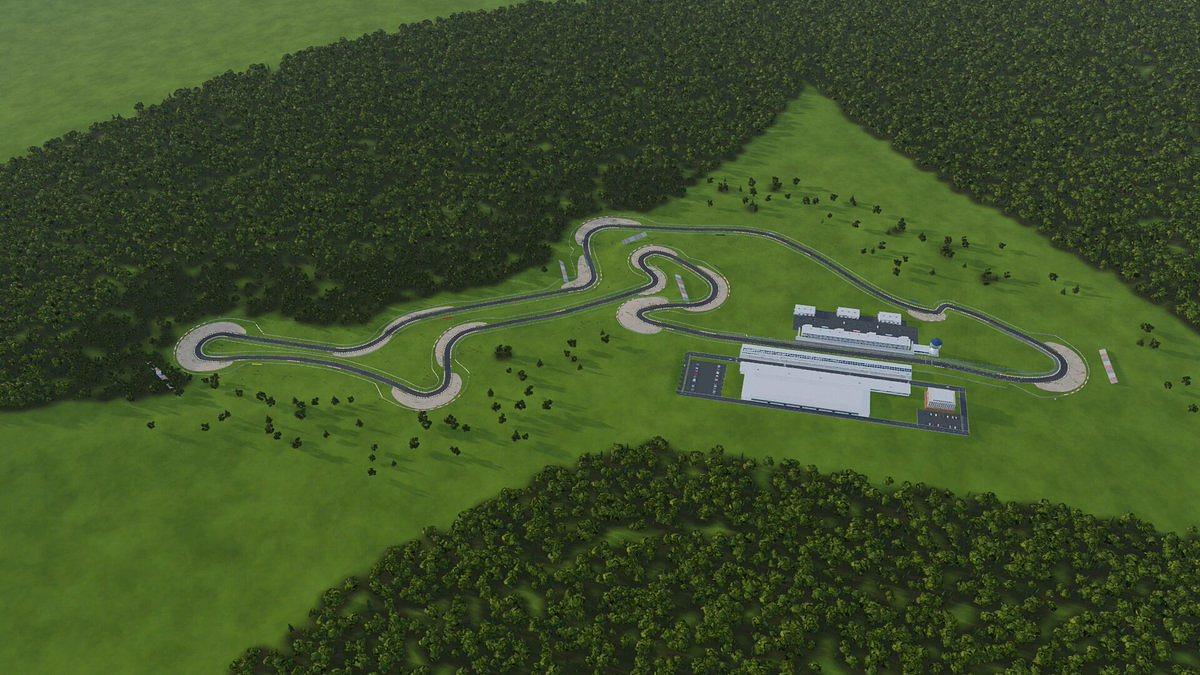
Miguel Ángel is a product engineer at HeyGen, and HyperFrames is HeyGen's own product, so this is the model being used on the thing he builds all day.
 Miguel Ángel
4w
Miguel Ángel
4w
Astra is too good making @HyperFrames_ videos!
 Shikhar
4w
Shikhar
4w
Astra is so cracked at Blender.
You can literally one-shot game assets with it.
Theo runs T3 Chat and makes videos about web development. Almost everything else in this collection is somebody building a new thing in one sitting; his six suggestions are all maintenance on code that already exists. He asks the model to audit a codebase for what he calls slop, useless tests and unnecessary function wrappers, to work through open pull requests and issues, and to take over a branch that has been stuck for months with permission to throw the existing work away. He says he has closed at least 200 pull requests and issues this way.
 Theo - t3.gg
4w
Theo - t3.gg
4w
Astra is rolling out now! It's unbelievably powerful, but you have to push it a bit to really see the difference.
I wanted to give some examples of what I mean here. Here are some fun things to try in your codebases when you get access:
1. Slop audits
I have asked Astra to go through all my codebases hunting for slop. Useless tests, unnecessary function wrappers, stuff like that. Surprisingly effective. It's cleaned up a ton of code for me.
2. Hunt for performance wins
Astra has found a ton of performance wins in my apps. It can make hard cuts and verify the results. Make sure you give it the tools it needs to verify it's changes. On that note...
3. Improve agent dx and verification loops
This model is surprisingly aware of what it can do. Ask it what it needs to verify it's own work. Let it suggest improvements to setup and worktree flows, debug access, end to end QA flows, etc.
4. Audit open PRs/issues
I've had Astra close at least 200 PRs and issues at this point. It also does a great job of finding easy win PRs to merge. Super helpful for projects with lots of contributors (both OSS and internal repos)
5. Let it merge
Once you get used to the model and it's ability to verify work, try trusting it a bit more. Obviously don't let it yolo ship to production, but if you have a good flow for pr -> main -> staging -> prod, maybe roll the dice a bit?
6. "takeover" work that is stuck in a loop
I've had this model land PRs that were stuck for months. If you have some old branch or PR where your agents are running in circles, blowing up the spec without actually shipping, tell Astra to take it over. Make sure it knows it can throw away the existing work and start from scratch.
Hope these help you guys with really pushing the new model! I've had a blast with it, I hope y'all do as well :)
Note: I cannot be held responsible for surprise bills and limit usage
 Angel 🌼
4w
Angel 🌼
4w
I asked GPT-6 Astra to make a portfolio inside a console similar to a Gameboy and LOOK AT THIS
It's so so so good, a huge jump from GPT-5.6
 Derya Unutmaz, MD
4w
Derya Unutmaz, MD
4w
I’m now making a World of Warcraft inspired single-player RPG with some RuneScape elements for the browser with GPT-6 Astra. I literally had the idea while drinking my morning coffee and thought… while I have another Astra project to develop treatments for cancer is ongoing, why not start this too! 😅
It’s still a very early version, but it’s already actually playable! Combat works, you can chop down trees and gather resources, and I’m starting to build out the world, progression, quests, loot, item tables and other RPG systems. I know this will surprise some but I used to be a serious gamer, I just know this stuff hah!
Maybe I’ll eventually turn it into an MMORPG so we can form rival Codex vs. Claude vs Grok guilds, but no cheating with the AI bots. 😂
The prompt reads one named reviewer's comments across the last fifty pull requests in every repo and ranks what they keep flagging. What ends up in AGENTS.md is what a team has already been asked for repeatedly, rather than a style guide somebody wrote once and nobody reads.
 Vox
4w
Vox
4w
As soon as you get Astra, run this in Codex:
“Use gh to scan the 50 most recent PRs in each GitHub repo under [CODE DIRECTORY]. Find the issues [REVIEWER GITHUB USERNAME] keeps flagging. Rank them by frequency and link the relevant PRs. Wait for my approval, then add only the rules I choose to ~/.codex/AGENTS.md.”
Codex reads ~/.codex/AGENTS.md at the start of every run, so those rules no longer depend on the reviewer repeating them.
 Dan Shipper
4w
Dan Shipper
4w
Astra one-shotted the first draft of its own vibe check for @every 🤯
we learned Astra was launching at 3 am yesterday morning. by 7 am we had a 3,000 word vibe check written.
 Bhavy☄️
4w
Bhavy☄️
4w
GPT-6 Astra vs Kimi K3 vs Fable 5.1 vs Sol
Astra is a beast at 3D scenes, a clear jump up from Sol.
Kimi K3 is real competition. It generated this for $2.3. Waiting on Kimi K3.1.
With Fable 5.1, I was expecting a much better result.
Greg Isenberg posts a startup idea a day, and here that habit is pointed at Astra: nine prompts written as jobs to hand over rather than questions to ask, most of them the model working a browser on its own.
 Greg Isenberg
4w
Greg Isenberg
4w
9 cool GPT 6 Astra prompts worth trying:
1. The bill renegotiator.
"Go through my internet, phone, and software bills, jump into each provider's chat support, and negotiate them down or cancel what I'm not using."
2. Turn an agency into software.
“Pick one service business in [niche] and reverse-engineer the exact workflow they sell to clients. Break it into steps, tools used, inputs, outputs, human judgment points, and places where the work gets slow or expensive. Then design the simplest AI product that could replace the first version of that service and charge $500-$5,000/month.”
3. Garage sale flipper.
"Watch Facebook Marketplace and Craigslist in my city for [cameras / furniture / bikes] listed way under market, and text me the second one's mispriced with the link."
4. Create my 1 person company dashboard.
“Look at my docs, notes, Stripe exports, analytics, customer calls, and project list, then build a weekly operator dashboard. I want to know what is making money, what is wasting time, what customers are asking for, what I should stop doing, and the three highest-leverage actions for next week. Be blunt and show your work.”
5. Audit my company for agent opportunities.
“Look at how this business works and find the tasks we should give to agents before hiring another person. For each task, estimate the current human time, the cost of mistakes, the tools involved, the difficulty of automating it, and the first safe version we could deploy. Prioritize things that save money or create revenue within 30 days.”
6. Be my browser operator.
“Use the browser to complete this workflow: [workflow]. As you go, click through the actual sites, collect the data, fill the forms where appropriate, and keep notes on what broke or slowed you down. When you’re done, give me the output, the repeatable SOP, and the automation plan so this can become an agent.”
7. The whole QA team.
"Every night, open my app on a real phone, go through signup, checkout, and the main flows, and screenshot anything that's broken or confusing."
8. The competitor spy.
"Sign up for my top 3 competitors, sit inside their product and their emails, and send me a monthly report on every new feature, price change, and thing they do better than us."
9. Make a game people would actually play for 5 minutes as a lead magnet
“Build a browser game around this mechanic: [mechanic]. Don’t just make a cute demo; add progression, tension, scoring, failure, polish, and one reason someone would send it to a friend. Then add lead capture (email/sms), it needs to tie into my core product which sells XYZ.”
 Viktor Oddy
4w
Viktor Oddy
4w
GPT-6 Astra Is Finally Here (And It's REALLY Good)
One-shot anything.
 Tim Jayas
4w
Tim Jayas
4w
GPT-6 Astra vs teffa-alpha (Qwen's unknown model)
unknown model codename "teffa-alpha" got spotted and as per rumors it's very likely Qwen3.8-Max-0902
here's the one-shot output from teffa-alpha compared to gpt-6-astra
 Feraser
4w
Feraser
4w
I gave the new GPT-6 Astra one task:
Build an interactive 3D turbocharger. Separate every working system. Let me rotate it, isolate parts, and see what the machine is actually doing.
It returned this.
 Daniel Ch
4w
Daniel Ch
4w
BREAKING: GPT-6 Astra one-shots motion videos
Generated this video in 14 minutes, only did 2 changes.