Muse Code is out of beta and now built to handle bigger, more complex engineering tasks. Developers can get started with one command today:
curl -fsSL https://dev.meta.ai/install.sh | bash

Mark Zuckerberg co-founded Facebook, now Meta, and is its chief executive. Muse Code is Meta's coding agent, worked from the terminal and built on Muse Spark 1.2, a coding model trained alongside the agent rather than wrapped around a general one. It keeps a repository of thousands of files in a 1M-token context window, splits a large job across sub-agents that each work in their own git worktree so parallel edits do not collide, and prints every sub-agent, tool call, steer and cancel to an event log. Muse Code is not new today: it opened in early beta on 5 August 2026, priced from $5 a month with $15 and $50 tiers above it, and a cheaper contributor tier in some countries in return for Meta training on your prompts and completions. What this post adds is that the beta is over.
 Mark Zuckerberg
Muse Code is out of beta and now built to handle bigger, more complex engineering tasks. Developers can get started with one command today:
curl -fsSL https://dev.meta.ai/install.sh | bash
 Jash Gor
 2w
2w
🚁 *Introducing Vayu Veer UAV Systems by RCSL — Engineered for Critical Missions.*
Proud to share *Vayu Veer*, a versatile UAV family developed to support diverse real-world operational requirements.
One UAV family. Multiple mission capabilities:
🔹 *RX4* — Surveillance & Thermal Intelligence
🔹 *RX7* — High-Speed FPV & Precision Payload Delivery
🔹 *RX8* — Heavy-Lift Firefighting, Rescue & Logistics
🔹 *RX9* — 30 kg Heavy-Payload Operations
From infrastructure inspection and night surveillance to firefighting, emergency response, rescue operations, and critical logistics, *Vayu Veer is designed to take capability where it matters most.*
What stands out is its *mission-ready and modular approach*, built around practical operational needs.
🇮🇳 *Vayu Veer UAV System by RCSL*
Designed for critical missions. Built for impact.
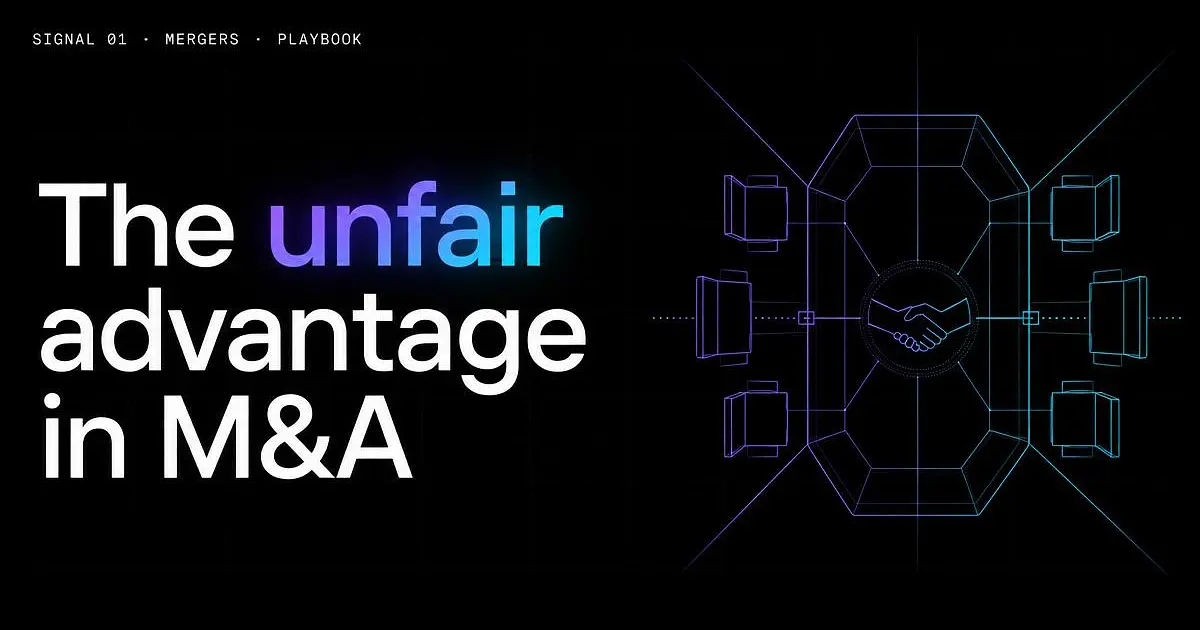
Image from Stir Advisors
From Stir Advisors
The best exits don't start when the banker enters the room. They start twelve to eighteen months earlier, in the quiet work of tightening margins, cleaning cap tables, and rehearsing the narrative until it's the one buyers repeat back to you.
By the time due diligence begins, the outcome is largely priced in. What looks like negotiation is often just discovery, the buyer verifying what your positioning already told them.
At Stir Advisors we treat sell-side mandates as an operating programme, not a brochure process. [...]
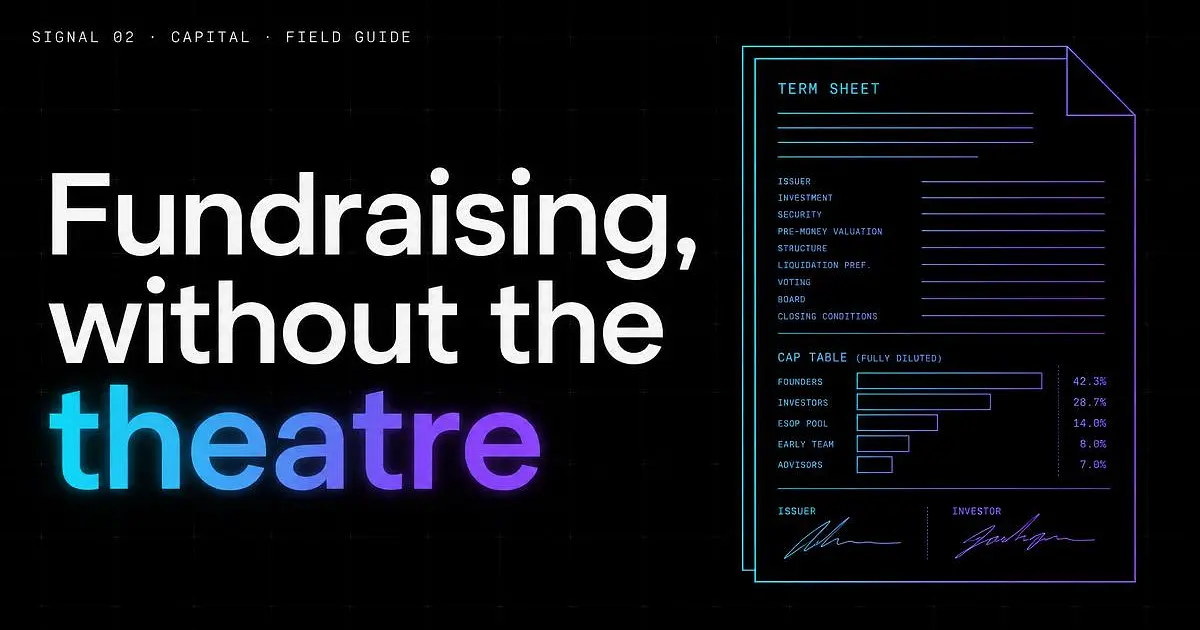
Image from Stir Advisors
From Stir Advisors
Most rounds are lost in the meeting before the meeting, the informal partner call that decides whether your deal even reaches the Monday partnership.
Term sheets are downstream artifacts. If the narrative, comps, and champion are wired correctly, terms tend to normalise. If they aren't, no clever mechanic recovers the round.
Whether equity, debt, or structured capital, dilution and cost of capital are the last things to negotiate, not the first things to fear. Clarity of use of proceeds and path to liquidity always outrank valuation theatre.