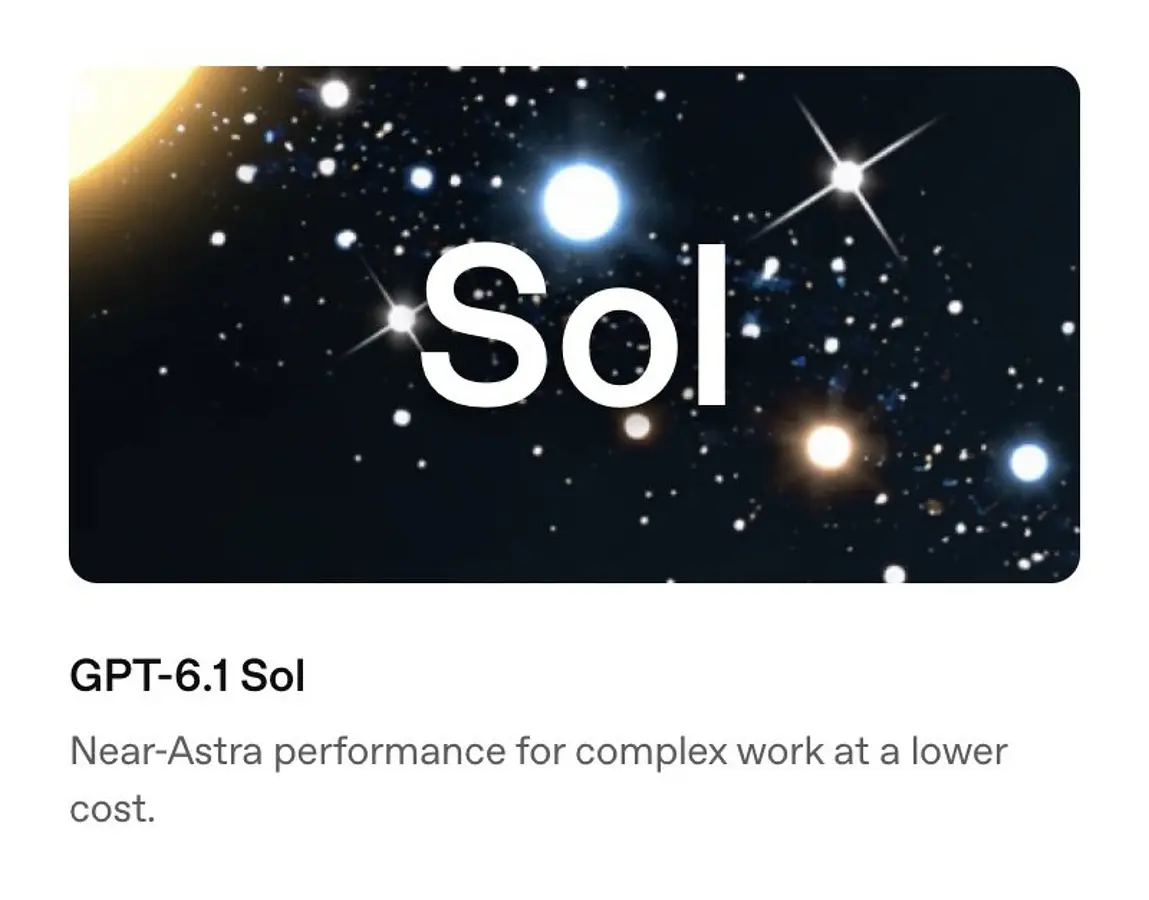
GPT-6.1 Sol: near-Astra intelligence for a fifth of the price.
It’s the most cost-efficient model for its performance available today.

What is being built with AI, how it is put to work, and what happens when it goes wrong.
GPT-6.1 Sol went live in the API a few minutes before the keynote began. OpenAI's launch page says it matches GPT-6 Astra on its real-codebase coding benchmark at about a fifth of the cost, at $2 per million input tokens, $0.10 cached and $10 output.
 OpenAI
GPT-6.1 Sol: near-Astra intelligence for a fifth of the price.
It’s the most cost-efficient model for its performance available today.
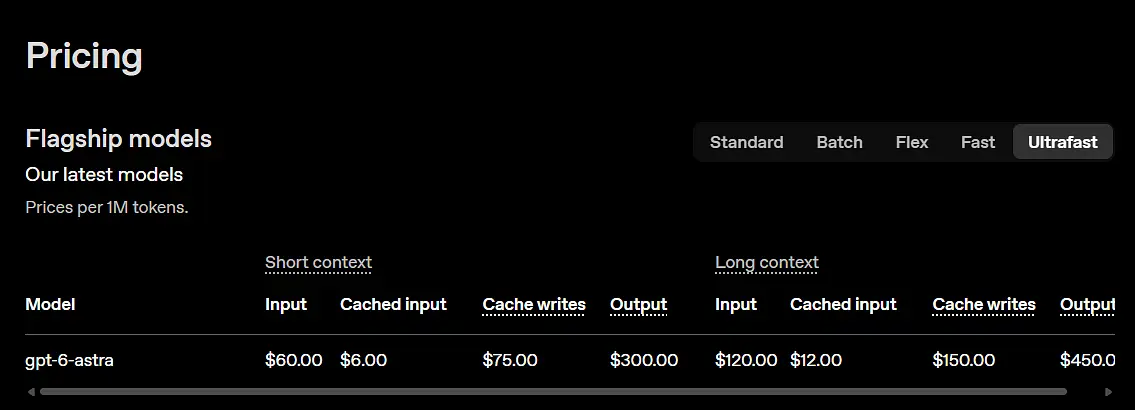
Tibo on the same launch, and the speed tier that came with it. OpenAI's recap puts Ultrafast at up to eight times the standard speed in Codex (300 tokens a second) and up to six times in the API, on Astra today and on 6.1 Sol soon.
 Tibo
Tibo
Introducing 6.1 Sol, near Astra intelligence at one fifth of the price of Astra and 95% cache read discount. It is an absolute workhorse.
Combined with ultrafast for 8X speeded available today for Astra and coming soon for 6.1 Sol.
Token Gremlin's read of everything announced, posted twenty-four minutes into the keynote.
 Token Gremlin
I read through basically everything OpenAI announced at DevDay so you don’t have to:
→ GPT-6.1 Sol is here, better at coding, computer use and agentic work, while staying much cheaper than Astra.
→ Astra Ultrafast, basically Astra on steroids. Much faster in ChatGPT Work, Codex and the API.
→ Dots: they’re persistent Astra-powered agents with their own cloud computers. You give them goals, connect apps, set permissions, and they can keep working for you over time.
→ Codex is getting way more autonomous, with parallel agents, cloud environments, mobile remote access, voice, worktrees, automatic code reviews and more.
It’s moving further away from “AI coding assistant” and closer to “AI software engineer that actually does stuff.”
→ Agents can now use computers more directly, OpenAI is bringing computer use deeper into the Agents API, along with multi-agent orchestration and better tool handling.
→ ChatGPT is becoming a workspace, there’s a new ChatGPT Space for keeping projects, context, goals and previous work together.
→ Pages and Slides are getting much more powerful, with live dashboards, charts, connected data and collaborative presentations directly inside ChatGPT.
→ Plugins are becoming more like actual apps, with interactive interfaces, sidebars, custom viewers and even event triggers.
So instead of just asking a plugin something, apps can increasingly become part of the workflow itself.
→ ChatGPT is going deeper into Slack and Teams, It can join conversations, investigate things, prepare updates and use connected tools directly from chats.
→ Meeting agents, that can record meetings, save notes, extract decisions and turn them into follow-up work.
→ “Sign in with ChatGPT”, basically the ChatGPT version of “Continue with Google.”
→ New $500/month Pro tier with more limits and exclusive Astra Ultrafast access in Work and Codex.
There are a bunch of smaller announcements too, but these are the ones I think actually matter.
OpenAI's launch film for dots, which runs two and a half minutes and plays where it was posted. Dots have a cloud computer and browser of their own, reach more than 4,000 apps through ChatGPT's plugins, learn from feedback, and can be messaged or called in ChatGPT and messaged in Slack and Teams. Each person starts with one primary dot and names it, and OpenAI says teams of dots come later. When a dot works in the background on its own, OpenAI's page says it is limited to read-only tools.
 OpenAI
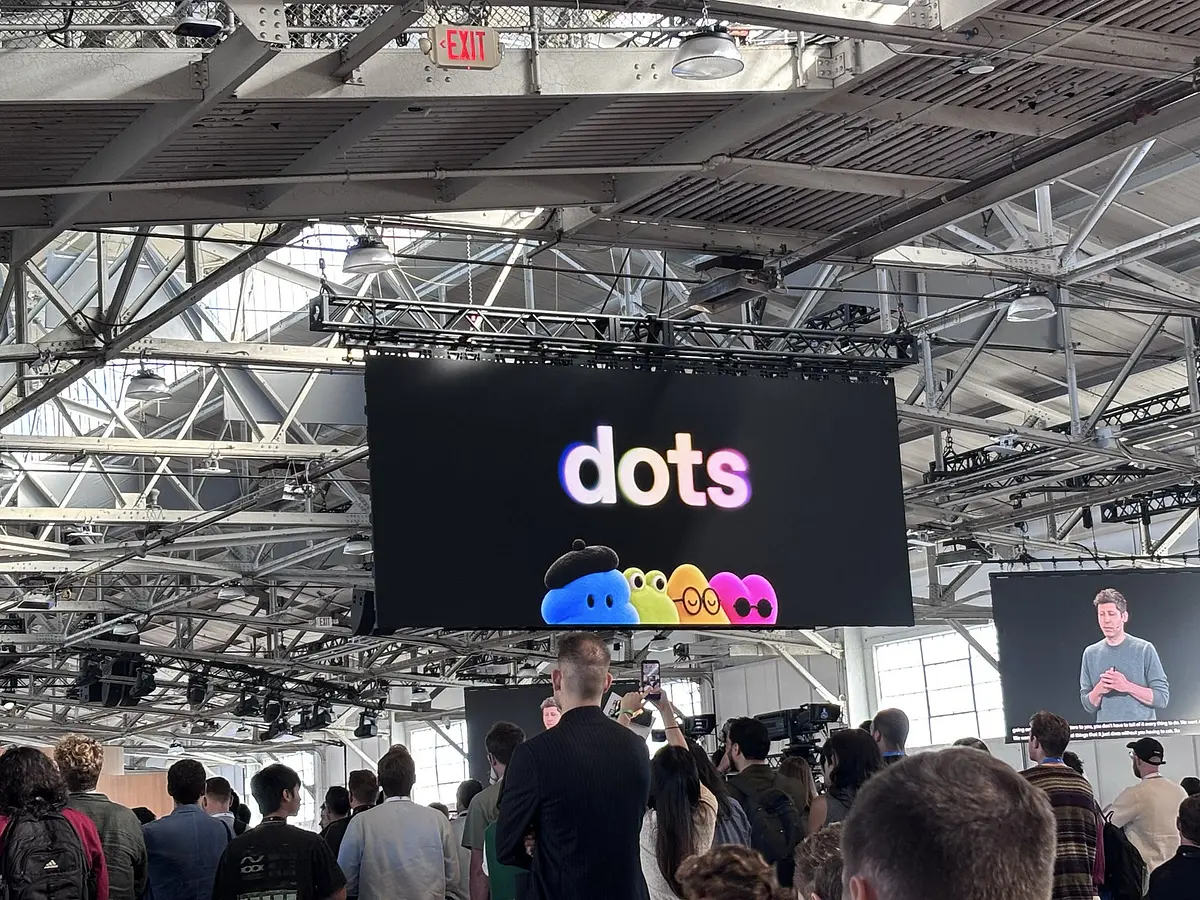
Introducing dots, powered by GPT-6 Astra.
Remarkably capable, always-on agents built to handle everything.

From the Hacker News thread on the dots launch page, minutes after it went up. At launch, dots are on Pro, Business Premium and Enterprise plans only.
cartersj, in Hacker News
This feels like a mass-market push.
The cost is going to be hard for many consumers to reconcile though. Free, Go, and Plus are probably the most popular consumer-facing plans, and Dots isn't available on any of those.
Who knows, maybe they think enterprise will pick up and run with Dots? Seems unlikely.
Tibo on ChatGPT Space: a shared home where a team, ChatGPT and their dots work on the same pages.
 Tibo
Tibo
Announcing ChatGPT Space, a collection of new collaborative experiences right in ChatGPT.
Edit rich notes with live visualizations together with others and your dots. Whether it’s a TODO list to delegate, a product plan or meeting notes. Working with others and your agents is seamless and they also be automatically kept up to date in the background. For developers, this is AGENTS.md taken one step further.
Elvis Saravia, who builds DAIR.AI and was at Meta AI before it, also had dots for a few days before the launch and used it to organise the trip to DevDay.
 Elvis Saravia
OpenAI announces dots.
I have been testing it for the last few days and it’s something special.
Proactive capabilities are really great.
I used it to organize my entire DevDay from travels to session/meetings setup.
It has its own computer.
Has come great note taking tools for organising work and it’s only going to get better for collaboration.
A lot of work ahead but it’s already fun and useful.
From the Hacker News thread on the GPT-6.1 Sol launch page. Anthropic released Claude Sonnet 5.5 the day before.
gradus_ad, in Hacker News
Ominous for the industry and investors that token price is becoming the main battleground. Could be Anthropic's rationale for IPOing this year.
Token Gremlin, reading the API's price list minutes after GPT-6.1 Sol appeared in it. The unchanged prices are the point OpenAI's own page makes: the same money buys a model it says is close to Astra.
 Token Gremlin
GPT-6.1 Sol pricing is showing up as:
$2/M input
$10/M output
$0.10/M cached input
$2.50/M cache writes
Looks basically unchanged from GPT-6 Sol pricing (unless I’m missing something).
Now I really want to see where the actual gains landed in the benchmarks.
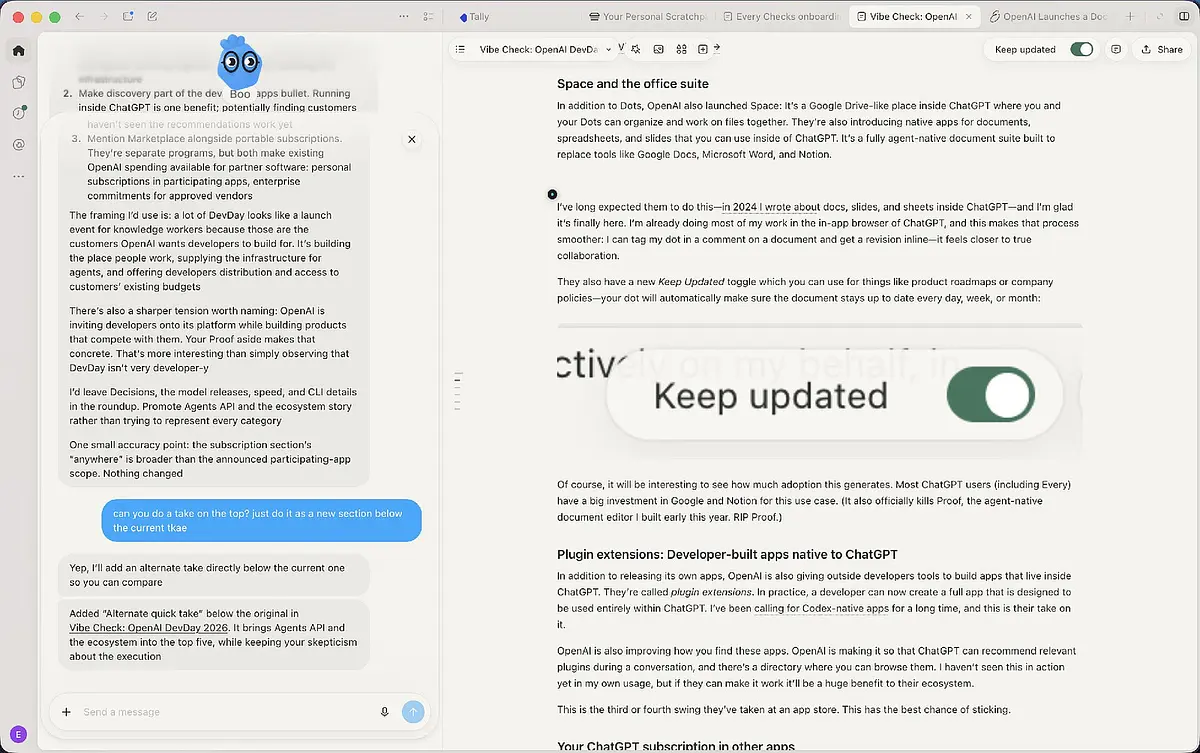
Dan Shipper of Every on what Space changes: documents an agent can edit directly rather than through a browser pointed at somebody else's app.
 Dan Shipper
BREAKING:
@OpenAI just launched Space, an agent-native office suite.
It's a Google Drive–like place inside ChatGPT where you, your Dots, and your team can organize and work on files together. OpenAI is also introducing native apps for documents, spreadsheets, and slides that you can use inside ChatGPT and with Space.
The obvious win is that you stop switching windows between ChatGPT and another app like Notion while you write. The less obvious one is speed. When a Dot builds a document through its browser in Google Docs, the edits practically crawl in, because Docs wasn't built for agents. Native documents don't have that lag. You can tag your Dot inside the document itself instead of going back to the chat to tell it to check the file.
I’ve long expected the company to do this—in 2024 I wrote about the potential for documents, slides, and sheets inside ChatGPT—and I’m glad the product is finally here. I’m already doing most of my work in ChatGPT’s in-app browser, and this makes that process smoother: I can tag my Dot in a comment on a document and get a revision inline as I’m working. The back-and-forth feels more like collaboration.
See more on the live feed @every: https://every.to/live/openai-devday-2026
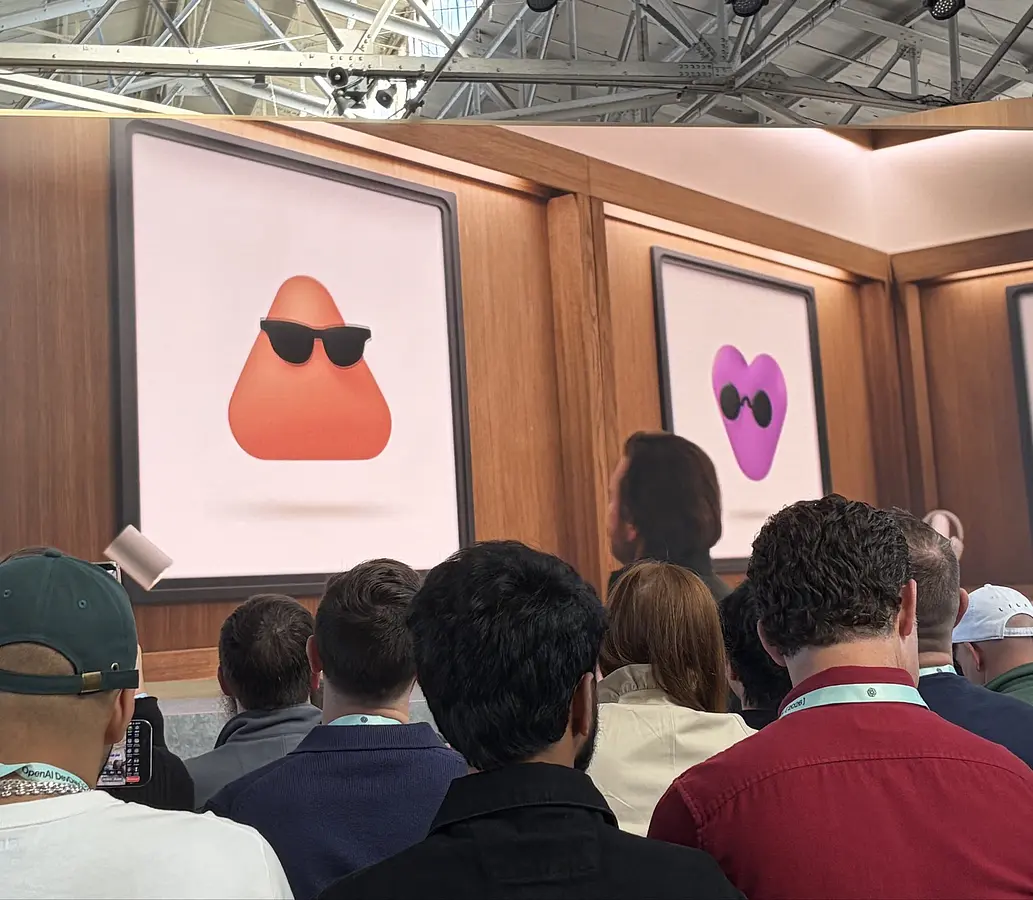
Claire Vo, who builds ChatPRD and hosts the How I AI podcast, on the launch from the point of view of every startup that has made an agent with a face.
 Claire Vo
BREAKING: @OpenAI releases Dots, AI agents for work & life, claiming lightly bezeled 3d blobs as avatars, reducing remaining bot avatar greenfield for new startups by 30%
Tibo, who works on Codex and ChatGPT at OpenAI, posting the launches from the room as they were announced. Dots came first. OpenAI's help page puts a limit on the last line: dots do not count against a plan's allowance for the next month, and OpenAI says it will share usage terms after that.
 Tibo
Tibo
Announcing dots. Dots work 24/7 for you, learn from your feedback, have their own computer, browser and can be connected to over 4k apps in our ecosystem.
They’re powered by Astra our best model yet. Included in your Pro plan, without drawing down on any of your usage. You can even call a dot while it’s working.
We’re getting you started with your primary dot today and soon you’ll be able to create entire teams of them.
Dan Shipper, who runs Every, had a dot for a few days before the launch and posted this as the keynote began: what it did well, what broke, and a recommendation to wait a week or two.
 Dan Shipper
BREAKING:
@OpenAI just announced Dots—always-on agents in ChatGPT
I've been testing it for the last few days @every, here's a quick vibe check:
What you should know:
- They'll look familiar if you've used OpenClaw, Muse, Instinct, or Grok Bots.
- Your Dot sits in the redesigned ChatGPT sidebar right below the “New chat” button
- It has its own cloud computer that lets it work while your laptop is closed. You can text it any time or call it on the phone.
Vibe check—the good
When it’s working, it changes the way I use ChatGPT: I interact with Boo (my Dot’s name), and Boo orchestrates ChatGPT threads, reads my email, uses Slack, and more. It automatically filters incoming Slack requests and emails so I can quickly triage items without opening my inbox. When I was rescheduling a flight, Boo warned me that my new flight time would conflict with a meeting request from Slack that I hadn’t read.
That’s the promise: an ongoing agent that filters what needs my attention and acts proactively on my behalf, in one long-running chat thread.
Vibe check—the bad
But the version I tested over the last few days was buggy and lacked some features I would expect, like iMessage support.
I had frequent issues with permissions and dropped messages, and my Dot was unable to connect to its own in-app browser.
The verdict
During testing, I found myself reaching for my Dot over starting new Codex threads, so it has definitely become a habit despite the frustration. And during the tesitng period the team was rapidly fixing issues—so I'd expect most of this to be smoothed out over the coming days and weeks.
Unless you love new things with rough edges, I’d recommend waiting a week or two to try it. OpenAI will have solved a lot of these paper cuts by then.
If you’re already deep into Grok Bots, Muse, or Instinct, it’s probably not an immediate switch unless you’re also a big ChatGPT or Codex user.
Read the live feed on @every: https://every.to/live/openai-devday-2026
Sam Altman spoke to CNBC's Kate Rooney on the morning of DevDay, a day after OpenAI said it would not release GPT-6.1 Astra because it did not meet its safety standards. The first passage is on that decision, which Altman put in the normal course of things; the second is on Nvidia's new platform for keeping AI agents in check, which Altman called a good thing but not a full solution. In the same interview Altman said OpenAI knows of no other incident as serious as the Hugging Face breach.
Sam Altman, in cnbc.com
Often we build a model, we test it, it doesn't meet our standards, we change it, we launch it later.
[...]
I don't think it's a full solution, and I worry that if we treat AI safety as only an engineering problem, we will miss the very important point that we have we have a science problem in front of us. We still have discovery about how to align these models, and we have to solve that scientific problem too.
Image from Simon Willison
Simon Willison, who created Datasette and writes about language models, live-blogged the keynote from a creator seat OpenAI provided, then the afternoon sessions: ChatGPT Sites, which already hosts 8 million sites, each with its own SQLite database; Codex Security, whose internal sprint at OpenAI fixed 53 critical findings on its first day, found 36 per cent of its discoveries were duplicates and shipped patches with a 1 per cent rollback rate; and a GPT-Live session with the model as a third presenter. Read it for what happened in the room, minute by minute.
From Simon Willison
10:13 Live demo! "Dottie is having a slow morning" - we got a "still checking" and an embarrassing silent moment.
[...]
10:24 Also today: previewing a new Decisions API. Lets the model respond "in a fraction of a second". It works by giving the Luna model "a predefined set of options to choose from". Sounds like their response to Jev, which came out of stealth less than two weeks ago!
[...]
10:53 They pressed the button live in the room. The reset affects everyone in the world, not just the DevDay attendees.