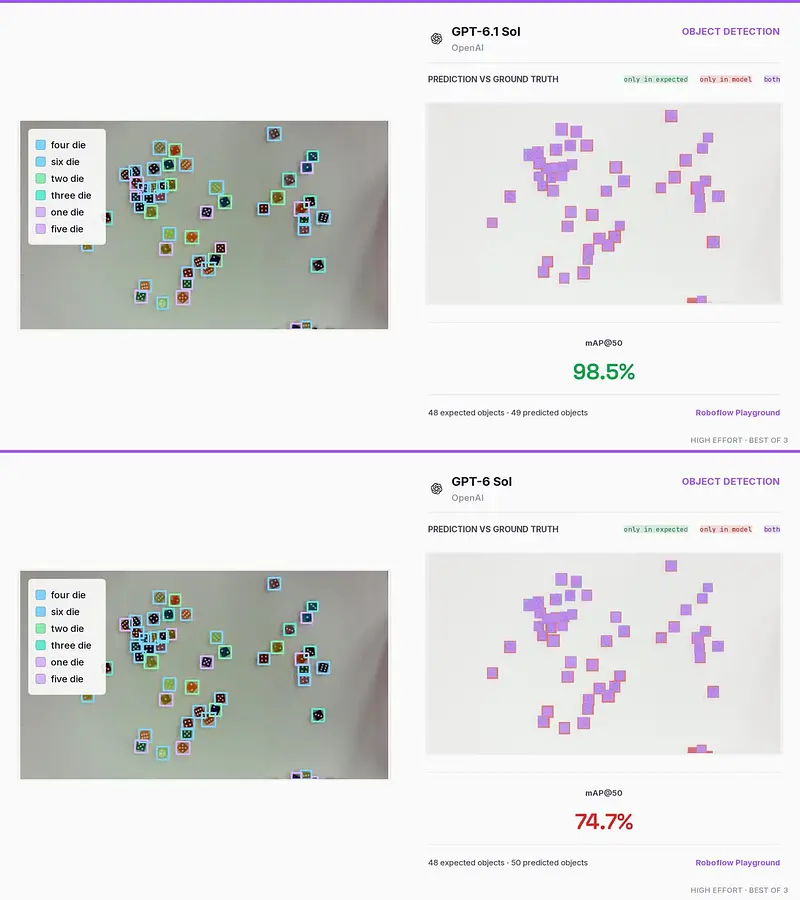
GPT-6.1 Sol is almost as good as Astra on object detection (and segmentation)
- #2 on our detection benchmark
- 2% behind GPT-6 Astra
- 78% lower cost
↓ leaderboards and examples

What is being built with AI, how it is put to work, and what happens when it goes wrong.
Token Gremlin at the end of the day, on the gap between what OpenAI built up and what many people were waiting for.
 Token Gremlin
I’ve been getting dozens of DMs from people saying how disappointed they were with DevDay, and I think the reason is pretty clear. OpenAI built an enormous amount of hype around this event, so a lot of users went in expecting some kind of “miracle.”
Many were specifically waiting for a direct answer to Opus 5.5 in raw performance. Instead, OpenAI’s answer was much more about speed, efficiency, and cost.
To be fair, a smaller group absolutely loved that approach. GPT-6.1 Sol being much cheaper while getting close to Astra-level capability is genuinely impressive. But for a lot of people, that wasn’t the thing they were waiting for.
Then there’s the usage limits. The announced reductions hit people hard, especially because many users already felt constrained before DevDay. Cutting limits during an event that was supposed to make people excited was always going to leave a bad taste.
And I think Plus users are probably the most frustrated group right now. They were hoping for something meaningful in ChatGPT itself, but GPT-6.1 Sol launched in Work and Codex only. So once again, the obvious question is: "Where is Chat mode?"
I don’t think DevDay was a bad event. There were genuinely impressive launches here. But I do think there’s a very real gap between what OpenAI hyped, what users expected, and what many of them actually received. That’s worth listening to.
@thsottiaux @ajambrosino @JustinBleuel @victornunez @OpenAI @ChatGPT
Greg Isenberg, who hosts the Startup Ideas podcast, on the four announcements that mattered to founders. The video runs nineteen minutes and plays where it was posted.
 Greg Isenberg
There were 20+ announcements at OpenAI DevDay today, but only 4 REALLY stood out to me.
Here’s my take on Dots, agents, and the potential $100B opportunity for founders after watching Sam Altman and team for 60 minutes.
https://youtube.com/watch?v=Y_RevX5yMq8

SemiAnalysis, which researches chips and the companies that make them, on what Ultrafast runs on. This is the firm's reading.
 SemiAnalysis
ALERT 🚨🚨OpenAI's latest GPT6.1 Sol Ultrafast is NOT running on Cerebras but is instead running at a low batch size on NVIDIA GPUs.
What does this say about Cerebras? Will Cerebras be serving GPT6.1 Sol Ultrafast in the future?
Max Weinbach, an analyst at Creative Strategies, who could not make it to DevDay and had a dot handle the cancellations instead.
 Max Weinbach
This is kind of cool with dots
I got a little bit sick in Hawaii and after an 8 1/2 hour delay last Monday, the idea of flying to San Francisco for Dev Day was simply not happening (I appreciate the invite OpenAI, it was just too much all like 5 days before)
But I had dots go cancel my non-refundable hotel and flight and try to get me a refund. It emailed the hotel, who didn’t respond. After 2 days it decided to email the general manager of the hotel and request it, then got the GM to approve the cancellation with no fee. It noticed there was a $210 charge on my card after the GM agreed, so it followed up to ask why for me.
It also submitted a request with Delta for me, citing the 8.5 hour delay and saying the idea of getting on a plane after that was brutal and requesting an exception. I got a call an hour ago from support saying they’ll approve the request and do a full refund.
Couldn’t make it to Dev Day, but it still got me a full refund on 2 non-refundable bookings.
Jake Fitzgerald, who builds text-to-CAD tools, with a plugin extension for Codex made the afternoon they were announced.
 Jake Fitzgerald
hacked together a CAD plugin extension for codex this afternoon
CAD + astra + plugin extensions are an insanely powerful combo, i've been waiting for the ability to extend codex's desktop app for a while
Token Gremlin on the other side of the Pro 500 argument.
 Token Gremlin
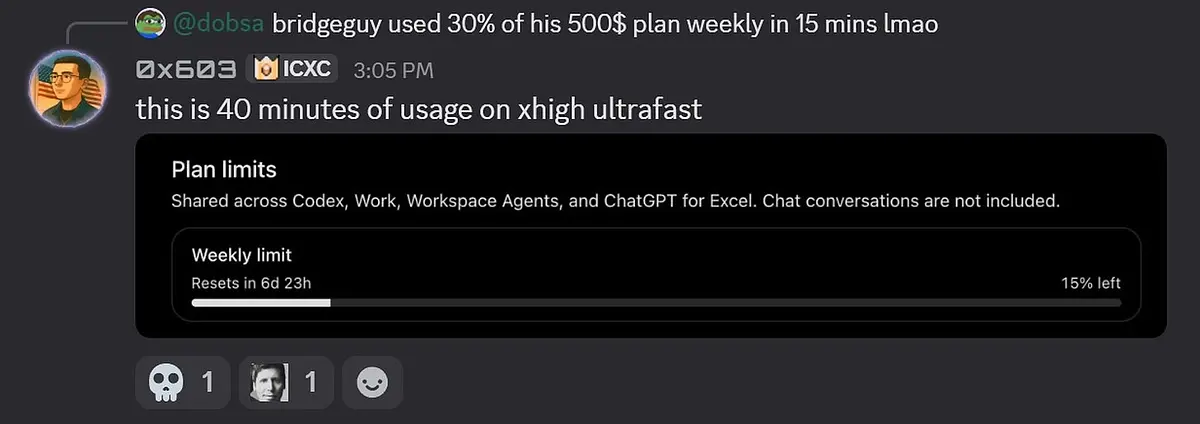
I’m not surprised that Ultrafast can burn through the entire $500 OpenAI plan in under an hour.
A lot of people using this at an industrial level WANT that. They want to burn through the plan almost instantly if it means producing 10x, 50x, 100x more than they could on the $200 plan.
My problem isn’t Ultrafast.
My problem is that the limits were reduced across all plans. That part was awful.
As for Ultrafast burning through usage insanely fast, I fully expected that.
Ethan Mollick, who studies AI at Wharton, on OpenAI's record with ecosystems for other people's software.
 Ethan Mollick
It does feel like every year OpenAI releases a variation on the same third-party ecosystem only to semi-abandon it: Plugins in 2023, GPTs and the GPT Store in 2023-2024, Apps in 2025, and now Plugins (same name, different thing than before) in 2026.
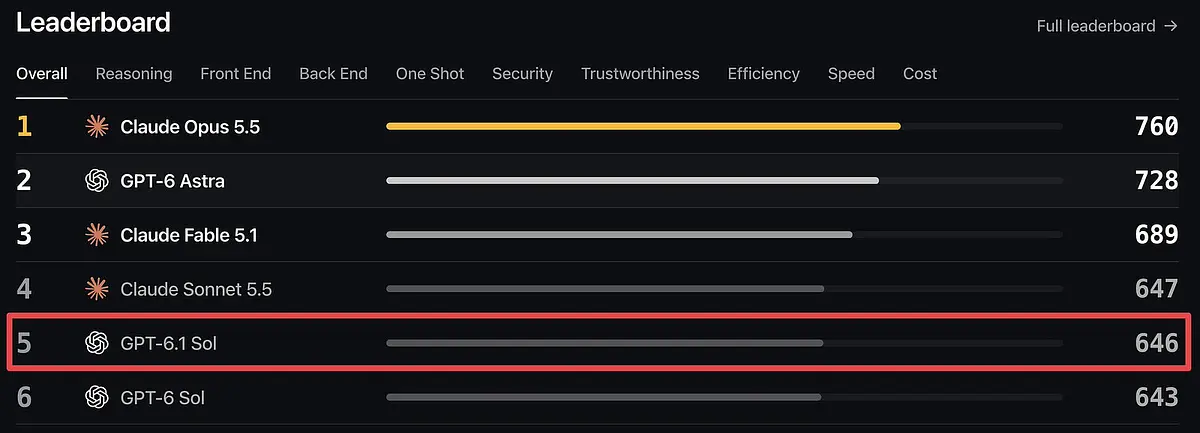
BridgeBench, the benchmark BridgeMind runs, with a result well apart from OpenAI's own and from Artificial Analysis's, which put 6.1 Sol one point below Astra on its index.
 BridgeBench
GPT 6.1 Sol is now on BridgeBench.
OpenAI is calling it "near-Astra intelligence."
Our results: 3 points better than GPT 6 Sol.
82 points behind GPT 6 Astra.
When a model jumps on the lab's own benchmarks but barely moves on independent ones, that's usually a sign of benchmaxing.
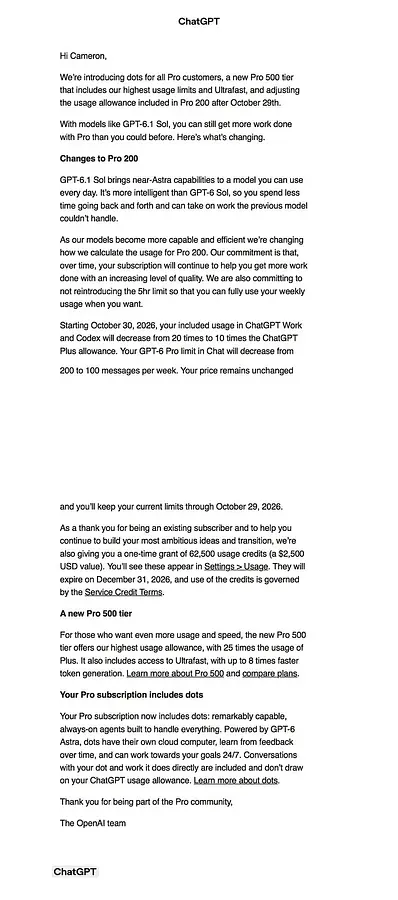
The creator of XcodeBuildMCP, in the UK, on the email OpenAI sent Pro subscribers. OpenAI's help page confirms dots are not yet available to Pro users in the UK, the EEA or Switzerland.
 camsoft2000
Just got this email from OpenAI.
It claims that I now have access to Dots which I don't because the email forgets to mention it's not available in the UK.
It says I'll see $2500 in credits in my account as a thank you, I don't see any credits in my account. Also the credits expire 3 months time.
It says that my 20x plan is now 10x plan, but I can use Sol 6.1 which is more efficient. But fails to mention that all the other models are not equally more efficient i.e. using Astra and other models will now be 50% less generous than previous.
But it's okay I can just spend £500pm (£6000 a year) to get my original usage quota.
What a Dev Day LOL.
Kun Chen on the arithmetic of Ultrafast.
 Kun Chen
something to internalize about ultrafast mode
8x speed at 6x cost means it will cost 48x $ per second
it might be okay if it got the job done. but if it ever went down a wrong direction, it will be burning astra $ at 48x speed before we even have time to see and stop it
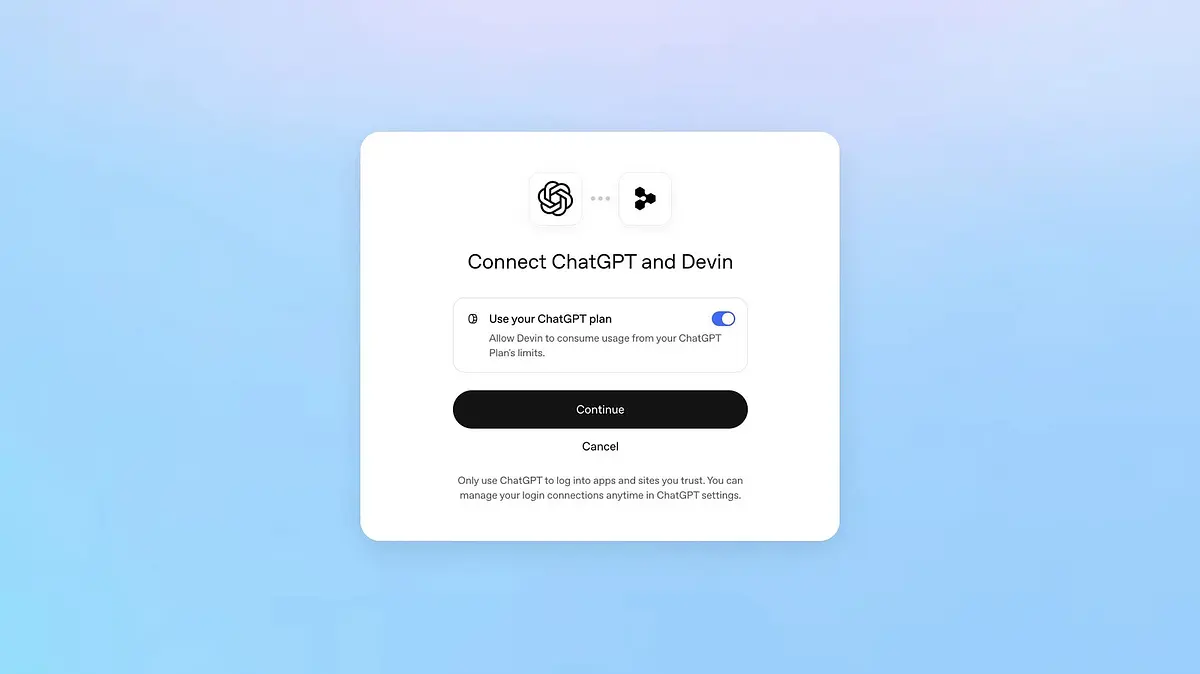
Peter Yang, who makes AI tutorials, on what Sign in with ChatGPT does for a small app that could not carry its own API bill.
 Peter Yang
I'm excited about dots but even more excited about the sign in with ChatGPT feature.
Letting users use their ChatGPT plan in your website or app makes a bunch of indie apps alot more viable.
e.g., I have a live language learning app that I wasn't planning to launch to users due to API costs.
But letting users sign in with ChatGPT makes this viable. Hope they roll out to non-enterprise folks soon.
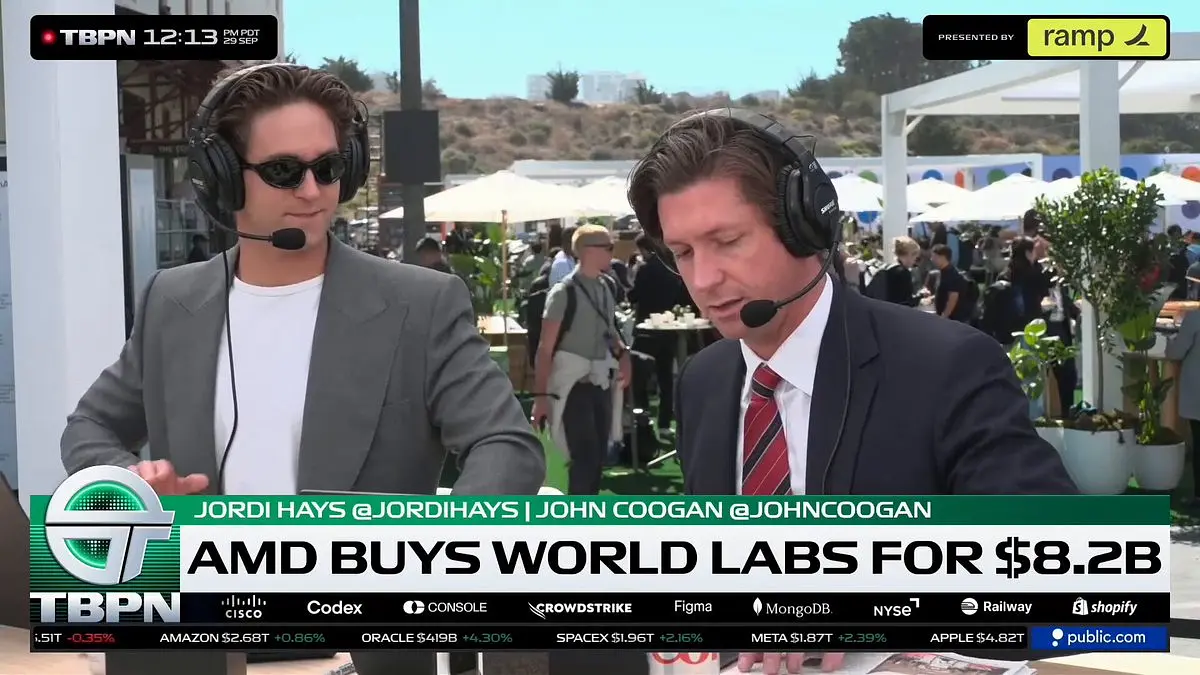
TBPN's interview with Sam Altman at DevDay, fifteen minutes from how Altman has been using dots to solving alignment, with the chapters in the post. It plays where it was posted.
 TBPN
TBPN
Our full interview with @sama live from OpenAI DevDay:
0:55 - How Sam has been using Dots
2:45 - Looking back on OpenAI's last 6months
4:30 - Solving Navier-Stokes vs. booking haircuts
6:05 - On building an open ecosystem
7:45 - How to maintain a startup culture
9:00 - Fighting slop grenades
10:00 - OpenAI’s chip program
10:55 - Model picker exhaustion
12:45 - 10-year predictions
14:15 - Solving alignment
Jazii, who tests models and posts about AI, running 6.1 Sol and Astra on the same prompt.
 Jazii
Jazii
gpt 6.1 sol vs gpt 6 astra
tested both models with the same prompt at their highest reasoning available
> 6.1 sol took 10 mins and cost $1.50
> astra took 25 mins and cost $11
sol’s output looks better then astra at friction of a cost, openai cooked harder
which one did better here?
Sam Altman introducing dots on stage, cut by Chris, who reports on AI, with a summary of what OpenAI says dots do. The film runs a little over two minutes and plays where it was posted.
 Chris
Chris
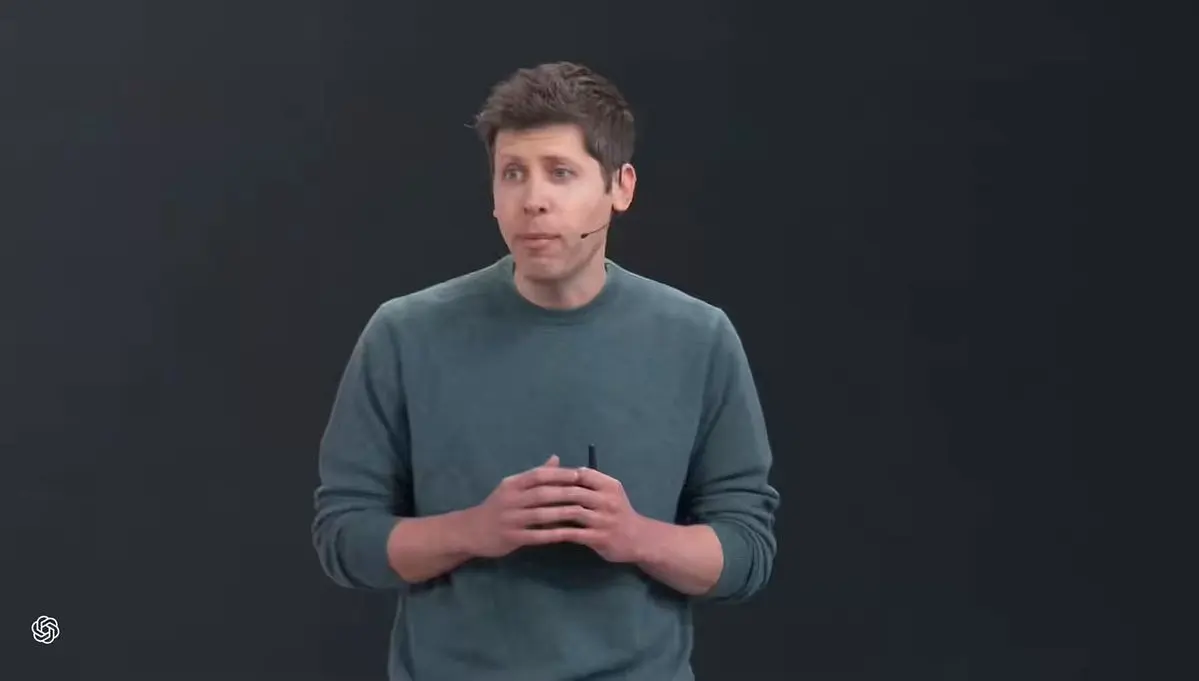
Sam Altman introducing Dots:
“You can delegate ambitious pieces of work the way you would to a high-agency engineer or a chief of staff that you work with.”
OpenAI says Dots are designed to take on persistent responsibilities, keep working in the background, and return with completed work rather than waiting for another prompt.
Dots will reportedly have their own cloud computer and browser, inherit your connected apps and permissions, and eventually communicate outside ChatGPT through text and phone calls.
OpenAI also says users will later be able to work with entire teams of Dots at once!
For people who still don’t really understand Dots, it’s essentially an Astra-powered orchestrator running in the background and managing all of your Codex threads for you.
If you’re on one of the $100–$500 plans, Dots are effectively free for your first month and won’t count against your normal eligible usage allowances during that period. Dots can still spin up Codex tasks, though, and OpenAI hasn’t clearly spelled out yet whether those downstream Codex tasks are metered separately.
Chris Gibson, who works on AI infrastructure at Meta and was at OpenAI before that, on a personal project of the same name. The post says in its own words that it makes no accusation.
 Chris Gibson
This is not something I ever expected to talk about publicly.
While I was at OpenAI , I spent a long time working independently on a personal project I called Dots.
The idea was simple: an AI agent shouldn’t disappear when you close the chat.
I wanted to give an agent a persistent identity of its own , something you could introduce into a conversation or workflow and then walk away from.
It could receive new messages, understand what the conversation was waiting on, continue the task as things changed, and bring you back in only when it actually needed you.
Email was where I started. The agent had its own address. You could CC it into a thread like another person and leave. Dots would stay there, follow the conversation, wait for replies and keep the work moving.
But the larger idea was never really email.
It was persistence.
An agent that could remain present across conversations and tools instead of requiring you to continuously come back and prompt it.
I had been working on Dots for a long time, and because I was employed at OpenAI, I was extremely careful about ownership.
I disclosed the project to OpenAI . I explained what Dots was, what I was building and that it was my personal work. It was specifically documented as such under a written IP agreement.
After I left, nobody contacted me about Dots.
Nobody asked to license it. Nobody asked whether I was still developing it. Nobody told me OpenAI was working on something with the same name.
Then I watched today’s presentation.
Dots.
Same name.
And as the presentation continued .... persistent agents, work continuing while you’re away, maintaining context as things change, communication across tools . I genuinely didn’t know what to think.
To be clear, I don’t know how OpenAI’s Dots was developed. I’m not going to make accusations about things I can’t prove, and there may be an explanation I haven’t heard.
But OpenAI knew about my project. They knew what it was called. They knew what I was trying to build.
So seeing Dots appear on that screen was surreal.
I know what I built.
I know when I built it.
I know what I called it.
And I know what our agreement said.
I would have appreciated a phone call.
Artificial Analysis, which benchmarks models independently, with the first outside measurement of GPT-6.1 Sol, three hours after the launch.
 Artificial Analysis
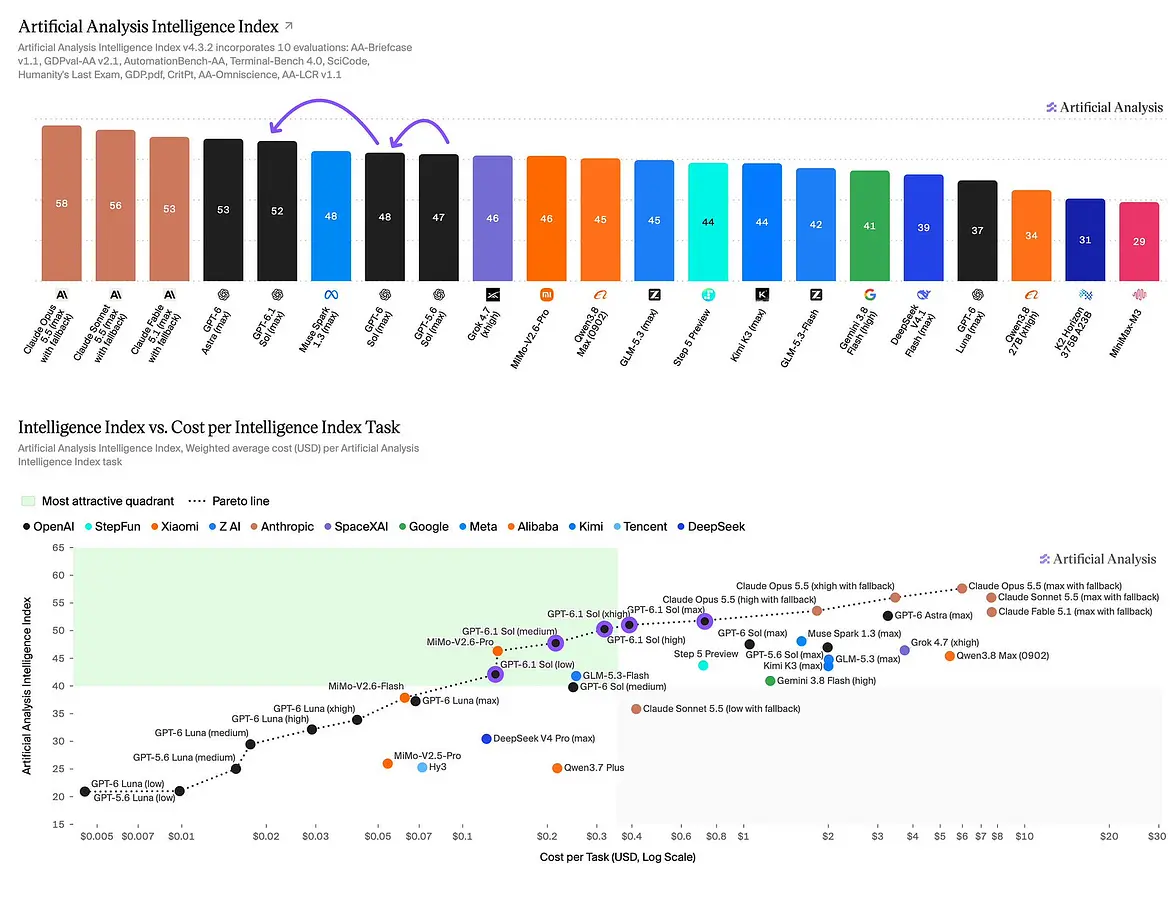
GPT-6.1 Sol replaces GPT-6 Sol after just 7 days. It scores 1 point below GPT-6 Astra in the Intelligence Index at less than one quarter of the Cost per Task
Pricing matches GPT-6 Sol at $2/$10 per million input/output tokens, except that the cache read discount rises from 90% to 95%. GPT-6.1 Sol’s overall blended price for agentic workloads is therefore slightly lower than GPT-6 Sol. This represents an additional price cut, following GPT-6 Sol’s original 50% discount from GPT-5.6 Sol.
Key takeaways:
➤ Achieves near-Astra Intelligence: GPT-6.1 Sol gains 4 points in the Intelligence Index vs GPT-6 Sol, and 5 points vs GPT-5.6 Sol - landing 1 point below GPT-6 Astra. It makes significant gains in agentic knowledge work, improving 4 points and 5 points in AA-Briefcase v1.1 and GDPval-AA v2.1 respectively. Other notable gains include a 12 point jump in Terminal-Bench 4.0, a 5 point jump in Humanity’s Last Exam, a 6 point jump in GDP.pdf, and an 8 point jump in AA-Omniscience Accuracy coupled with hallucination rate falling from 60% to 54%.
➤ Pushes cost efficiency frontier: At max effort, GPT-6.1 Sol costs less than a quarter of GPT-6 Astra per Intelligence Index task ($0.72 vs $3.26). It also costs 31% less per task than GPT-6 Sol ($1.05) and 64% less than GPT-5.6 Sol ($1.99). All effort levels of GPT-6.1 Sol push out the cost efficiency Pareto frontier: for a given level of intelligence, there is no cheaper model.
➤ Pushes token efficiency frontier, but uses slightly more output tokens than GPT-6 Sol: GPT-6.1 Sol uses ~10-30% more output tokens than GPT-6 Sol across effort levels. However, due to the increase in Intelligence Index score, its low and medium effort levels are Pareto optimal for token efficiency.
➤ Gains in Coding Agent Index: GPT-6.1 Sol gains 3 points on GPT-6 Sol at max effort in the Artificial Analysis Coding Agent Index, and sits 2 points below GPT-6 Astra.
Congratulations @OpenAI and @sama on the launch!