Jev is really good at intent-based search!
How it looks in Gmail:
(for a huge inbox you'd prob let semantic search / embeddings pull first but still much better experience)

A browser agent that finds flights in seven seconds. A Claude session cut from a million tokens to 86,000 in one second. A WHERE clause that reads plain English. Vercel's safety reviewer. We are collecting what people built with Jev in its first days, and what they argued about, each in their own words. Nobody in these bylines is on eChai, and every entry links back to where it was posted.
Nader Dabit's third: intent-based search over a Gmail inbox, with his own caveat that on a very large inbox you would let embeddings pull first.
 Nader Dabit
7h
Nader Dabit
7h
Jev is really good at intent-based search!
How it looks in Gmail:
(for a huge inbox you'd prob let semantic search / embeddings pull first but still much better experience)
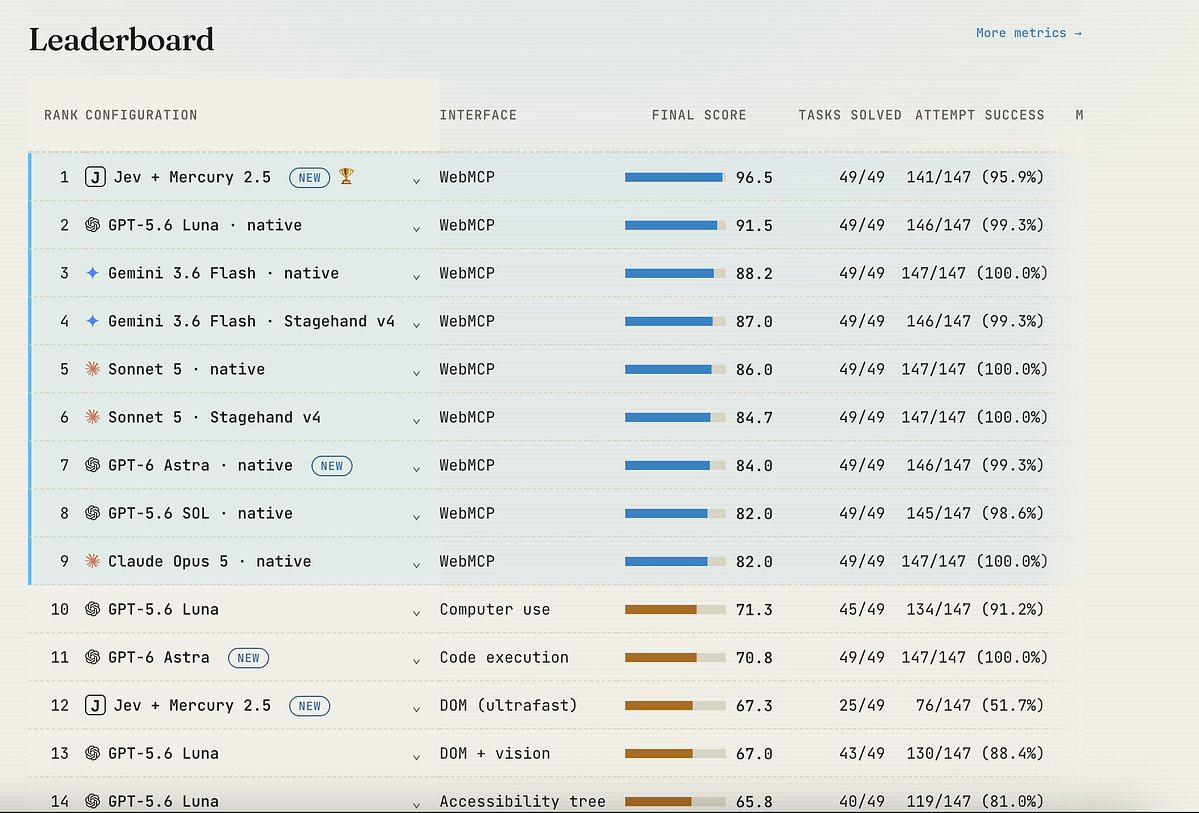
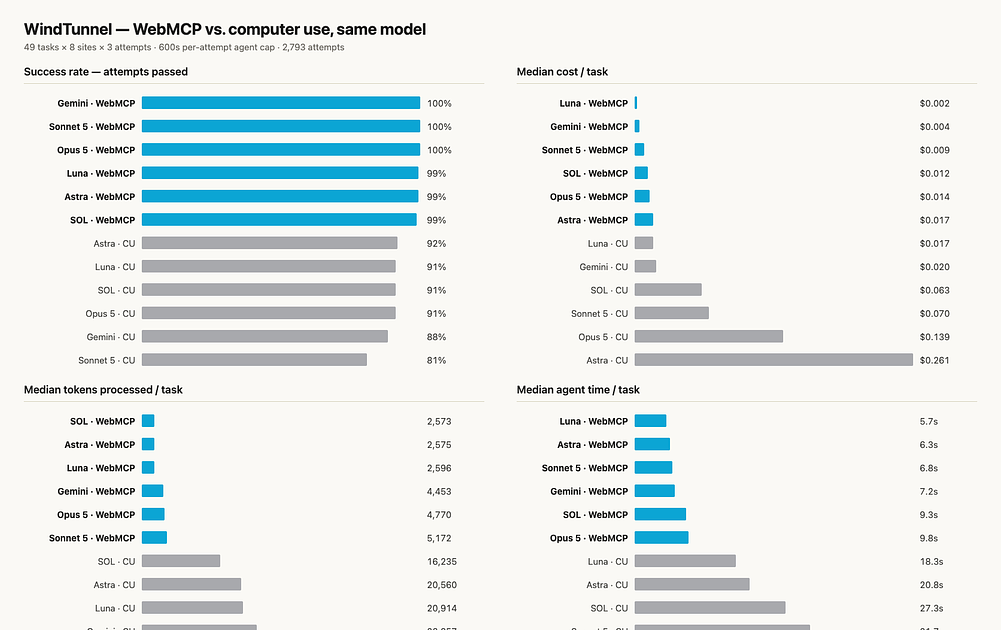
Idan Levin, of nekuda, ran Jev on the WebMCP benchmark and published the whole method. The headline is 49 of 49 tasks with Jev plus Mercury 2.5 through WebMCP at roughly 112x lower model cost than GPT-6 Astra with code execution; the honest half is that Jev driving the browser alone, on Browser Use's Ultrafast, solved 25 of 49, and WebMCP is what doubled it. The benchmark and harness are open at the link.
 Idan Levin
9h
Idan Levin
9h
We just ran Jev on our WebMCP benchmark.
The result: basically broke the benchmark.
Jev + Mercury 2.5 (a fast, low-cost LLM) using WebMCP solved 100% of the tasks at roughly 112× lower model cost than GPT-6 Astra using computer use with code execution. Compared to Astra using screenshot-based computer use, the model cost was 245× lower (!).
We also compared Jev operating the browser with and without WebMCP.
We used Browser Use’s open-source Ultrafast, with some improvements to the harness to make it more reliable across the benchmark.
Jev’s browser-control accuracy on its own was not amazing - adding WebMCP nearly doubled the number of solved tasks, from 25/49 to 49/49, while reducing model cost by 18% (more on why below).
The benchmark and methodology are fully open and reproducible.
Full results: https://webmcp.com/benchmark
A few words on how the Jev + WebMCP harness works and why this is exciting:
Jev receives text as input and a set of discrete options it can choose from. With WebMCP, those options are the tools exposed by the website. At each step, Jev sees the task, the available tools and previous results, then picks what to do next.
The limitation is that Jev can’t generate arbitrary text, which you need for tool arguments. For example, it can choose the search_products tool, but it can’t generate the search query itself.
So we split the work: Jev picks the tool and Mercury 2.5 generates the arguments if needed.
This works well because turns out most of the cognitive load in these tasks is around choosing the right action. The argument generation itself is relatively simple, so we can delegate to a small and very fast model. We used Mercury, which outputs 1,000+ tokens/sec and is very cheap.
The result is a pretty simple combination: Jev for tool selection + Mercury for arguments + WebMCP for the interface. It ends up being very reliable, very fast, and very cheap.
A few words about Ultrafast and why do we think it underperforms:
Without WebMCP, Jev chooses from the page’s controls: which button to click, which field to fill, or which option to select.
But choosing a valid button is different from choosing the right next step. The agent still has to navigate menus, understand forms, recover from errors and recognize when the task is actually complete.
Our hypothesis is that WebMCP makes the decision space much simpler. Instead of figuring out a sequence of clicks through a website, Jev chooses explicit actions that directly advance the task.
@typesafeai itself documents weaker accuracy on questions requiring multiple reasoning steps. WebMCP moves much of that complexity into the website’s tools, leaving Jev with clearer decisions and fewer opportunities to go wrong (in a sense WebMCP "compresses" a sequence of clicks into one tool call).
Our modified Ultrafast setup solved 25/49 tasks - that is a result for our particular implementation and benchmark, not a universal limit on Jev or Browser Use. We are open to more harness optimization to get this result to perform better, feel free to directly contribute to the benchmark here: https://github.com/nekuda-ai/WindTunnel
Browser-use ultrafast: https://github.com/browser-use/jev-ultrafast
Ian Nuttall again, on the small end: a filter for the reply-guy comments X's own filter misses, which he says took five minutes in Astra with the docs and an API key.
 Ian Nuttall
12h
Ian Nuttall
12h
Pro tip: You can use Jev to remove annoying reply guy comments that X seems to always miss. Takes 5 minutes in Astra with the docs and an API key.
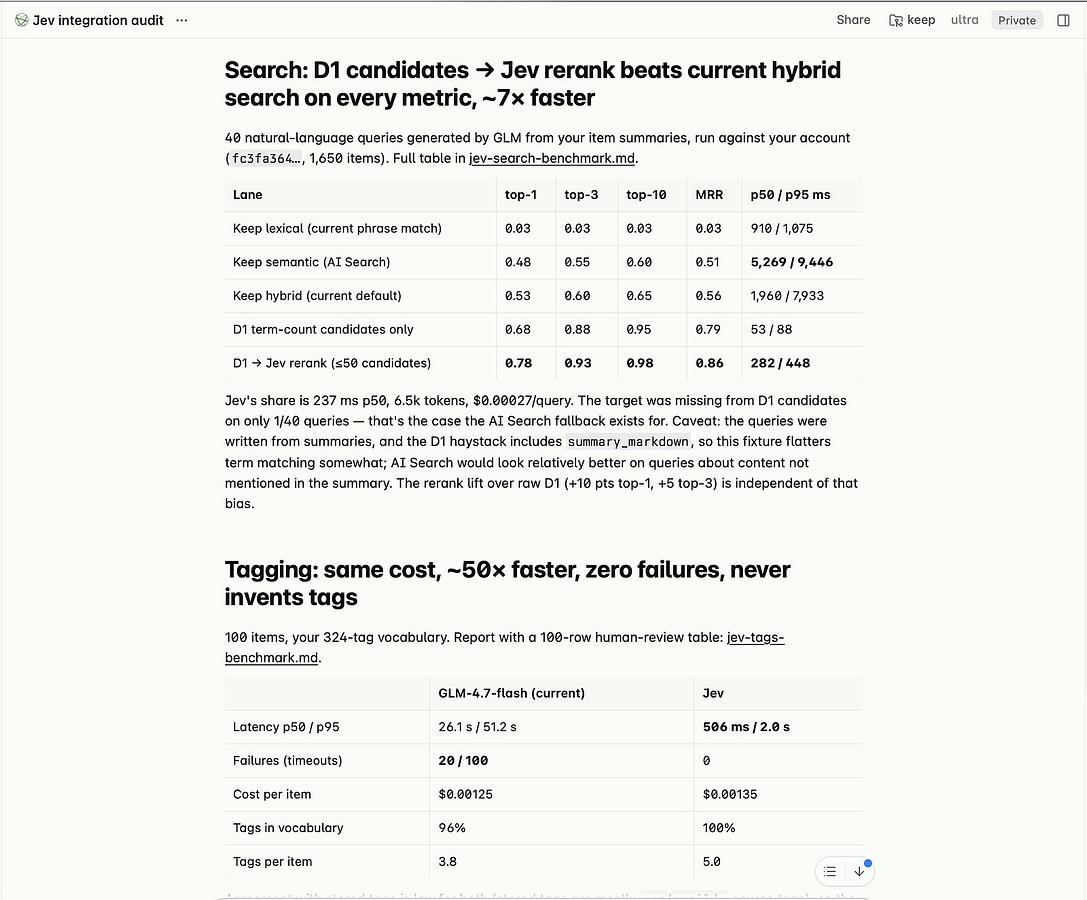
Ian Nuttall runs keep.md and put Jev to work on it the day it landed on Cloudflare Workers: a search rerank seven times faster than the hybrid it had, and content tagging fifty times faster than GLM 4.7 Flash with no failed calls.
 Ian Nuttall
12h
Ian Nuttall
12h
Cloudflare Workers has Jev now so I'm putting it to the test on https://keep.md
- 7x faster search rerank compared to the current hybrid
- 50x faster tagging of content vs GLM 4.7 Flash with no failures
Kitze, with a calculator notebook that takes plain-language terms.
 Kitze
13h
Kitze
13h
i made a smart calculator notebook using jev
it can calculate ANYTHING!! 😅
Written in Chinese. Sac built a computer-use loop on Codex with Jev as the judgment layer and calls it Jev Use: faster and smoother than Codex's built-in computer use for about the same tokens, shown side by side on adding a calendar event on a Mac, where the Jev run barely pauses.
 Sac
14h
Sac
14h
卧槽,居然真有比Codex内置computer use更快的操作电脑的方式
我尝试用Codex+Jev打造了一个加强版computer use,我称之为「Jev Use」。比内置的更快更丝滑,token消耗却差不多
下面是我用「添加Mac日历事件」做了一个对比视频,同样的内容,明显可以看到Jev版本整体过程几乎无任何停顿😆
Tony Dinh's Chrome extension listens to a YouTube video, has Jev decide in real time whether a sponsor segment has started, and skips it, at about half a cent a video. Bring your own key; the code is open.
 Tony Dinh
18h
Tony Dinh
18h
Just trying out Jev, I made a Chrome extension that:
- Listens to your YouTube audio (optional)
- Detects if it gets to a sponsor segment
- Skips it ➡️➡️➡️
- All in real-time while costing ~$0.005 per video
Prototype project, BYOK, open-source:

Matt Van Horn's summary of his own article, which checked every big Jev post of the first 72 hours by hand and groups them into nine things. Several entries on this page were found through it.
 Matt Van Horn
19h
Matt Van Horn
19h
TL;DR of my new article: WTF is Jev by @typesafeai, and the 9 things people are already building with it. The thesis: 𝗮 𝗰𝗼-𝗰𝗿𝗲𝗮𝘁𝗼𝗿 𝗼𝗳 𝗖𝗵𝗮𝘁𝗚𝗣𝗧 𝘀𝗽𝗲𝗻𝘁 𝘁𝘄𝗼 𝘆𝗲𝗮𝗿𝘀 𝗶𝗻 𝘀𝘁𝗲𝗮𝗹𝘁𝗵 𝗼𝗻 𝗮 𝗺𝗼𝗱𝗲𝗹 𝘁𝗵𝗮𝘁 𝗰𝗮𝗻𝗻𝗼𝘁 𝘄𝗿𝗶𝘁𝗲 𝗮 𝘀𝗲𝗻𝘁𝗲𝗻𝗰𝗲, 𝗮𝗻𝗱 𝗶𝗻𝘀𝗶𝗱𝗲 𝟳𝟮 𝗵𝗼𝘂𝗿𝘀 𝗱𝗲𝘃𝗲𝗹𝗼𝗽𝗲𝗿𝘀 𝘄𝗶𝗿𝗲𝗱 𝗶𝘁 𝗶𝗻𝘁𝗼 𝗲𝘃𝗲𝗿𝘆 𝗰𝗵𝗲𝗮𝗽 𝗷𝘂𝗱𝗴𝗺𝗲𝗻𝘁 𝗰𝗮𝗹𝗹 𝗮𝗻 𝗮𝗴𝗲𝗻𝘁 𝗺𝗮𝗸𝗲𝘀.
Think AI multiple choice, not AI essay writing. It doesn't chat. You hand it app state plus a typed question, it hands back a decision with a probability attached. 𝟯𝟭.𝟰𝗠 𝘃𝗶𝗲𝘄𝘀 on the launch post in two days (@CompleteSkeptic, who co-invented RLHF). I ran @slashlast30days on it 11 times, then checked every big post by hand.
🌐 𝗔 𝘁𝗶𝗻𝘆 𝗼𝗽𝗲𝗻 𝘀𝗼𝘂𝗿𝗰𝗲 𝗯𝗿𝗼𝘄𝘀𝗲𝗿 𝗮𝗴𝗲𝗻𝘁 𝗳𝗼𝘂𝗻𝗱 𝗳𝗹𝗶𝗴𝗵𝘁𝘀 𝗶𝗻 𝟳 𝘀𝗲𝗰𝗼𝗻𝗱𝘀 𝗳𝗼𝗿 $𝟬.𝟬𝟬𝟯𝟵. New action space every step, DOM as state, Jev picks the click, a small LLM only wakes up to type. The Browser Use founder built it (@gregpr07, 7.2K likes, 1.8M views) and had to note the video is 1x speed
🧹 The sleeper: instant compaction. Score every tool call, drop the junk, skip the summarization prompt entirely. "𝘪𝘯 2026, 𝘸𝘩𝘺 𝘪𝘴 𝘤𝘰𝘮𝘱𝘢𝘤𝘵𝘪𝘰𝘯 𝘴𝘵𝘪𝘭𝘭 𝘢 𝘴𝘶𝘮𝘮𝘢𝘳𝘪𝘻𝘢𝘵𝘪𝘰𝘯 𝘱𝘳𝘰𝘮𝘱𝘵?" asked @tamarajtran, 5K likes, then shipped the answer that afternoon. Run as a Claude plugin it took a session 𝗳𝗿𝗼𝗺 𝟭𝗠 𝘁𝗼𝗸𝗲𝗻𝘀 𝘁𝗼 𝟴𝟲𝗞 𝗶𝗻 𝗼𝗻𝗲 𝘀𝗲𝗰𝗼𝗻𝗱 (@altryne). Diogo's reply: "𝘧𝘳𝘦𝘦 𝘤𝘰𝘥𝘪𝘯𝘨 𝘢𝘨𝘦𝘯𝘵𝘴 𝘧𝘳𝘰𝘮 𝘥𝘦𝘴𝘪𝘨𝘯𝘪𝘯𝘨 𝘢𝘳𝘰𝘶𝘯𝘥 𝘵𝘩𝘦 𝘒𝘝 𝘤𝘢𝘤𝘩𝘦"
🛡️ Vercel put it in production as the safety reviewer in fx auto mode. 𝗨𝗽 𝘁𝗼 𝟭𝟴𝘅 𝗳𝗮𝘀𝘁𝗲𝗿 𝗮𝘁 𝗽𝟵𝟱 𝗮𝗻𝗱 𝗺𝗼𝗿𝗲 𝗮𝗰𝗰𝘂𝗿𝗮𝘁𝗲 than the model it replaced, per @rauchg, 3.7K likes. LangChain open-sourced the same idea the next day as AutoModeMiddleware. The closed danger classifier inside every coding harness is now a 100ms primitive
🚦 Model routing as middleware instead of a paragraph in a system prompt. About a dozen lines, probabilities left in agent state so you can audit the choice. The LangChain writeup by @sydneyrunkle is the cleanest how-to-wire-it piece anyone has published
🔎 RAG precision, solved the dumb way: retrieve as usual, run Jev on every chunk, delete the irrelevant ones. "𝘢𝘭𝘴𝘰 𝘥𝘪𝘥 𝘢𝘯𝘺𝘰𝘯𝘦 𝘳𝘦𝘢𝘭𝘪𝘻𝘦 𝘫𝘦𝘷 𝘴𝘰𝘭𝘷𝘦𝘥 𝘱𝘳𝘦𝘤𝘪𝘴𝘪𝘰𝘯 𝘪𝘯 𝘙𝘈𝘎?" (@kushbhuwalka, 416 likes)
🎮 Minecraft in real time: 𝗝𝗲𝘃 𝗿𝗲𝗮𝗰𝘁𝘀, 𝗚𝗣𝗧-𝟲 𝗔𝘀𝘁𝗿𝗮 𝗽𝗹𝗮𝗻𝘀, and they fight multiple zombies at once (@wuyang_zhou). A launcher that reads intent on every keystroke in about 100ms (@dabit3). TypeSafe's own demo is Doom at 10 decisions a second, roughly $7 an hour
📬 Email triage at scale: 1,500 emails in batches of 100 with 8 workers, 60,996 views on the demo. "𝘞𝘦 𝘰𝘯𝘭𝘺 𝘩𝘢𝘷𝘦 𝘢 𝘣𝘢𝘭𝘢𝘯𝘤𝘦 𝘰𝘧 $5 𝘥𝘰𝘸𝘯 𝘩𝘦𝘳𝘦, 𝘸𝘩𝘪𝘤𝘩 𝘫𝘶𝘴𝘵 𝘴𝘩𝘰𝘸𝘴 𝘩𝘰𝘸 𝘤𝘩𝘦𝘢𝘱 𝘵𝘩𝘪𝘴 𝘮𝘰𝘥𝘦𝘭 𝘪𝘴"
🗂️ 𝟳𝟳𝟳 𝗷𝘂𝗱𝗴𝗺𝗲𝗻𝘁𝘀 𝗶𝗻 𝘂𝗻𝗱𝗲𝗿 𝟬.𝟳 𝘀𝗲𝗰𝗼𝗻𝗱𝘀 𝗳𝗼𝗿 𝗮 𝗾𝘂𝗮𝗿𝘁𝗲𝗿 𝗼𝗳 𝗮 𝗰𝗲𝗻𝘁. Every's head of evals asked 21 questions of 37 documents in one request, and that is what came back
🧪 Jev in your browser: Reflex, a Qwen model doing structured decisions on WebGPU, built at Shopify by @kshetrajna and passed around by @tobi. Three independent clones inside 72 hours. 𝗧𝗵𝗲 𝗶𝗻𝘁𝗲𝗿𝗳𝗮𝗰𝗲 𝗶𝘀 𝘁𝗵𝗲 𝗶𝗻𝘃𝗲𝗻𝘁𝗶𝗼𝗻, 𝗻𝗼𝘁 𝘁𝗵𝗲 𝘄𝗲𝗶𝗴𝗵𝘁𝘀
🔌 Already behind the gateways you use: @vercel AI Gateway inside 48 hours (2,341 likes, the company's second-biggest post), Cloudflare, and @OpenRouter in beta
💸 𝟱,𝟬𝟬𝟬 𝗿𝗲𝗾𝘂𝗲𝘀𝘁𝘀 𝗳𝗼𝗿 𝗮𝗯𝗼𝘂𝘁 $𝟮. That was one developer counting his bill on day one (@MichaelLee04, 3,060 likes). Input is $0.042 per million tokens. Output is free
🧨 The honest part: Every's second test came out 𝟮𝟱𝘅 𝗳𝗮𝘀𝘁𝗲𝗿, 𝗻𝗼𝘁 𝟮𝟬𝟬𝘅, and Jev caught 6 of 7 planted defects to Fable 5.1's 7. The HN launch thread (1,863 points) spent most of its length on "can't hallucinate." Top critical comment: "𝘪𝘵 𝘤𝘢𝘯'𝘵 𝘦𝘮𝘪𝘵 𝘢𝘯 𝘪𝘯𝘷𝘢𝘭𝘪𝘥 𝘵𝘺𝘱𝘦, 𝘣𝘶𝘵 𝘪𝘵 𝘤𝘢𝘯 𝘴𝘵𝘪𝘭𝘭 𝘦𝘮𝘪𝘵 𝘢 𝘤𝘰𝘮𝘱𝘭𝘦𝘵𝘦𝘭𝘺 𝘸𝘳𝘰𝘯𝘨 𝘷𝘢𝘭𝘪𝘥 𝘷𝘢𝘭𝘶𝘦." Diogo called the "it's a zero-shot classifier" read "𝘷𝘦𝘳𝘺 𝘢𝘤𝘤𝘶𝘳𝘢𝘵𝘦!" And the biggest Reddit thread is someone who open-sourced the same architecture a year ago, 1,568 upvotes. Top reply: "𝘉𝘶𝘵 𝘥𝘪𝘥 𝘺𝘰𝘶 𝘱𝘰𝘴𝘵 𝘪𝘵 𝘴𝘢𝘺𝘪𝘯𝘨 𝘪𝘵'𝘴 𝘵𝘩𝘦 𝘯𝘦𝘹𝘵 𝘣𝘪𝘨 𝘵𝘩𝘪𝘯𝘨? 𝘙𝘰𝘰𝘬𝘪𝘦 𝘮𝘪𝘴𝘵𝘢𝘬𝘦"
Bonus: the name is not Kahneman. It's William Stanley Jevons, of Jevons paradox. Make a resource cheaper and people consume far more of it. Naming your decision model after that is a thesis statement.
𝗞𝗲𝗲𝗽 𝘁𝗵𝗲 𝗯𝗶𝗴 𝗺𝗼𝗱𝗲𝗹 𝗳𝗼𝗿 𝘁𝗵𝗲 𝗵𝗮𝗿𝗱 𝘁𝗵𝗶𝗻𝗸𝗶𝗻𝗴 𝗮𝗻𝗱 𝘄𝗿𝗶𝘁𝗶𝗻𝗴. 𝗨𝘀𝗲 𝗝𝗲𝘃 𝗳𝗼𝗿 𝘁𝗵𝗲 𝗿𝗮𝗽𝗶𝗱-𝗳𝗶𝗿𝗲 𝗱𝗲𝗰𝗶𝘀𝗶𝗼𝗻𝘀 𝗶𝗻 𝗯𝗲𝘁𝘄𝗲𝗲𝗻. That's the whole article.
Nader Dabit's second: type a column head like 'Urgency' and every row fills in as you type, about 100 ms each. A spreadsheet that recalculates meaning rather than numbers.
 Nader Dabit
19h
Nader Dabit
19h
Another crazy @typesafeai Jev example:
Predictive spreadsheets
Spreadsheets recalculate numbers, not meaning. Jev reads intent.
Type "Urgency" at the top of a column and, as you type, it figures out you want each row rated from "no follow-up needed" to "urgent" in ~100 ms.
Written in Spanish. Alan Daitch had Claude wire Jev into Playwright to hunt second-hand listings: it reads about 26 listings a minute, decides on each in 406 ms, passes on the ones that do not fit, bids on the ones that do, and messages the seller when a detail is missing. The whole search cost USD 0.00085, so a dollar covers about 26,000 listings.
 Alan Daitch
21h
Alan Daitch
21h
Claude me integró Jev con Playwright para buscar usados. Lee unos 26 artículos por minuto y decide qué hacer con cada uno en 406 milisegundos
Descartó los que no encajaban con lo que busco, ofertó por los que sí y hasta les mandó un mensaje a los vendedores cuando faltaba algún dato en la publicación.
Toda la búsqueda salió USD 0,00085. O sea: con un dólar revisás unas 26.000 publicaciones.
Una IA que por fin puede navegar por internet más rápido que nosotros es un game changer
Nader Dabit, with the first of his experiments. A launcher usually ranks by alias, fuzzy match and habit; this one reads intent, so typing 'the pdf I just downloaded' puts the newest PDF at the top, with a confidence on every keystroke, in about 100 ms.
 Nader Dabit
21h
Nader Dabit
21h
Also have been playing with @typesafeai Jev, insane!
So many immediate use cases and new apps are possible. What a time to be a builder!
Sharing some experiments here starting with:
Keystroke oracle / predictive launcher:
Your launcher ranks by aliases, fuzzy match, and habit.
Jev reads intent: type "the pdf I just downloaded" and the newest PDF is already the top hit with a full confidence on every keystroke, in ~100 ms
Kshetrajna Raghavan works at Shopify. Reflex is a Qwen 3.5 model doing structured decisions with probabilities entirely in the browser on WebGPU, which Tobi Lütke passed on with the line 'Here, have jev running in your browser'.
 Kshetrajna Raghavan
22h
Kshetrajna Raghavan
22h
“Wonder if we could build that?” is a pretty normal response to new tech at @Shopify. Its a fun place to work 😄
Jev got me curious, so I built Reflex: a Qwen-based experiment in structured decisions + probabilities running on WebGPU
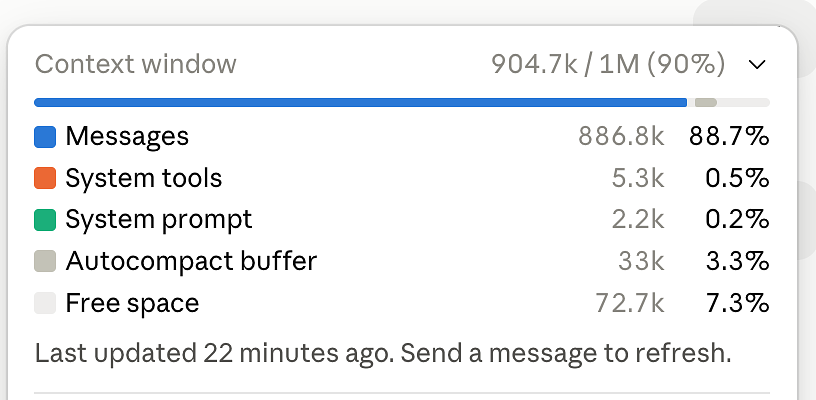
Alex Volkov, of Weights & Biases, ran Tamara Tran's plugin on a real Claude session: nearly a million tokens down to 86,000 in one second.
 Alex Volkov
22h
Alex Volkov
22h
This is actually insane. This uses @typesafeai Jev model, as a plugin in Claude to review all the un-nesseasary tool calls, and it takes 1s to run!
Like, literally, 1 second to take my Claude session from nearly 1M to ... 86K tokens! 😮
Ask your claude to install it and be amazed
Use this prompt
```
Install, and configure :
https://github.com/tamaratran/fast-jev-compaction
```
Mau Baron has Jev playing all four characters in a Smash Bros match against itself: 22 million tokens for the match, which he says cost a couple of cents.
 Mau Baron
22h
Mau Baron
22h
jev is insane 🤯
here is jev playing smash bros against itself
he is controlling all 4 different characters.
and literally deciding whats the best
move to play against itself
all within a fraction of a second
i used over 22 million tokens to play this match
and it only cost me a couple of cents...
jev does not replace gpt6 astra
but the possibilities with its instant response time
are endless
Kush Bhuwalka, of Puffle, with the two-line observation several people then built: retrieve as usual, run Jev over every chunk, delete the ones that are not relevant. Precision in RAG has been the half nobody could afford at retrieval time, since the fix was another model call per chunk.
 Kush Bhuwalka
23h
Kush Bhuwalka
23h
also did anyone realize @typesafeai jev solved precision in RAG?
you can run jev on all the chunks it retrieves and delete the irrelevant ones.