The Founder Bookshelf
Books founders recommend to each other. Browse by topic or by where you are as you grow, mark what you've read, and add what's next.
32 books on Investing
-
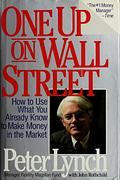
Ordinary observation can beat Wall Street's professionals.
Peter Lynch argues that everyday investors have an edge over Wall Street because they spot great products and companies in daily life before the pros do. He explains...
1 founder recommends Get the book ↗
-
The rich buy assets, not the appearance of wealth.
Kiyosaki contrasts the money lessons of his educated but cash-strapped poor dad with those of his entrepreneurial rich dad. He argues that financial education, owning...
1 founder recommends Get the book ↗
-
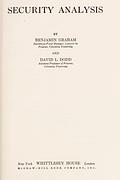
The foundational text that built modern value investing.
First published in 1934 in the wake of the Great Depression, Security Analysis is the rigorous, technical foundation of value investing. Graham and Dodd lay out a...
1 founder recommends Get the book ↗
-
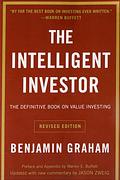
The timeless bible of disciplined value investing.
First published in 1949, The Intelligent Investor lays out Benjamin Graham's philosophy of value investing for the defensive and the enterprising investor. It teaches...
1 founder recommends Get the book ↗
-
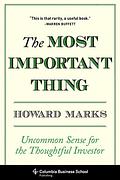
Why thinking differently and better beats being smart.
Drawn from Howard Marks's celebrated investor memos, the book distills his philosophy into themes like second-level thinking, the price-value relationship, and...
1 founder recommends Get the book ↗
-
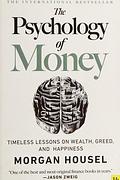
Doing well with money is about behavior, not intelligence.
Through a series of short stories, Morgan Housel argues that financial success is less about what you know and more about how you behave. He explores how greed, fear,...
1 founder recommends Get the book ↗
-
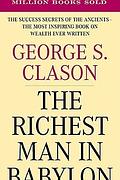
Pay yourself first and let savings compound.
Through a set of parables set in ancient Babylon, the book teaches timeless principles of personal finance such as saving at least a tenth of what you earn and putting...
1 founder recommends Get the book ↗
-
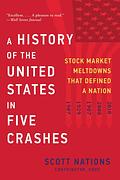
Five market crashes and the lessons they left behind.
A History of the United States in Five Crashes examines five major American stock market meltdowns: the Panic of 1907, Black Tuesday in 1929, Black Monday in 1987, the...
-
Why low-cost index funds usually beat stock pickers.
Malkiel popularizes the random walk hypothesis, arguing that stock prices move unpredictably and that few investors can consistently beat the market. He surveys...
-
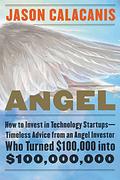
A blunt playbook for getting into early-stage tech investing.
Jason Calacanis lays out how an outsider can break into angel investing in technology startups. He covers building deal flow, evaluating founders, picking winners, and...
-
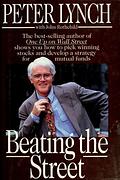
How a legendary fund manager picks winners by doing the homework.
Peter Lynch walks through how he picked stocks at Fidelity's Magellan Fund and how individual investors can do the same. He details his research process, his approach...
-
The insider-trading scandals that defined 1980s Wall Street.
Den of Thieves details the insider-trading scandals of the 1980s centered on figures like Ivan Boesky and Michael Milken. James B. Stewart reconstructs how a web of...
-
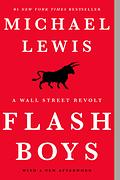
How high-frequency traders rigged the stock market, and who fought back.
Flash Boys investigates how high-frequency trading firms exploited tiny speed advantages to front-run ordinary investors. It follows a group led by Brad Katsuyama who...
-
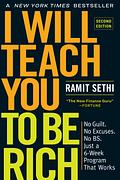
Automate your money and spend guilt-free on what you love.
A practical six-week program that teaches young professionals to optimize credit cards, banks, investing, and spending through automation. Sethi argues for spending...
-
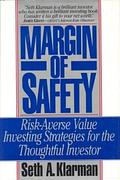
Protect your downside first, and the upside takes care of itself.
Seth Klarman lays out a risk-averse approach to value investing, centered on buying assets well below their intrinsic value to leave a cushion against error. He...
-
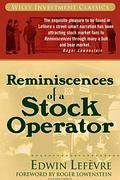
A century-old trader's tale on greed, fear, and timing.
Told as the memoir of speculator Larry Livingston, the book traces a trader's rise, ruin, and recovery across early twentieth century markets. It captures the...
-
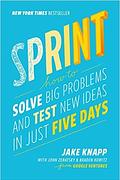
Solve big problems and test ideas with customers in five days.
Sprint lays out a five-day process, developed at Google Ventures, for solving hard problems and validating ideas before investing heavily in them. Each day has a...
-
Find your top strengths and build your life around them.
An upgrade of Gallup's strengths assessment, the book pairs a short read with an online code that unlocks the CliftonStrengths test. After taking it, readers receive...
-
How money, credit, and finance shaped human history.
The Ascent of Money traces the evolution of finance from ancient lending and the birth of banking through bonds, stock markets, insurance, and real estate. Niall...
-
How a handful of outsiders saw the housing crash coming.
The Big Short follows a small group of investors who recognized that the subprime mortgage market was a fraud waiting to collapse and bet against it. Michael Lewis...
-
Plain advice on low-cost, long-term index investing.
Drawn from the Bogleheads online community, the book offers straightforward guidance on building wealth through low-cost index funds, diversification, and sensible...
-
Heads I win, tails I do not lose much.
Pabrai distills a low-risk, high-return value investing framework inspired by Indian Gujarati business owners and Warren Buffett. He emphasizes buying simple,...
-
Buffett's shareholder wisdom, organized into a coherent philosophy.
Lawrence Cunningham curates and thematically arranges Warren Buffett's Berkshire Hathaway shareholder letters into a structured book on investing and business. It...
-
Cheap, fast experiments beat big, untested ideas.
Schrage argues that organizations get more innovation value from running many cheap experiments than from chasing a few good ideas. He introduces the 5x5 framework:...
-
Beat the biggest investing risk: your own brain.
Montier walks through the most common psychological biases that sabotage investors, from overconfidence and loss aversion to herd behavior. Drawing on research in...
-
Own the whole market, keep costs low, and win.
John Bogle makes the simple, powerful case for low-cost index fund investing. He shows how fees, taxes, and trading costs quietly erode returns, and argues that buying...
-
A simple formula for buying good companies cheap.
Greenblatt lays out his magic formula, a simple rules-based method of buying good businesses at bargain prices using return on capital and earnings yield. Written in...
-
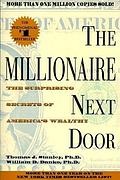
Most real millionaires live below their means, not large.
Based on years of surveys, the authors show that most American millionaires are not flashy spenders but disciplined savers who live frugally, budget carefully, and...
-
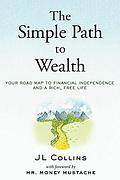
Buy low-cost index funds and stop overthinking it.
Written originally as letters to his daughter, Collins lays out a straightforward approach to building wealth through low-cost broad-market index funds. He explains...
-
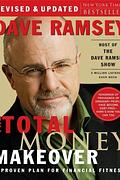
Get out of debt with a clear step-by-step plan.
Ramsey lays out a sequence of baby steps to escape debt, build an emergency fund, and build wealth, starting with the debt snowball method. He emphasizes behavior and...
-
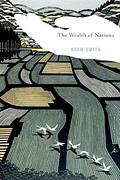
The founding text of free-market economics.
Smith's landmark treatise is the first comprehensive system of political economy, treating economics as a subject in its own right. He argues that the division of...
-
Find profits hidden where most investors never look.
Greenblatt shows how individual investors can find outsized returns in overlooked special situations like spin-offs, restructurings, and merger securities. He argues...
Questions, answered
What books do founders recommend?
Founders on the eChai network recommend titles like One Up on Wall Street, Rich Dad Poor Dad, and Security Analysis. The bookshelf ranks books by how many founders have read them.
Where can I find a startup reading list?
The eChai founder bookshelf is a curated, founder-recommended reading list you can browse by topic (fundraising, product, hiring) and by stage.
How is the bookshelf ordered?
By recommendation: the more founders mark a book read, the higher it ranks. You can also sort by newest or A to Z.