The Founder Bookshelf
Books founders recommend to each other. Browse by topic or by where you are as you grow, mark what you've read, and add what's next.
15 books on Customer & Human Behavior
-
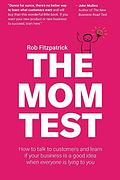
Ask about their life, not your idea, to get honest answers.
Fitzpatrick teaches founders how to interview potential customers without biasing the answers, even when people are inclined to be polite and lie to you. The core idea...
2 founders recommend Get the book ↗

-
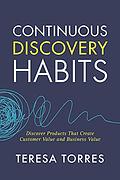
Build a weekly habit of talking to customers to guide product decisions.
Continuous Discovery Habits presents a structured, sustainable approach to product discovery built on regular customer contact. Torres introduces the opportunity...
-
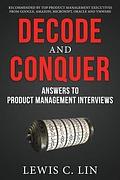
Frameworks and model answers for tough PM interview questions.
Decode and Conquer is a focused playbook for answering product management interview questions. Lin introduces structured frameworks such as the CIRCLES Method for...
-
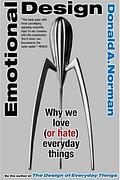
Why beautiful things often work better than plain ones.
Norman argues that emotion is central to how we experience and judge the things we use, not a superficial add-on. He proposes three levels of design: visceral...
-
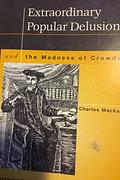
The original field guide to bubbles, manias, and herd behavior.
Extraordinary Popular Delusions and the Madness of Crowds is a 19th-century survey of mass folly, from the Tulip mania and the South Sea Bubble to the Mississippi...
-
Using economics and data to explain the hidden side of everything.
Levitt and Dubner apply economic tools to unconventional questions, from cheating teachers to the inner workings of drug gangs. The book argues that incentives explain...
-
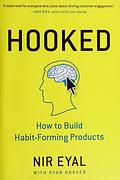
The four-step Hook Model behind products people use without thinking.
Hooked lays out the Hook Model, a four-phase cycle of trigger, action, variable reward, and investment that explains how successful products build user habits. Drawing...
-
Top traders explain how they really beat the market.
Schwager interviews some of the most successful traders of the era to uncover what separates them from the rest. Across markets and styles, common threads emerge...
-
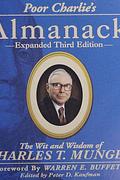
Munger's mental models for thinking clearly across every discipline.
This collection gathers Charlie Munger's speeches, talks, and writings, centered on his framework of multidisciplinary mental models. It explores rational decision...
-
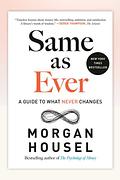
Bet on the things that never change.
In a series of short stories, Housel argues that the smartest strategy is to study what stays constant about human behavior rather than predicting what will change. He...
-
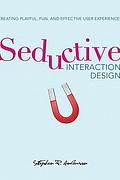
Use psychology to make products people actually enjoy using.
Anderson reframes interaction design around the stages of seduction, applying principles from psychology to make experiences engaging rather than merely functional....
-
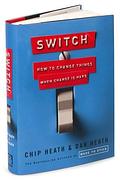
Direct the rider, motivate the elephant, shape the path.
The Heath brothers use the metaphor of a rider (rational mind) on an elephant (emotional mind) to explain why change is hard and how to make it stick. They offer a...
-
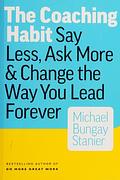
Lead by asking better questions, not giving answers.
Stanier distills coaching into seven essential questions that managers can use to build a daily coaching habit. The premise is that leaders should stay curious a...
-
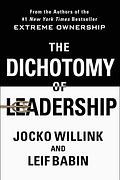
Every leadership strength becomes a weakness when overused.
The follow-up to Extreme Ownership focuses on the balancing act of leadership: knowing when to push and when to ease off. Willink and Babin examine opposing forces a...
-
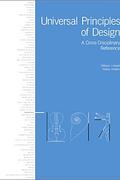
A cross-disciplinary reference of how good design works.
Universal Principles of Design is an illustrated reference covering concepts drawn from across design, psychology, and engineering, with each principle explained on a...
Questions, answered
What books do founders recommend?
Founders on the eChai network recommend titles like The Mom Test, Continuous Discovery Habits, and Decode and Conquer. The bookshelf ranks books by how many founders have read them.
Where can I find a startup reading list?
The eChai founder bookshelf is a curated, founder-recommended reading list you can browse by topic (fundraising, product, hiring) and by stage.
How is the bookshelf ordered?
By recommendation: the more founders mark a book read, the higher it ranks. You can also sort by newest or A to Z.