The Founder Bookshelf
Books founders recommend to each other. Browse by topic or by where you are as you grow, mark what you've read, and add what's next.
28 books on Hiring, Team & Culture
-
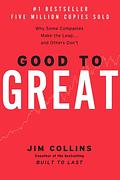
What separates merely good companies from truly great ones.
Jim Collins and his research team studied companies that made a sustained leap from good to great results and compared them to peers that did not. They identify common...
2 founders recommend Get the book ↗

-
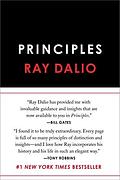
Turn your hard-won lessons into a system you can repeat.
Dalio distills the life and work principles he developed running Bridgewater into a single framework for making better decisions. He champions radical truth and...
2 founders recommend Get the book ↗

-
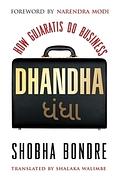
The instinct, grit, and trading sense behind Gujarati business success.
Dhandha profiles several successful Gujarati entrepreneurs, including a diamond merchant, a New York Life insurance agent, a motel owner, and hotel and manufacturing...
1 founder recommends Get the book ↗
-
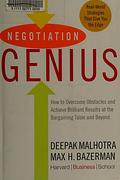
Turn hard bargaining situations into brilliant outcomes with proven frameworks.
Drawing on decades of Harvard research and teaching, Malhotra and Bazerman provide frameworks and strategies for negotiating in difficult situations. They cover...
1 founder recommends Get the book ↗
-
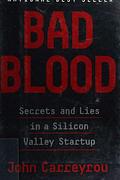
The definitive account of Silicon Valley's biggest fraud.
John Carreyrou reconstructs the rise and collapse of Theranos, the blood-testing startup that claimed to revolutionize diagnostics with a single drop of blood. He...
-

Negotiate from your own strengths, not someone else's playbook.
Shell lays out an information-based approach to negotiation grounded in your personal bargaining style rather than rigid tactics. He walks through a six-step framework...
-
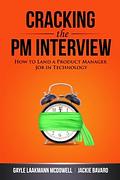
The end-to-end manual for landing a product manager job.
Cracking the PM Interview demystifies the product manager role and the hiring process at major tech companies. It covers what PMs actually do, how to position a...
-
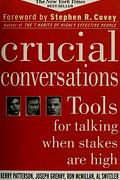
Handle high-stakes conversations without going silent or going to war.
The authors define crucial conversations as those where stakes are high, opinions differ, and emotions run strong. They offer a step-by-step method for staying in...
-
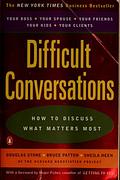
Break every hard talk into three conversations you can actually manage.
Drawing on the Harvard Negotiation Project, the authors argue that every difficult conversation is really three: the what-happened conversation, the feelings...
-
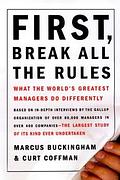
Great managers break conventional rules to grow people's strengths.
Based on Gallup's massive study of managers and employees, the authors find that great managers reject received wisdom and instead build on each person's natural...
-
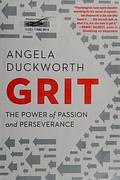
Sustained passion and perseverance beat raw talent.
Angela Duckworth argues that the key to high achievement is not talent but grit, the combination of passion and sustained perseverance toward long-term goals. She...
-
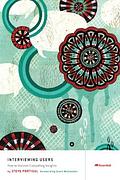
Learn to ask the questions that surface what users really do.
A practical guide to planning and conducting user interviews that yield genuine insight rather than confirmation of what you already believe. Portigal covers...
-
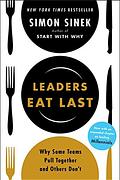
Great leaders sacrifice their comfort to keep their people safe.
Drawing on the Marine Corps principle that officers eat last, Sinek argues that the best leaders create a 'circle of safety' so their people can focus on shared goals...
-
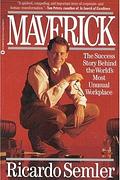
Hand employees real freedom and watch the company thrive.
Semler recounts how he tore up the rulebook at Semco, letting workers set their own hours, choose their managers, and even decide their pay. The book chronicles the...
-
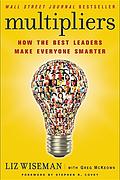
Great leaders multiply the intelligence of their teams.
Based on research across more than 150 leaders, Wiseman distinguishes Multipliers, who amplify the intelligence and capability of those around them, from Diminishers,...
-
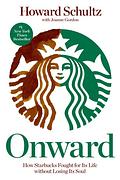
A founder returns to rescue the company he built.
Howard Schultz tells how he returned as CEO of Starbucks in 2008 to lead a turnaround as the company faltered amid overexpansion and the financial crisis. He recounts...
-
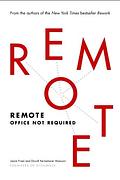
Why working from anywhere beats forcing everyone into one office.
The Basecamp founders argue that the advantages of remote work usually outweigh the drawbacks, and they address common objections head on. The book covers how to...
-
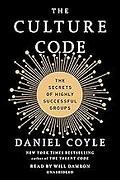
Belonging, candor, and purpose are what make groups click.
Coyle goes inside high-performing groups, from Navy SEALs and IDEO to the San Antonio Spurs, to find what makes their cultures work. He distills culture down to three...
-
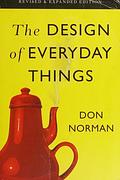
Good design is invisible; bad design is the user's fault you wrongly accept.
Don Norman explains why some everyday objects are a pleasure to use while others are frustrating, blaming bad design rather than clumsy users. He introduces concepts...
-
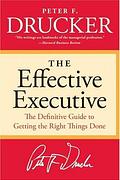
Effectiveness is a habit anyone can learn.
Drucker argues that effectiveness, doing the right things, is a discipline that can be learned rather than an innate talent. He lays out practices including managing...
-
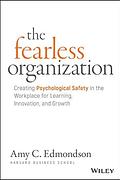
Build teams where people speak up without fear.
Edmondson argues that psychological safety, the shared belief that it is safe to take interpersonal risks, is the foundation of high-performing teams. Drawing on...
-
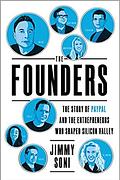
The chaotic origin story of PayPal and the people it launched.
The Founders chronicles the turbulent early years of PayPal, drawing on extensive interviews and internal material. It traces how a fractious group including Peter...
-
Great teammates are humble, hungry, and smart.
Told first as a fable and then as a practical model, this book identifies three virtues that make someone an ideal team player: humble, hungry, and smart (in the...
-
Set the standard, and the winning takes care of itself.
Bill Walsh shares the leadership philosophy he used to turn the worst team in football into a dynasty. His core idea is the Standard of Performance: define and...
-
Every organization is a set of tribes, and culture is the lever.
Drawing on an eight-year study of roughly 24,000 people across two dozen organizations, the authors argue that every company is made up of tribes of 20 to 150 people....
-
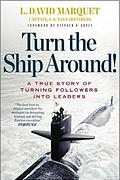
Stop giving orders, start creating leaders at every level.
Marquet recounts how he took the worst-performing submarine in the U.S. fleet and made it one of the best by abandoning the traditional leader-follower model. Instead...
-
Your culture is what your people do, not what you say.
Horowitz argues that culture is defined by how people actually behave, especially when leaders are not watching. He draws lessons from unlikely leaders including the...
-
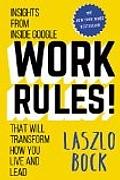
How Google hires, manages, and frees its people.
Bock shares the people-operations practices that shaped Google, from rigorous, structured hiring to giving employees freedom and using data to make management...
Questions, answered
What books do founders recommend?
Founders on the eChai network recommend titles like Good to Great, Principles: Life and Work, and Dhandha: How Gujaratis Do Business. The bookshelf ranks books by how many founders have read them.
Where can I find a startup reading list?
The eChai founder bookshelf is a curated, founder-recommended reading list you can browse by topic (fundraising, product, hiring) and by stage.
How is the bookshelf ordered?
By recommendation: the more founders mark a book read, the higher it ranks. You can also sort by newest or A to Z.