The first address of the businesses that made this city's money, in the order they started: a cotton mill in 1861, a stock exchange in 1894, a soda counter, a tea depot, two pharma companies started with twenty-five thousand rupees each, a detergent mixed in a backyard, a chaat cart, and a family that sold and started again.
-
Ahmedabad Spinning and Weaving Company
- Started
- 30 May 1861
- By
- Ranchhodlal Chhotalal
- With
- About one lakh rupees
Ranchhodlal Chhotalal was born in 1823, worked in the customs department, and in 1853 was discharged from it over a bribe allegation. Eight years later, on 30 May 1861, he opened the Ahmedabad Spinning and Weaving Company with about one lakh rupees of capital, the first cotton mill in the city and the second started by an Indian in the country, after Bombay. It came to be called the Shahpur Mill. He opened a second mill in 1877, and in 1885 was nominated the first Indian president of the Ahmedabad municipality, a post he held until 1895. By 1905 the city had about thirty-three mills, and the rest of this walk is what their owners did with the money: research laboratories, a management school, a design school, and the families whose chemists and clerks started the next century's companies. The mill itself is gone, and so is its address. The sources place it in Shahpur, north of the walled city, and a neighbourhood there still goes by Shahpur Mill Compound in the postal directories, which is a lead and not a plot. This stop opens on the neighbourhood rather than on a guessed pin. If you know the survey sheet it stands on, write to us.
From en.wikipedia.org →
-
Calico Dome
- Started
- 1880, the mill; 1962, the dome
- By
- Karamchand Premchand's family, later the Sarabhais
- Closed
- 1998; assets auctioned 2010 for Rs 270.83 crore
Calico was the generation after the first mill. The Ahmedabad Manufacturing and Calico Printing Company was set up in 1880 by Sheth Karamchand Premchand's family (one reference gives 1888 as the founding year), and under Ambalal Sarabhai, who took charge of it as a young man and in 1922 installed a complete fine-count spinning, weaving and processing mill, it became one of the most modern textile companies in the country, the first Indian mill to make cotton sewing thread. The dome is what the company built when it wanted a showroom. Gautam and Gira Sarabhai, Ambalal's son and daughter, designed it in 1962 as a geodesic dome after Buckminster Fuller, with the shop below ground and the dome as its roof; the first fashion show in Ahmedabad was held in it. The mill stopped production in 1998. The dome cracked in the 2001 earthquake, flooded in 2003 and eventually collapsed; the municipal corporation bought it as industrial heritage in 2006, restored the basement in 2014, and in March 2025 started rebuilding the dome itself on a budget of Rs 2.26 crore. The mill's assets were auctioned by a court-appointed liquidator in April 2010, seven lots for Rs 270.83 crore, with more than 120 bidders. Update: the Sarabhai name survives in the city as institutions rather than as a mill, which is the fourth stop.
From en.wikipedia.org →
-
Old Stock Exchange Building
- Started
- 1894
- As
- A public charitable trust, the second exchange in India after Bombay's
- Closed
- SEBI allowed it to exit the business in April 2018
Thirty-three years after the first mill the city had enough mill shares changing hands to need a floor of its own. The Ahmedabad Stock Exchange was set up in 1894 as a public charitable trust, the second exchange in India after Bombay's of 1875. This building at Manek Chowk, facing Mahurat Pol and a few steps from the Jama Masjid, was put up in 1919, with a European facade over jharokha balconies and Art Deco additions, and the exchange worked from it until 1996, when it moved to the Kamdhenu Complex at Panjrapol and went live on screens on 12 December that year. It never recovered the trade the national exchanges took, and in April 2018 SEBI allowed it to exit the stock exchange business. The building is graded heritage and stands. It belongs on this walk because it is the one address in the city where the money on the other twenty-two stops was priced in public for a century.
From en.wikipedia.org →
-
The Retreat, Shahibaug
- Built
- 1904, a 21-acre estate
- By
- The Sarabhai family of Calico Mills
- Became
- The Calico Museum of Textiles, since 1983
The Retreat is the Sarabhai family's estate in Shahibaug, twenty-one acres, dating from 1904, and it is on this walk because of what was decided in it. Ambalal Sarabhai, who ran Calico, gave Gandhi Rs 13,000 in 1915 to keep the Kochrab ashram going after it admitted an untouchable family. His son Vikram was born here on 12 August 1919 and had a small laboratory under the water tank; in 1947, with Kasturbhai Lalbhai's support, he founded the Physical Research Laboratory, which began in a room in an outhouse of this estate before moving to the M.G. Science Institute and then to its own campus, and which became the cradle of the Indian space programme. His brother Gautam, then chairman of Calico, was told by Ananda Coomaraswamy in 1946 that the city needed a textile museum; Gautam and his sister Gira founded the Calico Museum of Textiles in 1949, inaugurated by Nehru inside the mill premises, and in 1983 it moved here, to a building Gira designed around a courtyard with carved facades taken from old Gujarati houses. Gira and Gautam also helped establish the National Institute of Design in the 1960s. Ambalal's sister Anasuya organised the city's mill workers. The family earned the name the Medici of Ahmedabad, and the museum is still here, run by the Sarabhai Foundation.
From en.wikipedia.org →
-
Vadilal Industries
- Started
- 1907
- By
- Vadilal Gandhi
- Today
- Listed; revenue Rs 1,057 crore in FY23; 45 countries
Vadilal Gandhi opened a soda fountain shop in Ahmedabad in 1907 and added ice cream, made by the kothi method, a hand-turned machine churning milk with ice and salt. The first ice cream outlet opened in 1926, the year the company imported an ice cream machine from Germany; cassata came in the 1950s. It is the only business on this walk that was trading before the first world war, and the only one that still sells what it started with. The company is listed on the BSE and NSE, reported revenue of Rs 1,057 crore in the year to March 2023, exports to 45 countries by its own count, and is run by the fifth generation of the family, Kalpit Gandhi being the fifth-generation chief financial officer who tells the story in the Better India interview this stop is read from. This is Vadilal House, the corporate office on Netaji Road; where the 1907 shop stood is not in any source we checked.
From thebetterindia.com →
-
Wagh Bakri Tea Group
- Started
- 1919, as the Gujarat Tea Depot
- By
- Narandas Desai
- Today
- Revenue Rs 1,873 crore in FY23; fourth and fifth generation
Narandas Desai leased 500 acres near Durban in 1892 and grew tea there for more than twenty years, until racial discrimination made it impossible to go on. He left in 1915 with a certificate from Gandhi dated 12 February that year: "I knew Mr Narandas Desai in South Africa, where he was for a number of years a successful tea planter." In 1919, on borrowed money, he opened the Gujarat Tea Depot Company in Ahmedabad to sell loose tea, and its first customers were the workers of the mills on the earlier stops of this walk. The brand came in 1934: Wagh Bakri, a tiger and a goat drinking from the same cup, a deliberate statement against caste in a city where the two would not share a vessel. Gujarat Tea Processors and Packers, the packaged tea company, was set up in 1980. Forbes India put operating revenue at Rs 1,873 crore in the year to March 2023, the third-largest packaged tea company in the country and the leader in Gujarat since 2000; the fourth generation, Parag and Paras Desai, joined in 1995, and Parag died in October 2023 at 49. The Business Today account dates the brand to 1925; the company's own timeline says 1934, and that is the year used here. This is Wagh Bakri House, the head office opposite Parimal Garden; the 1919 depot's address is not given in any source we checked.
From waghbakritea.com →
-
Arvind
- Started
- 1931
- By
- Kasturbhai Lalbhai and his brothers
- Today
- Revenue Rs 8,329 crore in FY25; 25,833 employees
Kasturbhai Lalbhai was schooled at the government high school named after Ranchhodlal Chhotalal, the man who opened the first stop on this walk, and left college at seventeen in 1912 when his father died, to join the family's Raipur Mill. His father Lalbhai Dalpatbhai had started the Saraspur Manufacturing Company in 1897. In 1931, with his brothers, Kasturbhai founded Arvind Mills here on Naroda Road, in the middle of the depression that was closing other mills, answering Gandhi's call for Swadeshi with a mill built, in the company's words, to prove that Indian mills could compete with the finest in the world. The founding share capital is given as Rs 1.65 lakh by the Business Standard company history and as Rs 25.25 lakh in other accounts; the company's own story states no figure. Kasturbhai then put a large share of the fortune into institutions: the Ahmedabad Education Society in 1936, ATIRA in 1947 with Vikram Sarabhai, the L.D. College of Engineering the same year, the Institute of Indology in 1962, and with the Sarabhais the management institute, which is why several of the city's campuses exist. He received the Padma Bhushan in 1969 and retired in January 1977. Arvind commissioned India's first denim plant in 1987 and by 1991 was making 100 million metres a year, the fourth-largest denim producer in the world; it reported revenue of Rs 8,329 crore in the year to March 2025 with 25,833 employees, and Sanjay Lalbhai is chairman and managing director.
From arvind.com →
-
ATIRA
- Started
- 13 December 1947; working from 1949
- By
- The mills of Ahmedabad, Kasturbhai Lalbhai and Vikram Sarabhai
- Opened
- Foundation stone by Sardar Patel, 1950; inaugurated by Nehru, 10 April 1954
An industry that was already winning did something unusual with its money. In 1947 the textile mills of Ahmedabad pooled funds into a research association for their own sector, the Ahmedabad Textile Industry's Research Association, formed on 13 December 1947 on an idea worked out by Vikram Sarabhai, Kasturbhai Lalbhai and Shanti Swaroop Bhatnagar, with Sarabhai as its first honorary director. It began work in 1949. Sardar Patel laid the foundation stone of this campus on 1 November 1950, Nehru inaugurated it on 10 April 1954, and Achyut Kanvinde designed the main building. It sits on 272,000 square metres between what became the Indian Institute of Management and the Physical Research Laboratory, and that is the point of the stop: the habit of industrialists funding institutions rather than only factories is the single most distinctive thing about how this city grew, and this campus is where it started. The next generation of companies on this walk were started by chemists and pharmacists trained in the institutions that habit paid for.
From en.wikipedia.org →
-
LM College of Pharmacy
- Started
- 1951 or 1952, by which family tells it
- By
- Ramanbhai Patel and Indravadan Modi
- With
- Rs 25,000; first-year turnover about Rs 1.25 lakh
Ramanbhai Patel, born in 1925 at Kathor in south Gujarat, studied chemistry at this college and taught here before he was a founder. With his school friend Indravadan Modi, who quit a chemist's job in Mumbai, he started Cadila Laboratories in a rented bungalow with a capital of Rs 25,000, and the company turned over about Rs 1.25 lakh in its first year. The two families date the start differently, and the difference is part of the story: the Business Standard account of the Modi side and Cadila Pharmaceuticals' own heritage page give 1951 for Modi's decision and 13 March 1952 for the founding, and the Zydus account gives 1952. The early products say what Indian pharma was for at the time: Isopar in 1957, a tuberculosis formulation combining isoniazid and para-aminosalicylic acid, and Neuroxin-12 in 1959, vitamins B1, B6 and B12 in one vial, cheaper versions of medicines patients could not otherwise get. The first factory came at Ghodasar in 1967. In 1995, after the two founders disagreed, the company was split in two: Cadila Healthcare, the Patel family's, which is now Zydus Lifesciences, and Cadila Pharmaceuticals, the Modi family's. Both are still headquartered in this city, which is why this walk has two endings. Ramanbhai died in 2001 and his son Pankaj Patel is chairman of Zydus. The rented bungalow has not been located.
From business-standard.com →
-
Havmor Ice Cream
- Started
- 1953 on Relief Road, after 1944 in Karachi
- By
- Satish Chandra Chona
- Sold
- To Lotte, 2017, for Rs 1,020 crore
Satish Chandra Chona was a ground engineer with BOAC who learned to make ice cream at his uncle's restaurant, and in 1944 he set up a shop in Karachi called Have More. Partition ended it. He tried Dehradun and then Indore before reaching Ahmedabad, and in 1953 he started Have More again on Relief Road, from Kalyan Bhavan, with the help of Kasturbhai Lalbhai, whose Arvind is two stops back. One account of that arrangement says the premises came with the condition that nothing with egg in it would be sold, which became the brand's vegetarian identity; it is a family story rather than a record, and it is given here as one. The name was shortened to Havmor in the 1960s. Pradeep Chona took over from his father, and his son Ankit joined in 2006. In 2017, with revenue of nearly Rs 500 crore in the year to March 2017, the family sold Havmor Ice Cream to South Korea's Lotte Confectionery for about Rs 1,020 crore, the deal closing that November. It is the one business on this walk that its founding family no longer owns, and the last stop is what they did next. This is the Relief Road outlet near Rupam Cinema; whether it stands on the 1953 plot is not confirmed.
From forbesindia.com →
-
Torrent Pharmaceuticals
- Started
- 1959, as Trinity Laboratories
- By
- Uttambhai Nathalal Mehta
- With
- Rs 25,000
Uttambhai Nathalal Mehta was born in 1924 in Mehmadpur, a village near Palanpur, and worked as a medical representative for Sandoz from 1945 to 1958. In 1959 he started Trinity Laboratories with Rs 25,000, the same seed money Cadila had begun with on the previous stop, and in 1968 began marketing a medicine for the treatment of mental illness, at a time when specialty drugs in India came almost entirely from multinationals. The company was renamed Torrent Pharmaceuticals in 1971, and the biographical accounts add Torrent Laboratories as a separate step in 1976. Its first manufacturing facility came in 1980 at Vatva, and its first export order in 1983. Mehta died in 1998, and the hospital that carries his name is the U.N. Mehta Institute of Cardiology. The group his sons Sudhir and Samir run bought the Surat Electricity Company early in 1997 and the Ahmedabad Electricity Company later that year, when the Gujarat government sold Torrent its stake after a bidding contest with Bombay Dyeing, and the group today spans pharmaceuticals, power, gas and the Gujarat Titans cricket team. This is Torrent House off Ashram Road; the 1959 premises have not been traced.
From en.wikipedia.org →
-
Induben Khakhrawala
- Started
- 1965, at home
- By
- Induben Jhaveri
- Today
- 18 stores, revenue over Rs 20 crore, some 200 staff, mostly women
Induben Jhaveri started making khakhra in a small room of her home in Ahmedabad in 1965, up to five kilos a day by hand, to support the family when her husband Sumanlal's health failed. Her rule was to sell only what she would gladly feed her own children. The first shop opened in 1970 at Mithakhali, and a second near the family home in 1990; her son Hiren and then her grandsons Nishit and Ankit Jhaveri scaled it. The Better India account this stop is read from, with the grandsons quoted, puts the business at more than eighteen stores, revenue over Rs 20 crore, more than 200 employees with a deliberate emphasis on employing women, and exports to eight countries. Other retellings date the start to 1955 or 1964; the family's own account in that interview says 1965, and that is used here. She is on this walk for the same reason Karsanbhai Patel is two stops on: the first address was a home, and the capital was the work. This is the Mithakhali shop.
From thebetterindia.com →
-
Reliance Industries, Naroda
- Started
- 1966
- By
- Dhirubhai Ambani
- Became
- Vimal, and the 1977 IPO oversubscribed seven times
Dhirubhai Ambani had been trading yarn and spices from Mumbai since 1958 when he decided to make fabric rather than deal in it. Reliance Textiles Industries was incorporated in 1966 and set up a synthetic fabrics mill the same year at Naroda, on the industrial belt east of this city; the Ahmedabad record dates the start of the mill to February 1966. From this mill came Vimal, the brand that made the company a household name in the 1970s, and the 1977 public issue that Reliance's own history describes as ushering in the equity cult in India, oversubscribed seven times. The company that grew from here is the largest in the country by market value, headquartered in Mumbai, and its textile division still lists this address. Figures for the borrowed capital and the size of the first plot circulate in student case studies and are not repeated here; the company's own history and the standard reference give the year and the place, and that is what the stop rests on.
From en.wikipedia.org →
-
Nirma
- Started
- 1969, at home
- By
- Karsanbhai Patel
- At
- Rs 3 a kilo, against Rs 13 for the nearest brand
Karsanbhai Patel, born in 1945 in Patan, took a chemistry degree by twenty-one, worked as a lab technician at New Cotton Mills, one of the Lalbhai mills, and then at the state's geology and mining department. In 1969 he began making a detergent powder at home, in a room about ten feet square, and selling it door to door, fifteen to twenty packets a day, on the cycle ride to an office some fifteen kilometres away. He priced it at Rs 3 a kilo when the cheapest brand on the shelf was Rs 13, by the company's own account (Wikipedia gives Rs 3.50), and named it after his daughter Nirupama. He kept the job for about three years. Within a decade it was the largest-selling detergent in the country, and by the 1980s held about a third of the detergent market. The business was deliberately labour-intensive, which made it a large employer as it grew, and the group went on into soaps, salt, soda ash and cement, and in 1995 founded the institute that became Nirma University. He received the Padma Shri in 2010. This is Nirma House on Ashram Road, the corporate office; the house with the backyard has not been located.
From en.wikipedia.org →
-
Honest Restaurant
- Started
- 1975, a cart
- By
- Rameshbhai Agrawal, by one account; Ramesh and Vimla Gupta, by the other
- First restaurant
- C.G. Road, 1985 or 1987
Everyone agrees on the cart, the city and the dish. Honest began as a family cart selling chaat in Ahmedabad, and around 1975 bhaji pav, a Mumbai dish of spiced vegetables with buttered rolls, was added to the menu and took over the business; the name was chosen to say that the food and the dealing were straight. After that the published accounts separate. The Ahmedabad company's own page names Rameshbhai Agrawal and his family, a cart from 1975, the first sit-down restaurant on C.G. Road in 1985 opened by Lalbabu Rameshbhai Agrawal, with the recipes Ashaben Lalbabu Agrawal's and the business now led by Dushyant Lalbabu Agrawal. The story the United States chain tells names Ramesh Gupta and his wife Vimla, a chaat cart at Law Garden from the late 1960s, bhaji pav in 1975 with her spice blend, the cart inherited by three sons of whom the youngest, Vijay, launched more carts and opened the first restaurant in 1987, and the first American outlet in 2016. Two companies carry the name today, New Honest Corner here at Panchvati and Honest International Foods, and each counts itself the original. We have not tried to settle it; a family business of this age often has several branches and several surnames in play, and the honest answer is to say so. This is the White House restaurant at Panchvati; the cart is not located, and Law Garden, where one account puts it, is a kilometre east.
From newhonestcorner.com →
-
Rasna Group
- Started
- 1976, as Jaffe; Rasna from 1980
- By
- Areez Pirojshaw Khambatta
- Share
- 93% of soft drink concentrate in India, 2009
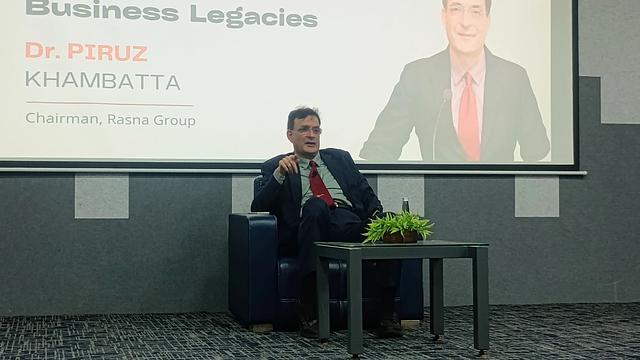
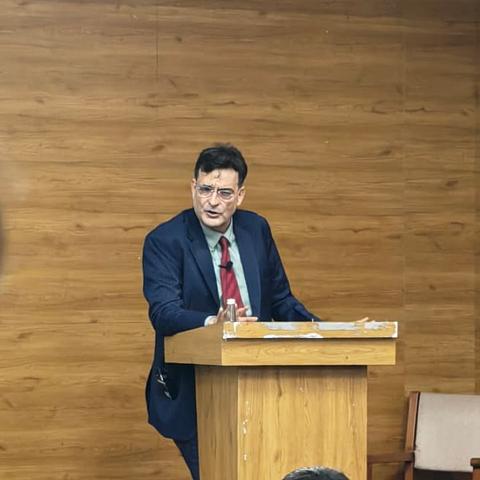
Areez Khambatta, born in 1937, took a chemistry degree at Gujarat College in 1959 and joined his father's business in 1962. In 1976, under Pioma Industries, he launched a soft drink concentrate called Jaffe, after Jaffna mangoes, as an affordable alternative to bottled carbonated drinks, and renamed it Rasna in 1980. It grew through the 1980s on the "I love you Rasna" campaign, run by Mudra from 1984 to 2005, and by 2009 held 93% of the soft drink concentrate segment in the country. His son Piruz took over in 1997. Khambatta was vice president of the Federation of Parsi Zoroastrian Anjumans of India, died in Ahmedabad on 19 November 2022 at 85, and was awarded the Padma Shri posthumously in 2023. Rasna bought the Jumpin ready-to-drink brand from Hershey's India in 2025. This is the Rasna office at Panchvati, a few doors from Honest; the factory is at Kalol.
From en.wikipedia.org →
-
Intas Pharmaceuticals
- Started
- 1977; incorporated 1985
- By
- Hasmukh Chudgar
- Today
- Revenue Rs 24,108 crore in FY26; 25,000 employees; more than 70 countries
Hasmukh Chudgar, a pharmacist, started Intas in 1977 and incorporated it in 1985, and unlike the two pharma companies before it on this walk, it has never listed. His sons run it: Nimish and Binish Chudgar the company, and the eldest, Urmish, a haematologist trained in the United States, the biopharmaceuticals arm. Forbes India first put the family on its rich list in 2014, when ChrysCapital sold a 10% stake to Temasek at a valuation close to $1.4 billion, and Forbes describes it now as a $3.5 billion company by revenue; the ICRA figure Wikipedia carries is Rs 24,108 crore for the year to March 2026, with more than 25,000 employees. Accord Healthcare, its wholly owned subsidiary, sells its generics across Europe and North America, and in August 2025 it bought the biosimilar Udenyca from Coherus for $558 million. This is the corporate office near Sola Bridge on the SG Highway.
From forbesindia.com →
-
Adani Enterprises
- Started
- 1988, as Adani Exports
- By
- Gautam Adani
- Listed
- 1 November 1994, oversubscribed 25 times
Gautam Adani was born in Ahmedabad on 24 June 1962, the son of a small textile merchant, and left for Mumbai in 1978 to sort diamonds for Mahendra Brothers in Zaveri Bazaar. In 1981 his elder brother Mahasukhbhai bought a plastics unit here and asked him to run it, which put him into PVC imports; by 1985 he was importing primary polymers for small-scale industry, and in 1988 he set up Adani Exports, trading agricultural and power commodities. Liberalisation came three years later, and a trading house that had already learned to source abroad under the old rules was placed to move volume when they loosened. The company, now Adani Enterprises, listed on 1 November 1994, the issue oversubscribed 25 times at Rs 150 a share, and in the same year got the Gujarat Maritime Board's approval for a captive jetty at Mundra, which became the port. For a walk about where money starts, the useful part is the pivot rather than the scale: the diamond trade taught brokerage, the plastics unit taught importing, and the 1988 company was built on the two long before it owned any infrastructure. This stop is kept to what the group's own timeline and the standard reference agree on. This is Adani Corporate House at Shantigram; the 1988 office and the plastics unit have not been traced.
From adani.com →
-
Symphony
- Started
- 1988, as Sanskrut Comfort Systems
- By
- Achal Bakeri
- With
- Rs 7 lakh (Forbes India); Rs 1 lakh in other accounts
In the summer of 1987 Achal Bakeri, then 27, and his father Anil Bakeri, whose Bakeri group builds housing in this city, were talking about the air coolers in their new house, and his father challenged him to make a better one. He stayed out of the family's real estate business and in 1988 founded Sanskrut Comfort Systems, with Rs 7 lakh from the family by the Forbes India account and Rs 1 lakh in other retellings. It sold a thousand coolers in Ahmedabad the first year, 7,000 in 1989 and 21,000 in 1990, and listed on the Bombay Stock Exchange in 1994. Then, on investors' worry that it made one product, it moved into water heaters and washing machines in 1995 and 1996, and the diversification nearly killed it: by 2000 it could not pay the Diwali bonus, and in 2001 it went to the Board for Industrial and Financial Reconstruction. Between 2002 and 2004 it exited every other category and went back to coolers alone, came out of BIFR in 2009, and bought IMPCO, the company credited with the first air cooler, with Forbes India dating the purchase to 2008 and other accounts to 2009. Net sales were Rs 610 crore in 2015, it sells in some sixty countries, and Bakeri's rule since the crisis has been no credit to anyone and no debt. This is Symphony House on the SG Highway.
From forbesindia.com →
-
Cadila Pharmaceuticals
- Started
- On its own from 1995; founded 13 March 1952 by its own account
- By
- Indravadan Modi, with Ramanbhai Patel; run by Rajiv Modi
- Today
- Revenue Rs 3,675 crore in FY23; about 8,000 employees
Cadila Pharmaceuticals is what the Modi family's share of Cadila Laboratories became. Its own heritage page dates the founding to 13 March 1952 and tells its version of the beginning: Indravadan Modi cycling forty kilometres a day to call on doctors, and Livirubra, a liquid vitamin supplement, among the first products. The first factory came at Ghodasar in 1967, and after the two founding families divided the business in 1995 this half was restructured and renamed Cadila Pharmaceuticals, adding plants at Dholka, Samba and Ankleshwar in 1996. Indravadan Modi died on 26 November 2012 and his son Rajiv Modi runs it; it reported revenue of Rs 3,675 crore in the year to March 2023 with about 8,000 employees, and marked seventy-five years in 2025. It is on this walk as one of the two endings of the L.M. College stop, and the two accounts of that beginning are given there. This is the corporate campus at Bhat on the Sarkhej-Dholka road, some twenty-five kilometres south-west of the city, which is why the walk jumps here before coming back for the other ending.
From cadilapharma.com →
-
Zydus Lifesciences
- Started
- Cadila Healthcare from 1995, Zydus Lifesciences from 2022; the company of 1952
- By
- Ramanbhai Patel; run by Pankaj Patel
- Today
- Revenue Rs 23,241 crore in FY25; more than 25,000 employees
Zydus Lifesciences is what Cadila Healthcare became: the Patel family's share of the 1952 company after the 1995 split, listed on the Bombay Stock Exchange in 2000 and renamed in 2022. It reported revenue of Rs 23,241 crore in the year to March 2025, employs more than 25,000 people, and Ramanbhai Patel's son Pankaj Patel is chairman, with a net worth Forbes put at $3.9 billion in 2020. The distance from the L.M. College stop to this campus is about fourteen kilometres and roughly seventy years. Stand here and the useful question is not how large it is; it is that a pharmacy lecturer and his school friend, and a rented bungalow nobody can now find, are the reason it exists. This is Zydus Corporate Park at Khoraj, near Vaishnodevi Circle.
From en.wikipedia.org →
-
Astral
- Started
- 1996, by the company's account; CPVC from 1998
- By
- Sandeep Engineer
- Listed
- 2007, raising Rs 35 crore on revenue of Rs 60 crore
Sandeep Engineer worked at Cadila Laboratories in Maninagar for two and a half years from 1981, which makes this stop a grandchild of the rented bungalow. His first venture, distributing a flavoured isabgol remedy across Ahmedabad, failed within a couple of years and lost him Rs 5,000; his second, Shree Chemicals in 1987, made active pharmaceutical ingredients with Pankaj Patel of Cadila as a mentor, and a third, Kairav Chemicals, he sold years later. His uncle, head of research at BF Goodrich Performance Materials in the United States, now Lubrizol and then the largest maker of CPVC in the world, introduced him to the material, and he established Astral Poly Technik in 1996, by the company's own account, to make polymer plumbing; Forbes India dates the founding to 1998, the year Astral launched CPVC piping in India for the first time under a Lubrizol licence, from a plant at Santej. It shifted to plumbing pipes for homes in 2001 and listed in 2007, raising Rs 35 crore on revenue of Rs 60 crore. This is Astral House behind the Rajpath Club, the registered office.
From forbesindia.com →
-
Hocco Ice Cream
- Started
- October 2023
- By
- The Chona family; Ankit Chona, managing director
- Today
- Revenue Rs 220 crore in FY25; valued at Rs 2,000 crore in September 2025
After selling Havmor to Lotte in 2017 for Rs 1,020 crore, the Chona family sat out a five-year non-compete, ran restaurants in the meantime, and in October 2023 launched Hocco with a new ice cream plant at Bavla outside the city. Ankit Chona, who had joined Havmor in 2006, is its founder and managing director. It raised Rs 100 crore in June 2024 from the Chona family office and Sauce.vc at a Rs 600 crore valuation, $10 million in a Series B in May 2025 co-led by the same two, and Rs 115 crore in September 2025 led by Sauce.vc at a valuation of Rs 2,000 crore, which is double what the family sold Havmor for eight years earlier. It closed the year to March 2025 with revenue of Rs 220 crore, and runs about a hundred eateries in India and two in the United States. Every other stop on this walk is finished history and this one is not, which is the reason the walk ends here rather than at a larger company: in this city, selling a business has rarely meant leaving the trade.
From inc42.com →


 Jatin Chaudhary's Ahmedabad








































































































































































































































































































































.jpeg)
.jpeg)
.jpeg)
.jpeg)