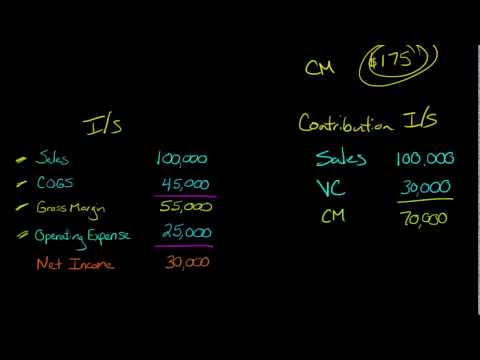
What's the difference between gross margin and contribution margin, and which one should I obsess over?
Gross margin is revenue minus the direct cost of making the thing; contribution margin subtracts the variable cost of each additional sale, which for many startups also means acquisition and payment fees. Early on, contribution margin is the more honest number because it tells you whether selling one more unit actually leaves cash on the table. A business that looks profitable on gross margin but bleeds on contribution margin is quietly buying its own revenue.
Go deeper
3 resources, 3 link-checked.
📄 Article
✓ Link checkedFreeBeginner
This is the cleanest side-by-side we found: it defines both margins in plain language and then walks the exact same $600,000 sales figure through both formulas, so you see gross margin land at 46.7% and contribution margin at 73.3% on identical numbers. The punchline is the one founders miss: gross margin strips out all product costs (fixed and variable), while contribution margin isolates only the variable costs, which is what actually tells you whether one more sale earns money. Treat it as your starting point for the vocabulary, not the last word on your own P&L.
From
AccountingCoachby Harold Averkamp (AccountingCoach)5 min read
Gross margin subtracts cost of goods sold (fixed and variable product costs); contribution margin subtracts only the variable costs, so the two numbers can be far apart on the same sales.
Contribution margin is the number for break-even math and per-unit decisions, because it shows how much each sale contributes toward covering fixed costs and profit.
Same revenue, two very different percentages: healthy gross margin can hide a thin contribution margin once variable selling and delivery costs are counted in.
If margins feel like a foreign language, the problem is usually that nobody taught you to read a P&L, and this is the book that fixes that without assuming an accounting background. Berman and Knight trained tens of thousands of non-finance people, and it shows: they walk through the income statement, balance sheet, and cash flow statement in plain English, plus the ratios that sit on top of them. It will not hand you a single answer on gross versus contribution margin, but it gives you the financial literacy to reason about both on your own numbers.
Reading the three core statements (income, balance sheet, cash flow) is a learnable skill, and this book teaches it for founders who never took finance.
A recurring theme is that finance is partly judgment, not just arithmetic: the assumptions behind the numbers matter as much as the numbers.
Profit and cash are not the same thing, and the book keeps hammering why a profitable-looking business can still run out of money.
For founders who learn by watching the math build up rather than reading formulas, Edspira is the go-to accounting channel, made by a CPA and PhD who teaches this for a living. This short walkthrough builds contribution margin from revenue minus variable costs step by step, so you actually see where the number comes from and why it differs from the gross figure. It is a concept explainer, so pair it with your own cost breakdown to see which margin your business should obsess over.