📄 Article
✓ Link checked
Free
Intermediate
Blomfield (founder of Monzo and GoCarchless, now a YC partner) gives the concrete mechanics of closing that first B2B deal: pick one wedge product and sell it hard for a couple of weeks, run paid pilots not vague free design partnerships, and use opt-out contracts to convert. It is the tactical how-to for turning your one target customer into a signed, paying pilot while you are still employed.
From
Y Combinator Startup Library
by Tom Blomfield
25 min read
- Charge for the pilot: a paid pilot with clear success criteria is real proof; a long, undefined free design partnership is the most common founder mistake and proves nothing
- Pick a narrow wedge and sell it aggressively for two weeks; if it does not land, switch the wedge rather than piling on features
- Find and cultivate an internal champion who sells for you when you are not in the room, which is how a single evening-and-weekend deal actually closes inside a company
Open
ycombinator.com →
🧵 Thread
✓ Link checked
Free
Beginner
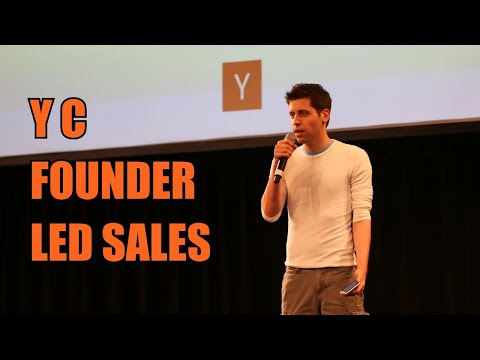
The condensed, skimmable version of Blond's YC talk, written up as a thread after he spoke to a live batch. Good for a quick refresher once you already know the fundamentals and just want the checklist in front of you before your next call.
From
X (Twitter)
by Sam Blond
short read
- Treat every early call as a chance to learn your pitch, not just close a deal
- Write down objections you hear repeatedly, they are your playbook forming in real time
- Founders closing early customers themselves builds credibility a hired rep cannot borrow
Open
x.com →
✍️ Essay
✓ Link checked
Free
Intermediate
A practicing operator's version of our own bar: Girdley says you need a proven, repeatable process and something like 15 customers closed yourself before you hire, tracked against a simple sales scorecard of conversion rate, deal value, and cycle length. He also makes the case for hiring a junior rep over a manager first, which is a decision most founders get backwards.
From
Michael Girdley
by Michael Girdley
12 min read
- Build a sales scorecard (conversion rate, deal size, cycle length) before you hire, so you know what good looks like
- Hire a salesperson first, not a sales manager, unless you are building a team under them immediately
- Don't expect a new hire to match your own conversion rate right away, budget for a ramp
Open
girdley.com →
📄 Article
✓ Link checked
Free
Intermediate
Jason Lemkin has watched thousands of SaaS founders make this hire, and this is his running list of what goes wrong. The number one mistake he names is hiring before the founder has closed the first 10 to 20 customers themselves, which is exactly the trap our short answer is warning against.
From
SaaStr
by Jason Lemkin
12 min read
- The most common mistake is hiring a rep before the founder has proven the motion themselves
- Hiring for a resume (worked at a famous company) over ability to sell your specific product is a recurring failure
- Underpaying your first sales hire is a quieter but equally common mistake
Open
saastr.com →
📄 Article
✓ Link checked
Free
Intermediate
Jason Lemkin's argument is that a single first rep gives you almost no signal: you can't tell if a slow start is the person, the market, or your playbook. Hiring two at once turns your first sales hire into a small experiment instead of a bet.
From
SaaStr
by Jason Lemkin
10 min read
- One rep in isolation tells you almost nothing about whether your process actually works.
- Two reps hired together let you compare performance and isolate the real variable.
- Budget for this from the start rather than hiring one and hoping.
Open
saastr.com →
📖 Book
✓ Link checked
Paid
Intermediate
Roberge built HubSpot's sales org from zero using data instead of instinct, and this is his framework for hiring, training, and managing reps once founder-led sales ends. The hiring formula chapter is directly useful for writing a scorecard for your first sales hires.
From
Mark Roberge
by Mark Roberge
250 pages
- Score candidates against traits that actually predicted success at your company, not a generic profile.
- Structured onboarding gets a new rep to full productivity faster than shadow me and figure it out.
- Data on where reps get stuck tells you more than gut feel about who to coach or let go.
Open
amazon.com →
📖 Book
✓ Link checked
Paid
Intermediate
This is the book most modern cold outbound advice quietly borrows from, so reading the source is worth it. Its "Cold Calling 2.0" idea flips the usual pitch: instead of selling in the first email, you send a short, plain email asking who the right person is, which is far harder to delete because it asks for a small favor, not your time. It is more about the system behind outbound than clever subject lines, which is why founders keep coming back to it.
From
Amazon
by Aaron Ross and Marylou Tyler
~208 pages
- The best cold email often asks for a referral to the right person rather than pitching, which lowers the reply barrier
- Short, plain, non salesy emails outperform polished marketing copy in cold outbound
- Outbound works as a repeatable process, not a one off blast, so structure and follow up matter more than any single line
Open
amazon.com →
📄 Article
✓ Link checked
Free
Intermediate
When your first ten will come from cold outreach, this guide gives you the full mechanics: building a target list, qualifying, writing the email, and running follow-ups without being annoying. It is the operational counterpart to the Lenny and YC pieces, showing the actual day-to-day of prospecting. Work through it as a checklist for your outbound.
From
Close
by Steli Efti
Multi-chapter guide
- Build a tight, specific list of the right people before you write anything.
- Qualify hard so you spend time on prospects who can actually buy.
- Structured follow-up, not a single email, is where most deals are won.
Open
close.com →
📄 Article
✓ Link checked
Free
Advanced
Written for the stage right after your first hire works, this explains why hiring account executives before product-market fit backfires: they inherit a market that does not understand your product yet, and no rep can sell their way through that. It is the clearest explanation of why our short answer's bar exists in the first place.
From
a16z
by Jason Rosenthal
15 min read
- Account executives hired before product-market fit will struggle even if they are talented, the market itself is not ready
- Hire a sales leader who has built a playbook before, then size your AE headcount off realistic deal capacity
- Solutions architects and sales development only make sense once the first AE seat is already working
Open
a16z.news →
The permission slip to recruit users by hand, do things manually, and deliver 'insanely great' experiences to your first few customers. The cheapest, most honest way to validate demand is to go get it one person at a time.
From
paulgraham.com
by Paul Graham
~15 min read
- Recruit your first users manually, don't wait for them to come.
- A tiny group of users who love you beats a big group who like you.
- Manual, unscalable effort early is a feature, not a failure.
Open
paulgraham.com →