📖 Book
✓ Link checked
Paid
Beginner
The single best thing ever written on customer conversations. It teaches you to ask about the customer's life and past behaviour, not your idea, so you can't be lied to. If a founder reads one thing before talking to a single customer, it's this.
From
momtestbook.com
by Rob Fitzpatrick
~130 pages
- Talk about their life, not your idea.
- Ask about specifics in the past, not opinions about the future.
- 'That's so cool, I'd totally buy it' is a compliment, not data, dig for commitment and evidence.
Open
momtestbook.com →
📄 Article
✓ Link checked
Freemium
Intermediate
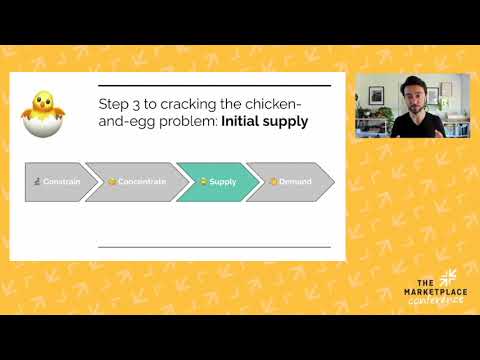
Lenny interviewed dozens of people who built Airbnb, DoorDash, Thumbtack, Etsy, and Uber, then distilled how they actually got started. This opening piece frames the chicken and egg problem and why almost every winner picked one side to build first. It is the single best overview of the exact question you are asking.
From
Lenny's Newsletter
by Lenny Rachitsky
~25 min read
- Nearly every marketplace solved the cold start by focusing on one side
- Liquidity, not brand or polish, is the early priority
- The biggest marketplaces leaned on just a couple of supply levers
Open
lennysnewsletter.com →
📄 Article
✓ Link checked
Freemium
Intermediate
Once you decide supply is the harder side to get, this piece is the tactical playbook for signing up those first suppliers by hand. It catalogues the concrete levers real marketplaces used to seed supply from zero, with examples you can copy this week. Pair it with the overview to go from theory to a to-do list.
From
Lenny's Newsletter
by Lenny Rachitsky
~25 min read
- Concrete tactics to recruit your first suppliers by hand
- Seed supply narrowly in one city or niche, not everywhere
- Fake or subsidize the harder side until real demand appears
Open
lennysnewsletter.com →
✍️ Essay
✓ Link checked
Free
Intermediate
For a two-sided marketplace, the first real decision is which side to define and win first, and this essay makes the case plainly: figure out which side is harder to get, because that side is usually the more valuable one, and once you have it the other side gets 2 to 10 times easier. It then walks through concrete ways to seed that harder side without the other side existing yet, so it is a starting point for the pick-two problem rather than abstract theory. NFX has studied more marketplace network-effect businesses than almost anyone, which is why this is the canonical reference founders keep returning to.
From
NFX
by James Currier
Long read (about 25 minutes)
- Identify the constrained (harder to acquire) side first, and define your ideal customer there, because that side sets the pace for the whole marketplace.
- You can build standalone value for one side before the other exists (for example a tool suppliers use whether or not buyers are present) so you are not stuck waiting for both.
- There are many concrete seeding levers (subsidies, geographic or category constraints, manual matching), so pick the two or three that fit your niche instead of trying all of them.
Open
nfx.com →
✍️ Essay
✓ Link checked
Free
Intermediate
Andrew Chen ran rider growth at Uber and now invests at a16z, so this is the canonical breakdown of how marketplaces get off zero. He organizes the best thinking on the chicken and egg problem around one honest idea: you almost never launch supply and demand at once, you seed the harder side first (usually supply) in a tiny atomic network, then pull the easy side in. Treat it as a starting map of tactics, then pick the one or two that fit your city and niche.
From
andrewchen.com
by Andrew Chen
~20 min read
- Solve the chicken and egg problem by picking the hard side (usually supply) and getting it dense in one narrow slice: a single city, campus, or vertical, before going wide.
- Liquidity, not signups, is the real metric: enough activity that a buyer who shows up actually finds a match.
- You can bootstrap one side manually (curate listings, run single-player-mode value) before the other side exists, which answers the 'no supply or demand yet' worry directly.
Open
andrewchen.com →
📄 Article
✓ Link checked
Free
Intermediate
Written by an investor who founded and sold a marketplace himself, this is a structured handbook covering business models, liquidity, and how to spark the supply and demand loop. It is broader than a single essay, so it helps you understand what kind of marketplace you are actually building. Read it to place your hand matching experiment inside the bigger picture.
From
Version One Ventures
by Boris Wertz and Angela Tran
~45 min read
- A full framework for how marketplaces create and hold liquidity
- Different marketplace types need different launch playbooks
- Concrete guidance on sparking the supply and demand loop
Open
versionone.vc →
📄 Article
✓ Link checked
Free
Beginner
Before you write a line of code, you can test whether a marketplace has a pulse by matching the first buyers and sellers yourself, over a form, a spreadsheet, and WhatsApp. This lays out the concierge method plainly: personally deliver the service, record every request, and watch whether people come back and pay. It is the cheapest way to learn if there is real demand before you spend months building a platform nobody needed.
From
Learning Loop
by Learning Loop
~10 min read
- Manually match 5 to 10 real users through a form or spreadsheet instead of building software: you are testing demand, not scale.
- Track willingness to pay, repeat requests, and drop-off points, because those signals tell you if a marketplace is worth building.
- It differs from Wizard of Oz testing: here users know a human is helping, which is exactly what lets you have the direct conversations that reveal what people actually value.
Open
learningloop.io →
✍️ Essay
✓ Link checked
Free
Advanced
Grinda has backed over a thousand marketplaces, and his blunt take is that roughly 95 percent are demand constrained, not supply constrained, which sharpens the question of which side is really harder for you. He also stresses getting unit economics right before scaling, so you do not mistake a subsidised match for a real one. Read it once you have a few hand matches and want to pressure test them.
From
Fabrice Grinda
by Fabrice Grinda
~30 min read
- Most marketplaces are actually demand constrained, test that assumption
- Confirm unit economics work before trying to scale
- Pick the genuinely harder side, do not assume it is supply
Open
fabricegrinda.com →
📄 Article
✓ Link checked
Free
Intermediate
Udemy's cofounder explains, with real numbers, how they hand recruited supply when cold calls failed, even creating a course themselves to seed the platform. It is a specific, honest story of manufacturing one side by brute force before demand existed. Useful when you are stuck on how to get your first suppliers to say yes.
From
The Hustle
by Sam Parr
~15 min read
- The core marketplace challenge is marketing supply, not building product
- Seed supply creatively, even by making the first inventory yourself
- Manual recruiting is normal until the flywheel catches
Open
thehustle.co →
📄 Article
✓ Link checked
Free
Beginner
This lays out a cheap, staged way to test whether an idea has real pull before you build anything, which maps directly onto validating both sides of a marketplace by hand. It gives you gates to pass rather than a vague sense of momentum. Use it to decide whether your ten manual matches actually justify writing code.
From
First Round Review
by Gagan Biyani
~20 min read
- Run the cheapest test that could kill the idea first
- Define what a pass and a fail actually look like before you start
- Real commitment beats stated interest as a signal
Open
review.firstround.com →
📖 Book
✓ Link checked
Paid
Intermediate
Once you accept that you have to define two customers, you need a deeper model of how the two sides pull on each other, and this is the book that laid the academic and practical groundwork for exactly that. Parker and Van Alstyne effectively founded the theory of two-sided networks, and Choudary translates it into practical platform design, so you get both the why and the how of balancing producer and consumer profiles. Read it after the shorter pieces, when you want the full framework rather than a quick tactic.
From
W. W. Norton
by Geoffrey G. Parker, Marshall W. Van Alstyne, Sangeet Paul Choudary
Book (about 350 pages)
- A platform serves distinct producer and consumer roles, and you have to design a clear profile and value proposition for each rather than treating them as one market.
- The two sides create value for each other through network effects, so a decision about one side (pricing, curation, quality) directly reshapes who your ideal customer on the other side is.
- Governance and quality control on the harder side are what keep a marketplace liquid as it scales, not just raw growth.
Open
amazon.com →
📄 Article
✓ Link checked
Free
Beginner
This is the cleanest short explanation of the two manual-first MVPs and, more importantly, how they differ, which is where most founders get confused. Concierge means you are the visible front end doing the work by hand, Wizard of Oz means you have a real interface but a human quietly runs the back end. It walks a single concrete product example through both, so you can see which one actually answers the question you are trying to answer.
From
Mind the Product
by Amanda White
~8 min read
- Concierge MVP: no interface yet, you personally take inputs and deliver the result by hand, and the user knows it is manual.
- Wizard of Oz MVP: a real front end that users think is automated, while humans do the work behind it, useful for testing whether people will use the interface itself.
- Pick based on what you need to learn: concierge tests whether the service is wanted, Wizard of Oz tests whether the product experience works before you build the automation.
Open
mindtheproduct.com →
The permission slip to recruit users by hand, do things manually, and deliver 'insanely great' experiences to your first few customers. The cheapest, most honest way to validate demand is to go get it one person at a time.
From
paulgraham.com
by Paul Graham
~15 min read
- Recruit your first users manually, don't wait for them to come.
- A tiny group of users who love you beats a big group who like you.
- Manual, unscalable effort early is a feature, not a failure.
Open
paulgraham.com →
The definitive playbook for network and community-led products, drawn from Andrew Chen's a16z experience and interviews with Slack, Uber, Tinder, Airbnb and more.
From
Harper Business
by Andrew Chen
Book (~368 pages)
- Build the smallest self-sustaining 'atomic network' before trying to scale.
- Focus on the hard side of the network and give it a magic moment.
- Networks are anti-viral until they cross a density threshold, so start narrow.
Open
coldstart.com →