The Founder Bookshelf
Books founders recommend to each other. Browse by topic or by where you are as you grow, mark what you've read, and add what's next.
28 books on Strategy for growth & scaling
-
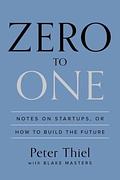
The best businesses create something new, not copies of what exists.
Peter Thiel contends that real progress comes from going from zero to one, creating something genuinely new, rather than copying what works (one to n). He argues that...
3 founders recommend Get the book ↗


-
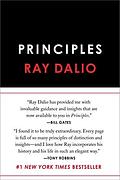
Turn your hard-won lessons into a system you can repeat.
Dalio distills the life and work principles he developed running Bridgewater into a single framework for making better decisions. He champions radical truth and...
2 founders recommend Get the book ↗

-
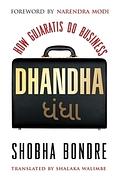
The instinct, grit, and trading sense behind Gujarati business success.
Dhandha profiles several successful Gujarati entrepreneurs, including a diamond merchant, a New York Life insurance agent, a motel owner, and hotel and manufacturing...
1 founder recommends Get the book ↗
-
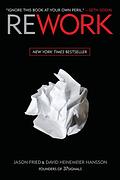
A contrarian, no-nonsense manifesto for building a business your way.
A series of short, punchy chapters that challenge conventional business wisdom about plans, growth, meetings, and hustle. The Basecamp founders argue you do not need...
1 founder recommends Get the book ↗
-
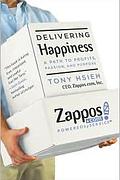
Building a company where culture and service drive profit.
Tony Hsieh recounts his journey from childhood ventures and selling LinkExchange to Microsoft, through building Zappos into a billion-dollar business. He argues that...
-
The leadership and coaching that turns teams into product powerhouses.
Empowered, the follow-up to Inspired, focuses on product leadership: how managers create the conditions for ordinary teams to build extraordinary products. Cagan and...
-
Most strategy is fluff; real strategy names the problem and acts.
Rumelt argues that most so-called strategy is empty goal-setting and slogans, while good strategy has a clear kernel: a diagnosis, a guiding policy, and coherent...
-
How Google built a company around smart creatives.
Schmidt and Rosenberg explain the management principles that guided Google's growth, centered on attracting and empowering people they call smart creatives. They cover...
-
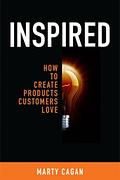
How great tech companies build products customers actually love.
Inspired distills how the best technology companies structure product teams and build products customers love. Cagan covers the role of the product manager, product...
-
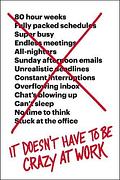
Building a calm company instead of a chaotic, always-on one.
The Basecamp founders make the case for the calm company, one without crazy hours, frantic growth, or constant distraction. Through short chapters they describe how...
-
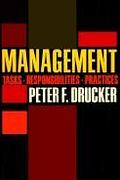
Drucker's comprehensive encyclopedia of the manager's job.
This sweeping volume gathers Drucker's mature thinking into a single reference on what managers actually do. It covers the tasks of management (economic performance,...
-

The economics of platforms that serve two sides at once.
Two pioneering economists explain how multisided platforms create value by bringing together distinct groups, such as buyers and sellers or riders and drivers. They...
-
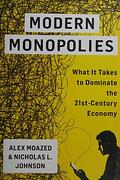
Why platforms, not products, dominate the modern economy.
Moazed and Johnson argue that platform businesses, which connect producers and consumers rather than make products, have become the dominant model of the 21st century....
-
How to build and run a design team that actually delivers.
This guide covers how to create, structure, and lead in-house design organizations as design becomes central to product companies. Merholz and Skinner address hiring,...
-
Strategy for designing and competing as a platform business.
A book attributed to Sangeet Paul Choudary on platform business strategy. Public sources do not confirm a distinct work by this exact title and date under his...
-

How values and culture scaled Starbucks one cup at a time.
Howard Schultz tells the story of how he transformed Starbucks from a small Seattle bean roaster into a worldwide brand built on the Italian espresso bar experience....
-
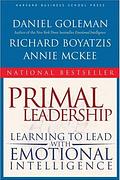
Great leaders move people through emotional intelligence, not just strategy.
The authors argue that a leader's primary task is emotional: setting the mood that drives everyone else's. Drawing on brain science and corporate research, they...
-
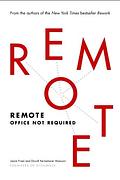
Why working from anywhere beats forcing everyone into one office.
The Basecamp founders argue that the advantages of remote work usually outweigh the drawbacks, and they address common objections head on. The book covers how to...
-
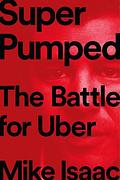
Uber's rise, recklessness, and the cost of growth at all costs.
Mike Isaac chronicles Uber's explosive growth under co-founder Travis Kalanick and the scandals that nearly destroyed it. He details the aggressive culture, regulatory...
-
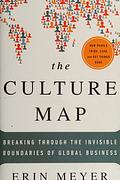
A field guide to working across cultural differences.
Meyer presents an eight-scale framework for decoding how cultures differ in communicating, evaluating, persuading, leading, deciding, trusting, disagreeing, and...
-
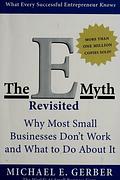
Build a business that runs without you by working on it, not in it.
Gerber dismantles the myth that most small businesses are started by entrepreneurs, arguing instead that they are started by technicians who get trapped doing the...
-
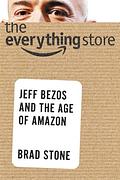
How Bezos turned a bookstore into an everything machine.
Brad Stone chronicles Amazon's rise from a 1990s online bookstore through the dot-com crash to the inventions of Prime, Kindle, and AWS. Drawing on interviews with...
-

A factory manager learns to fix the one constraint that matters.
Told as a novel, the book follows plant manager Alex Rogo as he races to save his failing factory by rethinking what productivity really means. Through a mentor named...
-
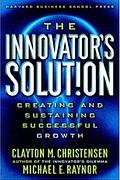
How incumbents and startups can build predictably disruptive growth businesses.
A follow-up to The Innovator's Dilemma, this book shifts from why great firms fail to how any company can create disruptive growth on purpose. Christensen and Raynor...
-
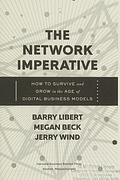
Why network businesses outgrow asset-heavy incumbents.
Drawing on research across fifteen hundred companies, the authors show that network-based firms consistently outperform traditional asset and product businesses. They...
-
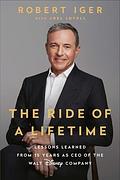
Leadership lessons from reinventing a media giant.
Robert Iger shares the leadership principles he relied on while running Disney for fifteen years. He recounts the negotiations and bold bets behind acquiring Pixar,...
-
Turn sales from an art into a repeatable, data-driven machine.
Mark Roberge shares the metrics-driven playbook he used to scale HubSpot's sales organization from zero to over $100 million in revenue. He breaks the formula into...
-
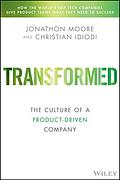
A practical playbook for adopting the product operating model.
Transformed tackles how established companies move from project-based delivery to a product operating model. The SVPG team covers changing how you build, how you solve...
Questions, answered
What books do founders recommend?
Founders on the eChai network recommend titles like Zero to One, Principles: Life and Work, and Dhandha: How Gujaratis Do Business. The bookshelf ranks books by how many founders have read them.
Where can I find a startup reading list?
The eChai founder bookshelf is a curated, founder-recommended reading list you can browse by topic (fundraising, product, hiring) and by stage.
How is the bookshelf ordered?
By recommendation: the more founders mark a book read, the higher it ranks. You can also sort by newest or A to Z.