The Founder Bookshelf
Books founders recommend to each other. Browse by topic or by where you are as you grow, mark what you've read, and add what's next.
89 books for growth & scaling
-
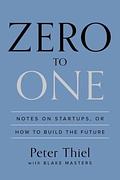
The best businesses create something new, not copies of what exists.
Peter Thiel contends that real progress comes from going from zero to one, creating something genuinely new, rather than copying what works (one to n). He argues that...
3 founders recommend Get the book ↗


-
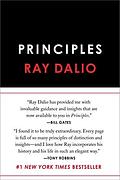
Turn your hard-won lessons into a system you can repeat.
Dalio distills the life and work principles he developed running Bridgewater into a single framework for making better decisions. He champions radical truth and...
2 founders recommend Get the book ↗

-
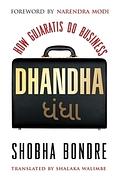
The instinct, grit, and trading sense behind Gujarati business success.
Dhandha profiles several successful Gujarati entrepreneurs, including a diamond merchant, a New York Life insurance agent, a motel owner, and hotel and manufacturing...
1 founder recommends Get the book ↗
-
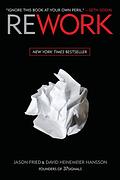
A contrarian, no-nonsense manifesto for building a business your way.
A series of short, punchy chapters that challenge conventional business wisdom about plans, growth, meetings, and hustle. The Basecamp founders argue you do not need...
1 founder recommends Get the book ↗
-
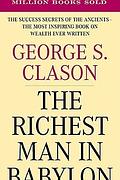
Pay yourself first and let savings compound.
Through a set of parables set in ancient Babylon, the book teaches timeless principles of personal finance such as saving at least a tenth of what you earn and putting...
1 founder recommends Get the book ↗
-
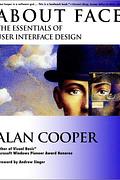
The definitive handbook for designing software people can use.
About Face is a comprehensive guide to interaction design, introducing goal-directed methods and the use of personas to design software around real user goals. First...
-
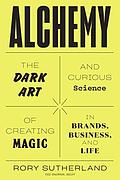
The most valuable ideas often make no logical sense.
Sutherland argues that human behavior is driven by psychology and perception more than by economic logic, so the best business and marketing solutions are often...
-

A systems toolkit for the messy problems of engineering management.
Will Larson treats engineering management as a series of solvable systems problems, from sizing teams and managing growth to handling technical debt and succession...
-
Build a company where everyone grows on the job.
Kegan and Lahey study Deliberately Developmental Organizations, companies that treat employees' personal growth as central to the business rather than a side benefit....
-
An insider's account of the reforms that powered India's growth.
Backstage is part memoir and part economic history, recounting Ahluwalia's role in India's liberalization and high-growth years. He offers a behind-the-scenes view of...
-
Don't build a better product, build a more capable user.
Badass argues that sustainable success comes not from making a better product but from making users awesome at whatever the product helps them do. Sierra draws on...
-
Prioritize speed over efficiency to win winner-take-all markets.
Hoffman and Yeh define blitzscaling as a set of techniques for igniting and managing breakneck growth, deliberately accepting inefficiency and risk to capture a market...
-

Branding as a strategic leadership discipline, not tactical management.
Aaker and Joachimsthaler argue that strategic brand leadership is replacing the older, tactical brand management model. They cover brand architecture, brand-building...
-
Hard-won advice on building products, teams, and a career worth having.
Build is part memoir, part mentorship manual from one of the people behind the iPod, iPhone, and Nest. Fadell shares blunt advice on careers, product design, startups,...
-
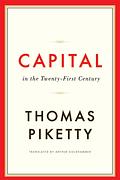
When returns on capital outpace growth, wealth concentrates.
Piketty draws on centuries of data to analyze wealth and income inequality across Europe and the United States. His central thesis is that when the return on capital...
-
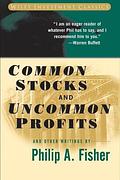
How to find great growth companies and hold them.
Philip Fisher argues that the biggest investment gains come from buying outstanding growth companies and holding them for the long term. He introduces the scuttlebutt...
-
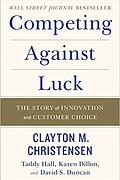
Customers do not buy products, they hire them to do a job.
Christensen and co-authors lay out the Jobs to Be Done theory: people hire products and services to make progress in specific circumstances of their lives. By...
-

Word of mouth, not advertising, is what really makes things spread.
Jonah Berger investigates the science of why certain products, ideas, and behaviors catch on through word of mouth. He identifies six principles, captured by the...
-
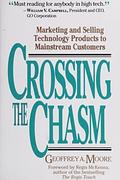
Bridge the gap between early adopters and the mainstream market.
Geoffrey Moore identifies a chasm in the technology adoption life cycle between visionary early adopters and the pragmatic early majority. Many promising products die...
-
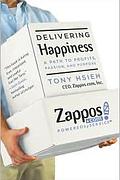
Building a company where culture and service drive profit.
Tony Hsieh recounts his journey from childhood ventures and selling LinkExchange to Microsoft, through building Zappos into a billion-dollar business. He argues that...
-
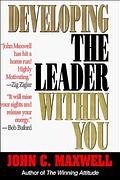
Leadership starts with developing yourself before leading others.
Maxwell's first and most enduring leadership book frames leadership as influence that can be cultivated through deliberate growth. He walks through traits and...
-
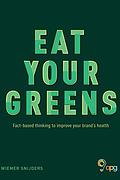
A myth-busting anthology of evidence-based marketing thinking.
An edited collection of essays from dozens of marketing practitioners and scholars who apply empirical evidence to common branding and advertising decisions. The...
-
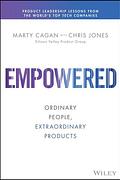
The leadership and coaching that turns teams into product powerhouses.
Empowered, the follow-up to Inspired, focuses on product leadership: how managers create the conditions for ordinary teams to build extraordinary products. Cagan and...
-
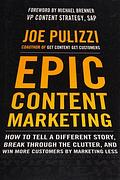
Win customers by telling a different story, not selling harder.
A strategic blueprint for attracting and retaining customers by creating valuable, consistent content rather than interruptive advertising. Pulizzi lays out how to...
-
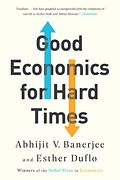
What the evidence really says about our hardest economic problems.
Good Economics for Hard Times applies rigorous research to today's most contentious issues, including immigration, trade, inequality, automation, and growth. Banerjee...
-
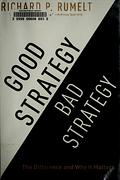
Most strategy is fluff; real strategy names the problem and acts.
Rumelt argues that most so-called strategy is empty goal-setting and slogans, while good strategy has a clear kernel: a diagnosis, a guiding policy, and coherent...
-
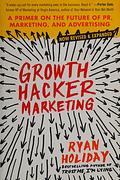
A short primer on marketing as product-driven, testable growth.
A concise introduction to the growth hacker mindset, arguing that the line between product and marketing has blurred. Holiday walks through a simple sequence: achieve...
-
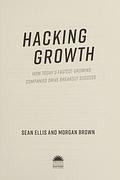
Run a fast, data-driven experiment engine to drive breakout growth.
Ellis and Brown lay out the operating system for growth teams: a rapid, cross-functional experimentation process that pulls together product, marketing, data, and...
-

Great ads come from one simple, surprising, well-crafted idea.
A widely used guide to creating effective advertising, covering how to find big ideas, write sharp copy, and survive the creative business. Named after an annoying ad...
-
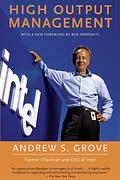
A manager's output is the output of their whole organization.
Andy Grove distills the management principles he used to run Intel into a practical operating manual for managers at any level. He frames management around leverage:...
-
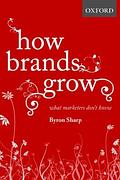
Brands grow by reaching more buyers, not deeper loyalty.
Sharp uses decades of empirical data to challenge marketing orthodoxy, arguing that brands grow mainly by increasing market penetration and reaching light, occasional...
-
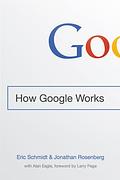
How Google built a company around smart creatives.
Schmidt and Rosenberg explain the management principles that guided Google's growth, centered on attracting and empowering people they call smart creatives. They cover...
-
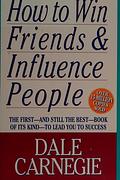
Win people over by genuinely caring about them first.
Carnegie distills timeless principles for getting along with and influencing others: avoid criticism, give honest appreciation, see things from the other person's...
-
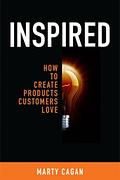
How great tech companies build products customers actually love.
Inspired distills how the best technology companies structure product teams and build products customers love. Cagan covers the role of the product manager, product...
-
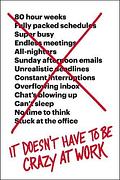
Building a calm company instead of a chaotic, always-on one.
The Basecamp founders make the case for the calm company, one without crazy hours, frantic growth, or constant distraction. Through short chapters they describe how...
-
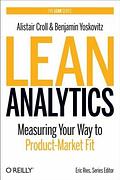
Find the one metric that matters at each stage of your startup.
Part of the Lean Series, this book gives founders a framework for choosing and tracking the metrics that actually move a startup forward. Croll and Yoskovitz introduce...
-
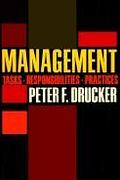
Drucker's comprehensive encyclopedia of the manager's job.
This sweeping volume gathers Drucker's mature thinking into a single reference on what managers actually do. It covers the tasks of management (economic performance,...
-
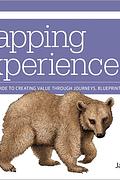
Make the whole customer experience visible so teams can fix it.
A comprehensive reference for diagramming the experiences people have with an organization, covering customer journey maps, service blueprints, mental model diagrams,...
-
Read where you are in the cycle to tilt the odds.
Howard Marks explores the recurring cycles in economies, markets, and investor psychology, arguing that recognizing where you stand in a cycle improves your odds. He...
-
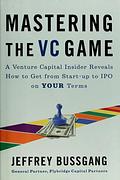
A two-sided guide to playing the venture game and winning.
Jeffrey Bussgang draws on his experience as both founder and VC, plus interviews with entrepreneurs like Jack Dorsey and Reid Hoffman, to explain how the venture game...
-
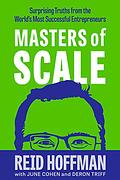
Hard-won scaling lessons distilled from iconic founders.
Built on Hoffman's hit podcast, the book gathers stories and lessons from founders and leaders of companies like Netflix, Nike, Spotify, Google, and Instagram. It is...
-

The economics of platforms that serve two sides at once.
Two pioneering economists explain how multisided platforms create value by bringing together distinct groups, such as buyers and sellers or riders and drivers. They...
-
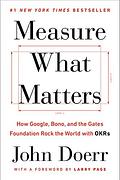
Set audacious goals that actually get done with OKRs.
Doerr lays out Objectives and Key Results (OKRs), the goal-setting system he carried from Intel into Google and dozens of other organizations. Through first-person...
-
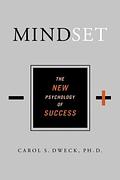
Believing you can grow changes what you achieve.
Carol Dweck distinguishes between a fixed mindset, where abilities are seen as static, and a growth mindset, where they can be developed through effort and learning....
-
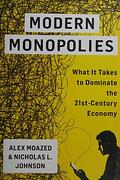
Why platforms, not products, dominate the modern economy.
Moazed and Johnson argue that platform businesses, which connect producers and consumers rather than make products, have become the dominant model of the 21st century....
-
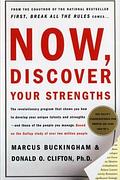
Stop fixing weaknesses and start building on your talents.
The original Gallup strengths book introduces the idea that real growth comes from developing innate talents into strengths rather than patching weaknesses. It...
-
How to build and run a design team that actually delivers.
This guide covers how to create, structure, and lead in-house design organizations as design becomes central to product companies. Merholz and Skinner address hiring,...
-

Earn attention by asking permission instead of interrupting.
Godin contrasts traditional interruption marketing with permission marketing, where customers voluntarily opt in to receive relevant, personal messages. He argues that...
-
How to scale a startup by building a platform, not a product.
Choudary argues that today's fastest-scaling startups build platforms where others create and exchange value, rather than selling a product directly. The book offers...
-
Strategy for designing and competing as a platform business.
A book attributed to Sangeet Paul Choudary on platform business strategy. Public sources do not confirm a distinct work by this exact title and date under his...
-
Fighting poverty by testing what actually works.
Poor Economics draws on years of randomized controlled trials to examine how the world's poor actually make decisions about health, education, savings, and risk....
-

How values and culture scaled Starbucks one cup at a time.
Howard Schultz tells the story of how he transformed Starbucks from a small Seattle bean roaster into a worldwide brand built on the Italian espresso bar experience....
-
Build a repeatable outbound engine for predictable sales growth.
Drawing on the system Ross built at Salesforce, the book lays out the Cold Calling 2.0 outbound process and the case for specializing sales roles into prospectors,...
-
Great leaders move people through emotional intelligence, not just strategy.
The authors argue that a leader's primary task is emotional: setting the mood that drives everyone else's. Drawing on brain science and corporate research, they...
-
Let the product, not the sales team, drive your growth.
Product-Led Growth explains how SaaS companies can use the product itself as the main engine of acquisition, conversion, and expansion. Bush walks through choosing a...
-
Take your profit first, then run the business on what is left.
Profit First flips the conventional accounting formula from Sales minus Expenses equals Profit to Sales minus Profit equals Expenses. Michalowicz lays out a behavioral...
-
A blueprint for organizations run without traditional hierarchy.
Laloux maps the history of organizational models and identifies an emerging stage he calls Teal, built on self-management, wholeness, and evolutionary purpose. Through...
-
Why working from anywhere beats forcing everyone into one office.
The Basecamp founders argue that the advantages of remote work usually outweigh the drawbacks, and they address common objections head on. The book covers how to...
-

Treat advertising as a measurable, testable science.
A foundational 1923 text arguing that advertising should be judged by measurable results, not opinion or art. Hopkins champions testing, tracking, coupons, and sales...
-
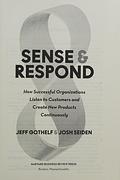
Build organizations that learn from customers and adapt continuously.
Sense and Respond argues that software is reshaping every industry and that successful organizations are those that sense customer behavior and respond quickly with...
-
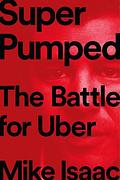
Uber's rise, recklessness, and the cost of growth at all costs.
Mike Isaac chronicles Uber's explosive growth under co-founder Travis Kalanick and the scandals that nearly destroyed it. He details the aggressive culture, regulatory...
-
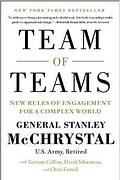
Lead a network, not a machine, in a fast world.
McChrystal recounts how his task force in Iraq defeated a nimble enemy by abandoning rigid command structures for a flexible, networked team of teams. He blends...
-
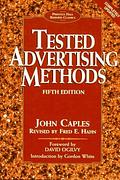
Test everything; the audience decides what works.
A foundational text on direct-response advertising built on rigorous split-testing of real campaigns. Caples shows that small changes, especially to headlines, can...
-
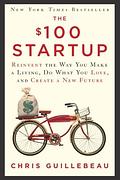
Turn a passion and a tiny budget into a real income business.
Drawing on case studies of 1,500 people who built businesses on small investments, often a hundred dollars or less, the book distills how ordinary people created...
-
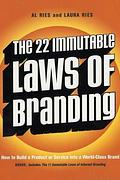
Branding is about owning a word in the customer's mind.
Al and Laura Ries lay out 22 principles for building a powerful brand, arguing that branding is fundamentally about narrowing focus to dominate a category in the...
-
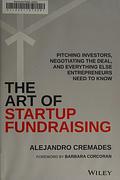
A modern, step-by-step playbook for raising startup capital.
Cremades offers a practical guide to startup fundraising in the post-JOBS Act era, covering everything from crafting a pitch and building a deck to identifying...
-
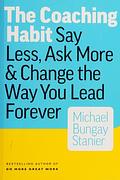
Lead by asking better questions, not giving answers.
Stanier distills coaching into seven essential questions that managers can use to build a daily coaching habit. The premise is that leaders should stay curious a...
-

Solve the empty-network trap and scale network effects.
Chen tackles the chicken-and-egg cold start problem that every network product faces when it has no users yet. Drawing on interviews with teams behind LinkedIn,...
-
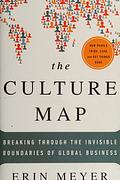
A field guide to working across cultural differences.
Meyer presents an eight-scale framework for decoding how cultures differ in communicating, evaluating, persuading, leading, deciding, trusting, disagreeing, and...
-
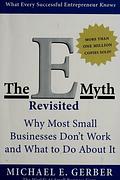
Build a business that runs without you by working on it, not in it.
Gerber dismantles the myth that most small businesses are started by entrepreneurs, arguing instead that they are started by technicians who get trapped doing the...
-
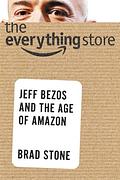
How Bezos turned a bookstore into an everything machine.
Brad Stone chronicles Amazon's rise from a 1990s online bookstore through the dot-com crash to the inventions of Prime, Kindle, and AWS. Drawing on interviews with...
-

A factory manager learns to fix the one constraint that matters.
Told as a novel, the book follows plant manager Alex Rogo as he races to save his failing factory by rethinking what productivity really means. Through a mentor named...
-
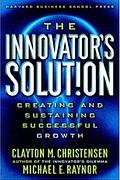
How incumbents and startups can build predictably disruptive growth businesses.
A follow-up to The Innovator's Dilemma, this book shifts from why great firms fail to how any company can create disruptive growth on purpose. Christensen and Raynor...
-
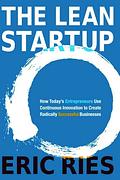
Treat your startup as an experiment, not a leap of faith.
Eric Ries argues that startups are organizations built to find a sustainable business model under extreme uncertainty, not just to execute a plan. He introduces...
-

Split your budget roughly sixty-forty between brand and activation.
Drawing on the IPA Effectiveness Databank, Binet and Field show that marketing works on two timescales: short-term sales activation and long-term brand building, which...
-
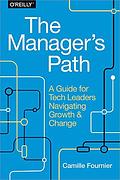
A stage-by-stage map from engineer to technical executive.
Camille Fournier walks through each step of the technical leadership ladder, from mentoring and tech lead to manager, director, and CTO. Each chapter gives practical,...
-
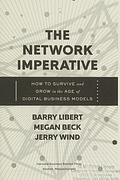
Why network businesses outgrow asset-heavy incumbents.
Drawing on research across fifteen hundred companies, the authors show that network-based firms consistently outperform traditional asset and product businesses. They...
-
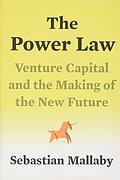
The definitive history of venture capital and the bets that built tech.
Drawing on unprecedented access to leading firms like Sequoia, Kleiner Perkins, Accel, and Andreessen Horowitz, Sebastian Mallaby chronicles how venture capitalists...
-
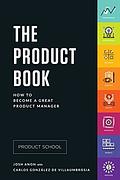
A complete beginner's roadmap to the product manager craft.
Based on Product School's curriculum, this book offers an end-to-end introduction to product management for newcomers. It covers identifying customer needs, designing...
-
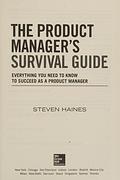
A field manual for surviving and thriving in your product role.
Steven Haines offers a practical, no-nonsense guide to the realities of the product manager job, from understanding the role to working across functions. It covers...
-
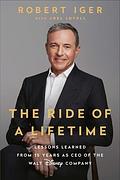
Leadership lessons from reinventing a media giant.
Robert Iger shares the leadership principles he relied on while running Disney for fifteen years. He recounts the negotiations and bold bets behind acquiring Pixar,...
-
Turn sales from an art into a repeatable, data-driven machine.
Mark Roberge shares the metrics-driven playbook he used to scale HubSpot's sales organization from zero to over $100 million in revenue. He breaks the formula into...
-

The founding text of free-market economics.
Smith's landmark treatise is the first comprehensive system of political economy, treating economics as a subject in its own right. He argues that the division of...
-
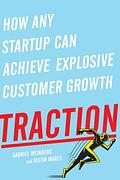
Most startups fail from lack of customers, not lack of product.
Weinberg and Mares lay out nineteen traction channels, from SEO and content marketing to community building and unconventional PR, that startups can use to grow. They...
-
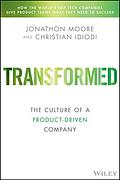
A practical playbook for adopting the product operating model.
Transformed tackles how established companies move from project-based delivery to a product operating model. The SVPG team covers changing how you build, how you solve...
-
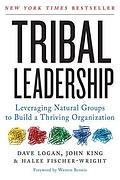
Every organization is a set of tribes, and culture is the lever.
Drawing on an eight-year study of roughly 24,000 people across two dozen organizations, the authors argue that every company is made up of tribes of 20 to 150 people....
-
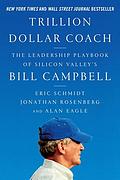
The coaching principles behind Silicon Valley's most valuable mentor.
The authors distill the leadership lessons of Bill Campbell, the executive coach who quietly guided leaders at Google, Apple, and beyond. They show how Campbell built...
-
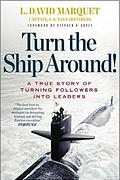
Stop giving orders, start creating leaders at every level.
Marquet recounts how he took the worst-performing submarine in the U.S. fleet and made it one of the best by abandoning the traditional leader-follower model. Instead...
-
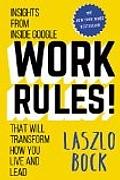
How Google hires, manages, and frees its people.
Bock shares the people-operations practices that shaped Google, from rigorous, structured hiring to giving employees freedom and using data to make management...
Questions, answered
What books do founders recommend?
Founders on the eChai network recommend titles like Zero to One, Principles: Life and Work, and Dhandha: How Gujaratis Do Business. The bookshelf ranks books by how many founders have read them.
Where can I find a startup reading list?
The eChai founder bookshelf is a curated, founder-recommended reading list you can browse by topic (fundraising, product, hiring) and by stage.
How is the bookshelf ordered?
By recommendation: the more founders mark a book read, the higher it ranks. You can also sort by newest or A to Z.