The Founder Bookshelf
Books founders recommend to each other. Browse by topic or by where you are as you grow, mark what you've read, and add what's next.
37 books on Strategy for timeless
-
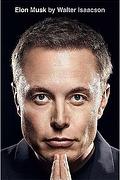
An inside look at the drive and chaos behind Musk's empire.
Isaacson spent two years shadowing Elon Musk across Tesla, SpaceX, the founding of his AI work, and the takeover of Twitter. The book traces Musk's traumatic...
2 founders recommend Get the book ↗

-
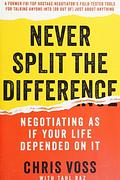
Negotiate with tactical empathy instead of splitting the difference.
Chris Voss draws on his career as an FBI hostage negotiator to teach a practical, emotion-aware approach to negotiation. He introduces techniques like tactical...
2 founders recommend Get the book ↗

-

Some things actually get stronger when life shocks them.
Taleb introduces antifragility, the property of systems that gain from volatility, stress, and disorder rather than merely surviving it. He contrasts the fragile, the...
1 founder recommends Get the book ↗
-
Turn hard bargaining situations into brilliant outcomes with proven frameworks.
Drawing on decades of Harvard research and teaching, Malhotra and Bazerman provide frameworks and strategies for negotiating in difficult situations. They cover...
1 founder recommends Get the book ↗
-
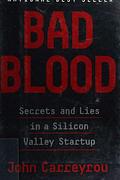
The definitive account of Silicon Valley's biggest fraud.
John Carreyrou reconstructs the rise and collapse of Theranos, the blood-testing startup that claimed to revolutionize diagnostics with a single drop of blood. He...
-

Negotiate from your own strengths, not someone else's playbook.
Shell lays out an information-based approach to negotiation grounded in your personal bargaining style rather than rigid tactics. He walks through a six-step framework...
-
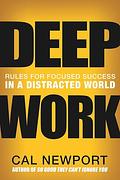
Cultivate distraction-free concentration to produce work that matters.
Cal Newport defines deep work as the ability to focus without distraction on cognitively demanding tasks, and argues it is both increasingly rare and increasingly...
-
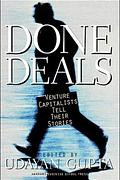
Venture capital's founding figures recount how it all began.
Udayan Gupta gathers first-person accounts from more than thirty leading venture capitalists, from early pioneers like Eugene Kleiner and Arthur Rock to later top...
-
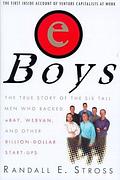
An embedded look at Benchmark's partners during the dot-com boom.
Randall Stross spent time inside Benchmark Capital, chronicling the partners who backed eBay, Webvan, and other startups during the internet boom. The book follows...
-
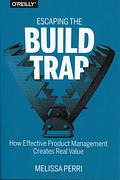
Stop shipping features for their own sake and create real value.
Escaping the Build Trap explains how companies get stuck measuring success by features shipped instead of value created, and how to break out. Perri lays out the role...
-
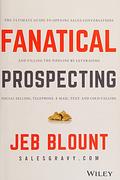
The fastest way to fill a pipeline is relentless prospecting.
Jeb Blount argues that the number one reason salespeople fail is an empty pipeline, and the cure is consistent, disciplined prospecting across every channel. The book...
-
A purported account of the Patanjali consumer brand's rise.
This title could not be verified as a published book through available sources. The details provided suggest a business narrative about Patanjali, the Indian FMCG and...
-
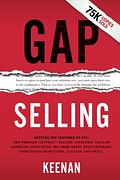
Sell by closing the gap between the buyer's current and future state.
Keenan presents a problem-centric selling method built around uncovering the gap between a customer's current state and their desired future state. He argues that deep...
-
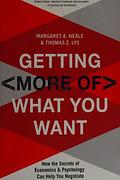
Use economics and psychology to negotiate smarter in business and life.
Neale and Lys blend behavioral economics and psychology to show how rational analysis and human biases both shape negotiation outcomes. They explain how to assess the...
-
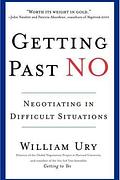
Turn confrontation into cooperation, even with difficult people.
William Ury picks up where Getting to Yes leaves off, focusing on how to negotiate with people who refuse to cooperate. He lays out a breakthrough strategy of five...
-
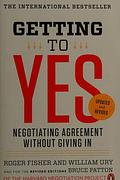
Negotiate on the merits by focusing on interests, not positions.
Fisher and Ury introduce principled negotiation, a method developed at the Harvard Negotiation Project. They urge negotiators to separate people from the problem,...
-
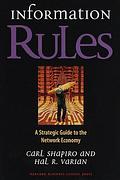
Timeless economics for the businesses built on information.
Shapiro and Varian argue that the digital economy follows durable economic laws, not entirely new rules. They explain how to price information goods, manage switching...
-
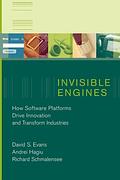
How software platforms quietly reshape entire industries.
Invisible Engines examines how software platforms, from operating systems to game consoles, act as multisided markets connecting developers, users, and other parties....
-
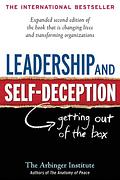
Most leadership failures start with deceiving yourself.
Told as a business fable, the book describes how leaders fall into a self-justifying mindset, being in the box, that distorts how they see other people. It argues that...
-
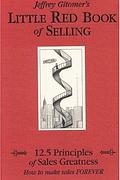
People do not like to be sold, but they love to buy.
Gitomer lays out twelve and a half blunt principles of sales greatness, arguing that lasting success comes from value, relationships, and earning loyalty rather than...
-
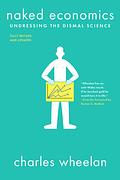
Economics made plain, useful, and surprisingly readable.
Naked Economics strips the jargon out of economics and explains how markets, incentives, prices, and policy actually work in everyday life. Charles Wheelan walks...
-
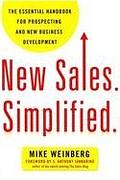
A no-nonsense playbook for proactively winning new business.
Weinberg delivers a practical handbook for the unglamorous work of prospecting and new business development. He covers building a target list, crafting a compelling...
-
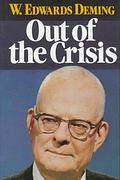
Fix the system, not the people, to build lasting quality.
Deming lays out a theory of management built on his famous 14 Points, arguing that most failures stem from flawed systems rather than poor workers. He critiques...
-
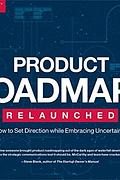
Roadmaps are about outcomes and direction, not feature lists.
This book reframes the product roadmap as a strategic communication tool centered on themes and outcomes rather than dated feature commitments. The authors walk...
-

Structure presentations like stories to move audiences.
Duarte applies the principles of storytelling and dramatic structure to business presentations, showing how to turn a talk into a transformative experience for the...
-
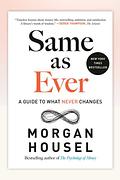
Bet on the things that never change.
In a series of short stories, Housel argues that the smartest strategy is to study what stays constant about human behavior rather than predicting what will change. He...
-
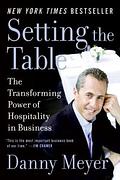
Hospitality, not just service, is the real competitive edge.
Meyer chronicles his rise from a single Manhattan restaurant to a hospitality empire, sharing the philosophy of enlightened hospitality behind it. He argues that...
-
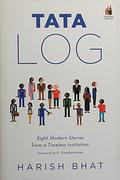
Eight inside stories of how Tata built bold businesses on values.
Harish Bhat narrates eight first-hand stories of strategic and operational challenges across Tata Group companies over two decades. The cases span the Tata Nano,...
-
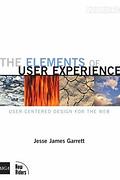
A clear model of what user experience actually is.
The Elements of User Experience lays out a five-plane model, from abstract strategy to concrete surface, that explains how the pieces of a user experience fit...
-
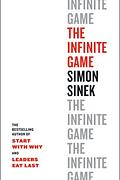
Play for the long game, not just to win today.
Sinek applies game theory's distinction between finite and infinite games to business, arguing that the best leaders play the infinite game. Rather than chasing...
-

Stop letting programmers design the products users hate.
Cooper argues that high tech products frustrate people because they are designed by engineers optimizing for what is easy to build rather than what users actually...
-
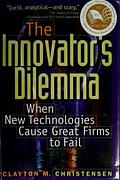
Why doing everything right can still cost market leaders everything.
Clayton Christensen explains why well-managed, successful companies often fail when faced with disruptive technologies. Listening closely to their best customers and...
-
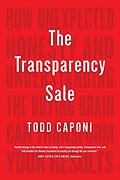
Win more deals by being honest about your flaws, not hiding them.
Todd Caponi makes the case that transparency, including proactively sharing weaknesses, builds trust and accelerates deals. Drawing on behavioral science and the way...
-
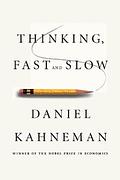
Two mental systems, fast and slow, and the biases they create.
Kahneman explains the mind as two systems: System 1, fast, intuitive, and emotional, and System 2, slow, deliberate, and logical. Drawing on decades of research, he...
-
Strategy is a philosophy of becoming, told in short provocations.
Godin reframes strategy not as a rigid plan but as a way of seeing systems, time, and the people you serve. Through a series of short, interconnected reflections, he...
-
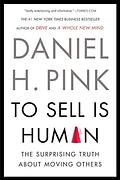
Everyone is in sales now, whether they admit it or not.
Pink argues that we all spend much of our day in non-sales selling: persuading, convincing, and moving others. Drawing on social science, he replaces the old ABCs of...
-
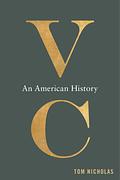
How risk-taking with other people's money built modern venture capital.
Tom Nicholas traces the origins of American venture capital from nineteenth century whaling voyages and cotton mills through the rise of firms like Kleiner Perkins and...
Questions, answered
What books do founders recommend?
Founders on the eChai network recommend titles like Elon Musk, Never Split the Difference, and Antifragile. The bookshelf ranks books by how many founders have read them.
Where can I find a startup reading list?
The eChai founder bookshelf is a curated, founder-recommended reading list you can browse by topic (fundraising, product, hiring) and by stage.
How is the bookshelf ordered?
By recommendation: the more founders mark a book read, the higher it ranks. You can also sort by newest or A to Z.