Starting Up
The resources founders actually use.
Every essay, video, podcast, book and tool behind 1,327 answered founder questions, in one place, each with a note on why it is here.
What founders use most, ranked by how many answers lean on it.
- Most pieces on this question are payment vendors selling you a billing model, so they always land on subscriptions. This is a... Indie Hackers Essay Subscriptions vs. One-Time Payments: A Developer's Honest Take Smoteria
-
 Video
Subscription Models vs One Time Purchase: Bridge the Debate
Soren Kaplan
- Most pricing advice stays abstract, so here is a real writeup of an experiment with the numbers left in. They raised the... Conversion.com Essay Using experimentation to find a product's optimal price (and increase RPV by 16% in the process) Stephen Pavlovich
- This is the exact question you are asking, answered by someone who has sold a lot of enterprise software. Lemkin gives you a... SaaStr Article Dear SaaStr: Our Biggest Customers Are All Asking for Custom Features. When Do We Say Yes? Jason Lemkin
- This is the clearest single write-up on why an annual plan exists in the first place: it front-loads cash and it holds people... Paddle Article · About a 12 minute read Annual plans: Why every SaaS company needs to sell them Paddle
-
 Video · About 12 minutes
I looked at 105 SaaS pricing pages. Here's what I learned.
Slidebean
- If you decide usage pricing is right, this is real billing infrastructure that meters events in real time and lets you set... Metronome Tool · Product site, plus docs Metronome: Usage-Based Billing Platform Metronome (now part of Stripe)
- This tackles the exact fear you named: a buyer who wants your product but cannot predict the bill, and sometimes builds it... Andreessen Horowitz (a16z) Article · About 8 minute read Customers Want Predictability in Usage-based Pricing. Here's How to Help Them Get It. Tugce Erten and Mark Regan
- This is the cleanest head-to-head on the exact question you are asking: it puts the two models side by side, gives real... HelloAdvisr Essay · ~10 min read Should I offer freemium or free trial, which drives better growth? HelloAdvisr
- Once you have decided free is worth trying, this is the practical follow-through: a step by step way to decide what stays free,... RevenueCat Article · ~15 min read 6 Steps To Design A Freemium Tier That Actually Converts Daphne Tideman
- This is a focused, plain-language piece on the exact trap in the question: a low blended CAC that quietly counts customers you... Eightx Article · Short read (10 to 12 min) What Is Blended CAC vs Paid CAC? Matt Putra
- This is the piece that made cohort-based LTV the default way serious investors think, and it is exactly the right medicine when... Social Capital / The Startup (Medium) Article · About 20 minute read Diligence at Social Capital, Part 3: Cohorts and (revenue) LTV Jonathan Hsu
-
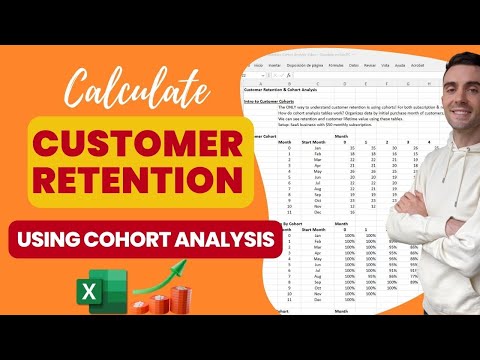 Video · Short explainer (under 15 minutes)
Customer Retention & Cohort Analysis: How VCs Calculate Customer Retention
YouTube
- This is the template to stop guessing a single LTV number and plot your actual cohorts instead. You type in only the basics... andrewchen.com Tool · Downloadable Excel template plus short guide The easiest spreadsheet for churn, MRR, and cohort analysis Christoph Janz (Point Nine Capital), guest post on Andrew Chen's blog
- This is the essay that separates the two payback numbers that actually matter to you: the accounting payback (when the revenue... Point Nine (Point Nine Land) Essay · About a 15 minute read The Art and Science of Figuring out Your CAC Payback Time Christoph Janz
- A free, driver-based Google Sheets model where you plug in your own assumptions and actuals and watch the numbers flow through... Drivetrain Tool · Free Google Sheets template, roughly 30 to 60 minutes to populate SaaS Financial Model Template in Google Sheets Drivetrain
- This piece nails the exact trap in your question: you can have great unit economics, a customer worth 5 times what it cost to... RoadmapOne Article · About a 10 minute read CAC Payback Period: The Cash Flow Metric That Gates Your Growth Speed Mark Holt
- If you sell a one-time product and think LTV is a SaaS thing, this piece does the reframe cleanly: for a physical-goods brand,... Top Growth Marketing Article · Long read, about 20 to 25 minutes Unit Economics for DTC Brands: The Complete Guide Jack Paxton
-
 Video · Short explainer, under 10 minutes
What Shopify Customer Lifetime Value (CLV) Is & How to Calculate It
Shopify
- Where the a16z essay defines the metrics, this one reads like an audit checklist for the model you just built. It names eight... Capidel Article Unit Economics and CAC/LTV: The Metrics Every Startup Financial Model Needs Capidel
- This is a clean, plain-language walk through the numbers that decide whether your pricing actually works: contribution margin,... Mercury Article · ~12 min read What is unit economics, and does it matter for your startup? Dan Kang
- This is the rare piece that treats Indian and dollar pricing as two different economic games, not one price converted at the... Product Growth Article SaaS Pricing in India: The Rupee vs Dollar Dilemma Product Growth (productgrowth.in)
- This is SaaSBOOMi's canonical case for why building from India is a structural edge, written by Manav Garg, who founded Eka... SaaSBOOMi Essay The India Advantage Manav Garg
- This piece answers the sequencing question head on: it places unit economics right at the handoff between reaching... Stage 2 Capital Article · About 8 minute read Understanding Unit Economics: The Bridge Between Product-Market Fit and Go-to-Market Fit Brent Holloway
Playbooks
A goal, and the route through it a step at a time.
Find an idea worth pursuing
Spot problems worth solving and find the one that actually fits you.
Validate before you build
Get real evidence people want it before you write a line of code.
Understand your customers
Talk to real users, define who you're for, and read the market clearly.
From idea to first customers
The idea-stage spine: find a problem, prove it, talk to customers, and land the first ten.
Build an MVP without code
Ship a first version with no-code tools before you hire anyone.
Build and launch your first product
Turn a validated idea into something real people can use.
Find and work with developers
Hire, brief, and work with builders without getting burned.
Name and brand your startup
Name it, design an identity, and say what it does in a line.
Build a landing page that converts
A page that loads fast, earns trust, and turns visitors into signups.
Get your first customers
The scrappy, unscalable work of going from zero to your first paying users.
Sell it yourself, founder-led
Reach out, run the conversation, and close before you have a sales team.
Grow with content and SEO
Compound reach with content, search, and a founder audience.
Grow with paid ads
Spend that returns: the channels, metrics, and loops behind it.
Price and package your product
Charge for value, package it right, and check the numbers work.
Bootstrap instead of raising
Fund growth from revenue, and keep control of your company.
Raise your first round
Understand the game before you pitch: whether to raise, from whom, and on what terms.
Find a co-founder, split equity
Find the right partner and split equity without regret.
Set up the company right
Incorporate, split equity, protect your IP, and make your first hires.
Survive founder life
Mindset, burnout, the leap, and the parts nobody warns you about.
Build in India
The India-specific playbook: schemes, government, enterprise, and the local market.
The questions founders start with
What are good startup ideas in India right now?
The ideas Indian investors are backing in 2026 sit in a few places: AI built into one industry's daily work (vertical AI for B2B, where software fu...
How do I find product-market fit?
Narrow until a small group cannot do without you, then widen. Pick the segment where usage is strongest, talk to those people every week, and chang...
Do I actually need a co-founder, or can I go solo?
You don't strictly need one, but the data says teams outlast solos: complementary skills, shared load, and someone to argue you out of bad calls al...
How do I build an MVP for my startup, step by step?
Write down the one assumption that kills the idea if it is wrong, then build the cheapest thing that tests it and get it to real users within weeks...
Which tool should I use to analyse qualitative data like interview notes?
For a founder with a dozen interviews, Gemini Notebook, which is free, or Claude, free or $20 a month on Pro: load the transcripts, ask for the rec...
How do I get my first client as a freelancer?
Your first client is most likely someone who already knows you or someone they know, so start there before marketplaces. 1) Pick one service for on...
How do I decide how much to charge for my product?
Stop guessing and stop pricing off your costs, price off the value the customer gets and their willingness to pay. Talk to customers about pricing,...
Should I raise venture capital or bootstrap my startup?
Raise VC only if your business needs a big pile of cash to reach escape velocity before someone else does, and if a 10x-in-a-few-years outcome is g...
Questions for your situation
eChai Partner Brands
The partnership →